
Does Insurance Cover Windshield Replacement? What Drivers Should Know
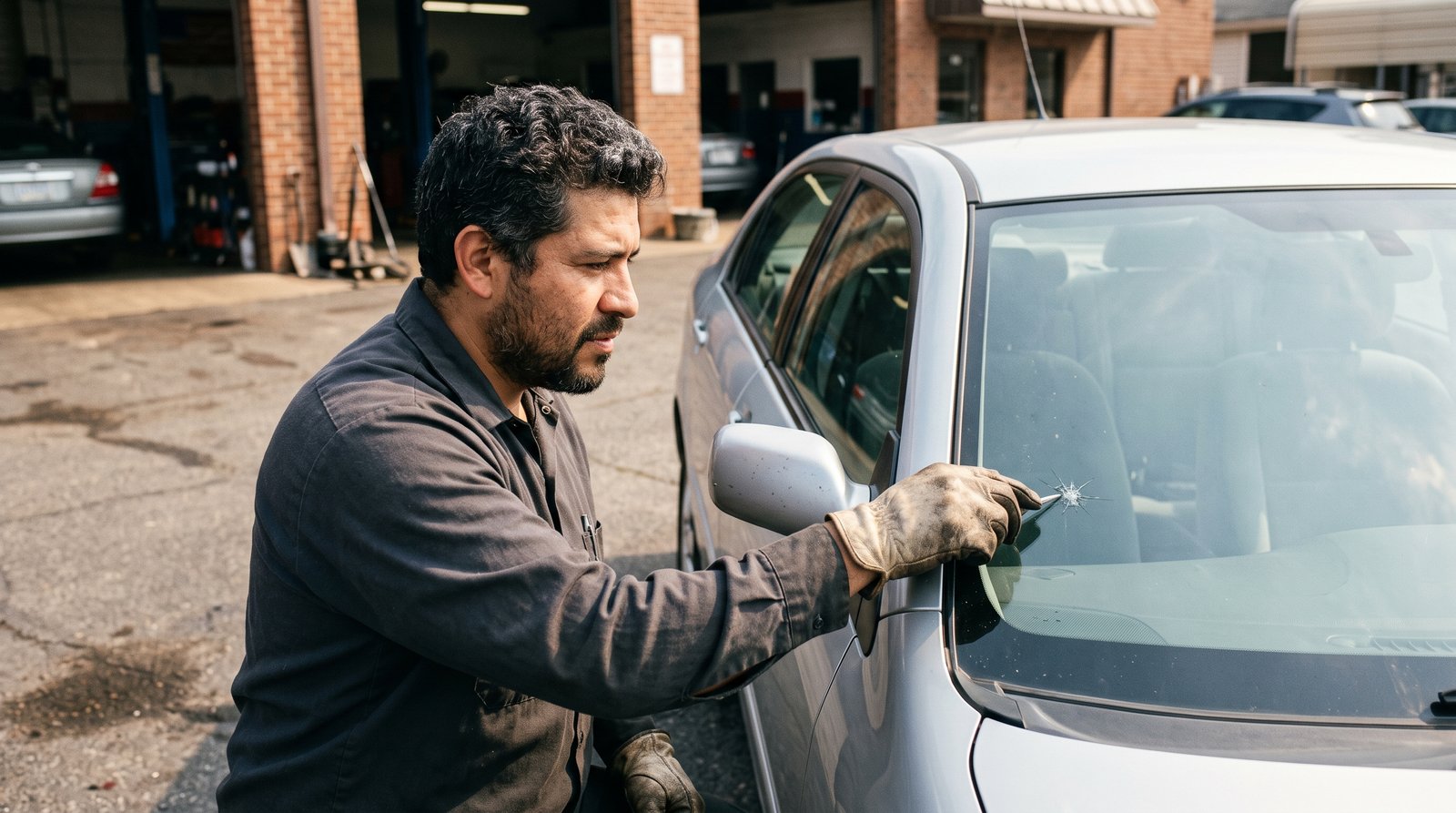
Does insurance cover windshield replacement the way most drivers expect? Typically it does — provided comprehensive coverage sits on your policy, and in the majority of states your comprehensive deductible hits the glass just as it would hail damage or a car that was stolen. That single detail settles almost every other glass question, including the one that ambushes owners of late-model vehicles: who foots the bill to recalibrate the cameras mounted behind the fresh windshield.
In this article
- Broken glass is comprehensive territory, not collision
- Does insurance cover windshield replacement with no deductible?
- Full glass coverage and endorsements that drop the deductible
- Three states have written glass rules into statute
- Repair versus replacement, and why carriers push for repair
- ADAS recalibration is what drives today's glass bills
- OEM versus aftermarket glass, and who picks the shop
- Will a glass claim push your premium up?
Broken glass is comprehensive territory, not collision
Glass on a vehicle sits under comprehensive coverage, the portion of a policy built for damage that has nothing to do with a collision. A stone kicked up by a truck, a hailstorm, a limb coming down, a smash-and-grab: comprehensive, all of them. Collision only answers when your car strikes something or gets struck, which makes it the wrong place to take the chip that showed up on the interstate. Our guide to comprehensive vs collision coverage works through that division completely.
In practical terms that makes a glass claim a first-party claim on your own policy, with nobody else driving and no blame to fight over. It resolves quicker than an accident claim, never drags in the other side's carrier, and gets handled differently when renewal comes around. The rest of the perils sharing that line of your policy appear in what comprehensive coverage actually covers.
An immediate corollary: carry liability alone and your policy holds nothing capable of paying for glass. Comprehensive must be in place before anything else happens.
Does insurance cover windshield replacement with no deductible?
Across most of the country, it does not. A windshield draws your comprehensive deductible exactly like any other comprehensive loss would: your share comes off the top and the insurer covers what remains. Should the replacement come in under your deductible, the company owes nothing whatsoever and all you have accomplished is reporting a loss to your carrier.
That is the reason a minor chip is frequently less expensive to handle on your own. Ask the shop for a price, weigh it against your comprehensive deductible, and only after that judge whether filing is worthwhile — the identical math we run through in small claim vs pay out of pocket.
Two circumstances redraw that math: purchasing standalone glass coverage, or residing in a state where lawmakers have already stripped the deductible off glass on your behalf.
Full glass coverage and endorsements that drop the deductible
Plenty of carriers offer an optional rider — typically labeled full glass coverage, glass buy-back or a zero-deductible glass endorsement — that wipes out the deductible on glass losses alone. Everything else riding the comprehensive line retains the usual deductible; only the windshield, the side windows and the rear glass get special handling.
Availability, naming and the amount it tacks onto your premium all come from the insurer and are filed state by state, which means no answer and no price holds everywhere. Certain carriers skip it entirely in certain states. Put two pointed questions to your agent: does it apply to replacement as well as repair, and does it take care of the recalibration work described further down this page.
Its value peaks for people who park outside, drive highways where gravel flies, or hold a high comprehensive deductible.
Ready to compare car insurance rates?
See quotes from top insurers side by side. Free, about two minutes, no obligation.
Get My Quotes →Three states have written glass rules into statute
Because glass coverage is governed at the state level, a handful of legislatures have layered their own rules over whatever a policy happens to say. Three of them are confirmed in statute today.
| State | Effect of the law | Statute |
|---|---|---|
| Florida | Windshield damage carries no deductible | s. 627.7288 |
| Kentucky | Glass-only claims must be paid in full | KRS 304.20-060 |
| South Carolina | Safety glass carries no deductible | s. 38-77-280(B) |
Under Florida's statute, the deductible provisions of a comprehensive policy "shall not be applicable to damage to the windshield." South Carolina's language holds that a physical damage or policy deductible "does not apply to automobile safety glass" — and that state's Department of Insurance says plainly this is not free glass, since the vehicle still has to carry comprehensive. Kentucky's version, amended in 2024, obliges a comprehensive or other-than-collision policy to settle glass-only claims "without regard to any deductible or minimum amount."
Live anywhere but those three, and you should presume the deductible applies unless your declarations page tells you differently.
Repair versus replacement, and why carriers push for repair
Chips are often fixed instead of swapped out: a technician injects resin into the break, cures it and polishes the surface flat. Carriers welcome that result, since a repair runs far cheaper than fresh glass and keeps a small break from creeping into a crack that would demand replacement down the road. That is the logic behind so many companies waiving the deductible on a repair while still charging it on a replacement.
Whether a break can be repaired at all hinges on how big it is, how deep it goes and where it sits. Anything in the driver's direct sightline normally gets replaced instead of repaired, because even a clean repair leaves a bit of distortion behind in the glass. Lengthy cracks, breaks that reach the edge of the windshield, and damage penetrating both layers are usually beyond repair as well. That judgment belongs to the shop looking at the actual glass — no one can make it from a photo.
Act fast regardless. Swings in temperature, bumpy pavement and trips through the car wash all coax a chip into spreading.
ADAS recalibration is what drives today's glass bills
In a vehicle built within the past several years, a windshield amounts to more than glass. Writing the federal rule behind the automatic emergency braking standard, NHTSA observes that the cameras these systems depend on are "typically mounted behind the front windshield near the rearview mirror," where they stay shielded from dirt and debris. The very same forward-facing cameras supply lane departure warning, which NHTSA characterizes as watching lane markings to signal when a car is drifting.
Pull the windshield and the camera's alignment leaves with it. NHTSA tackled that head-on in the 2024 AEB final rule, recognizing industry worry over "glass replacement and the impact that has on FCW/AEB sensors" and observing that glass replacement companies already coordinate with manufacturers "to ensure proper sensor calibration." That same record contains a safety-research instance of a camera left crooked after a windshield replacement, which gave the driver no warning whatsoever.
So before you green-light any work, ask two things: does this quote include recalibration, and will the claim pay for it? Both Kentucky and Florida mention recalibration of driver assistance systems inside their glass statutes, an indication of how substantial that line item has become. And with the federal AEB standard reaching passenger cars and light trucks from September 1, 2029, the issue is only going to spread.
OEM versus aftermarket glass, and who picks the shop
New glass arrives either through the vehicle manufacturer's own supply chain (OEM) or from an independent maker working to an equivalent specification (aftermarket). What you end up with is dictated by the policy rather than by preference: certain policies guarantee OEM parts, others guarantee parts of like kind and quality, and a few sell an OEM endorsement on the side. Go read the physical damage language.
State law puts a floor beneath all of that. Florida, for instance, prohibits an insurer from insisting on replacement parts that fail to be "at least equivalent in kind and quality" to whatever was damaged, measured by fit, appearance and performance, and it makes the insurer give you a copy of the written estimate that any partial-loss settlement is based on.
Picking the shop is normally your call. Kentucky's glass statute provides that an insured filing a first-party glass claim cannot be forced to use one specific shop as a condition of payment, though insurers may still operate a network. Anti-steering rules vary from state to state, so when a carrier leans hard on you to use one shop, ask your state department of insurance where the boundary lies.
Will a glass claim push your premium up?
Not in the manner an at-fault accident does, and the explanation is structural. The NAIC lays out two distinct mechanisms behind your bill: underwriting, in which the company decides whether to accept the risk, and rating, in which it prices the risk it accepted. Since a comprehensive glass loss involves no fault, it usually escapes the surcharge that an at-fault collision draws under a rating plan.
That word "usually" is carrying real weight. Your carrier still records the claim, and claim frequency — how often you come knocking, whatever the cause — can influence eligibility, tier placement and renewal. A single chip repair almost certainly will not register; a string of glass claims inside a short stretch is another matter. If your premium has already jumped, why did my car insurance go up runs through the typical reasons.
Rules for glass are established state by state and drafted insurer by insurer. What governs your situation is your own declarations page and policy language, and your state department of insurance can verify what your state demands.
Frequently Asked Questions
Will my policy cover repairing a small windshield chip?
Frequently yes, and frequently without a deductible. A lot of insurers drop the deductible for a resin repair because it saves them far more than the replacement it heads off. Get confirmation before any work begins, though — waiving the deductible on repairs does not automatically extend to replacements.
Is comprehensive coverage required to claim a cracked windshield?
Yes. Because glass lives under comprehensive, a liability-only policy holds no funds to pay such a claim. South Carolina's Department of Insurance spells this out even alongside its own no-deductible rule: comprehensive has to be on the vehicle before any insurer replaces the windshield.
Does full glass coverage justify the extra cost?
That turns on your deductible and how exposed you are. Someone carrying a high comprehensive deductible who parks outside or drives past gravel trucks benefits most; a garaged vehicle with a low deductible benefits less. Find out what it adds to your premium and whether recalibration is part of it, then set that against what a single replacement costs.
Who covers ADAS recalibration once the windshield is replaced?
If the glass loss itself is covered, the recalibration that the replacement forces usually rides on that same claim — recalibration is named in both Kentucky's and Florida's glass statutes. Have it put into the estimate before work starts, since a camera can end up misaimed with nothing at all lighting up on the dash.
Can my carrier force me to use one particular glass shop?
Normally not, though the rules differ by state. Kentucky prohibits an insurer from demanding a specific glass shop as a condition of paying a first-party glass claim, while still permitting carriers to keep networks. When your company is steering hard toward a single shop, your state department of insurance can explain where the boundary falls where you live.
Ready to compare car insurance rates?
See quotes from top insurers side by side. Free, about two minutes, no obligation.
Get My Quotes →