
Comprehensive vs Collision Coverage: What Each One Pays
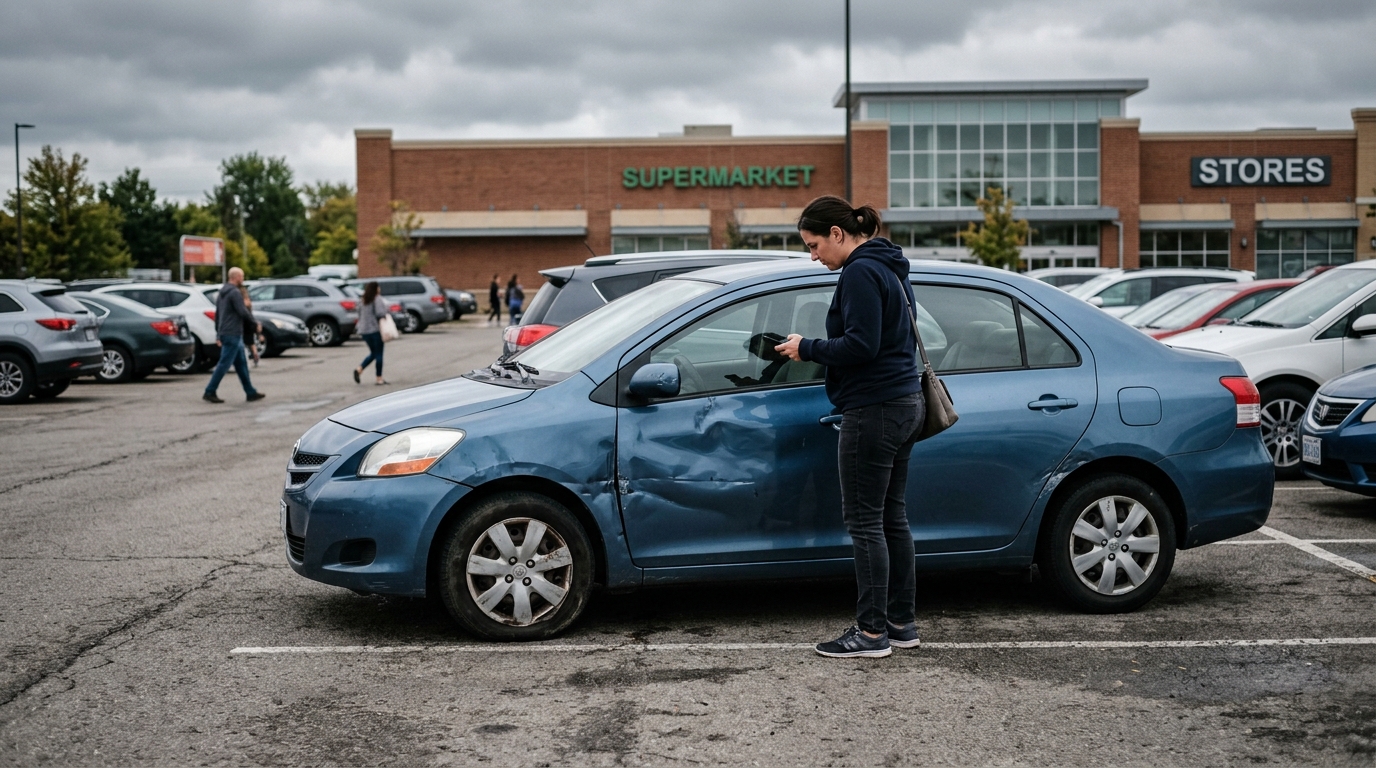
Few pieces of auto insurance knowledge pay off like grasping comprehensive vs collision coverage — and few get mixed up more often. Together these two make up most of what people mean by "full coverage," yet they answer for entirely different kinds of damage, carry different price tags, and turn optional at different stages of a vehicle's life. What follows explains what each one handles, how carriers tend to price them, and how to judge when keeping both is worth the money versus when one or both can go.
In this article
The Damage Comprehensive Coverage Handles
Comprehensive coverage — listed on some declarations pages as other than collision — repairs or replaces a car damaged by anything other than striking a vehicle or object. Hail, flooding, falling branches, theft, vandalism, fire, and animal strikes make up the standard list. Deer collisions land here rather than under collision, which surprises a lot of people.
A clean-record driver in an ordinary car generally pays between $130 and $250 a year for comprehensive, although the number jumps in hail- and hurricane-heavy states such as Texas, Colorado, and Florida. Carriers typically offer deductibles of $100, $250, $500, or $1,000 — and $500 is the usual default. Say a hailstorm does $4,500 in damage to the hood and roof on a $500 deductible: the owner pays $500 and the carrier handles the remainder.
Glass falls under comprehensive as well, and most carriers drop the deductible altogether for windshield repairs — chips and short cracks — though not for a full replacement. It is a minor benefit, but one worth verifying on whatever policy you hold.
The Damage Collision Coverage Handles
Collision pays when a car strikes something: another vehicle, a guardrail, a curb, a pothole deep enough to ruin a rim, a tree stump. Single-car wrecks such as rollovers count too, as does the damage you cause when you are the at-fault driver in a two-car crash. The comprehensive vs collision line matters most in the borderline cases: a deer that runs into the car is comprehensive; swerving away from that deer and hitting a tree is collision.
Of the two, collision nearly always carries the higher price. Budget somewhere around $300 to $600 annually for a typical driver, and more than that in crowded cities or with tickets and at-fault crashes on record. Anyone young, or driving something expensive to fix — luxury sedans, EVs with pricey battery packs, vehicles packed with cameras and sensors — pays noticeably above that.
Worth remembering: when somebody else causes the wreck, their liability insurance is what pays to fix your car. Your own collision line only becomes relevant if that driver has no insurance, not enough of it, or is arguing about who was at fault.
When Both Coverages Are Effectively Mandatory
Certain circumstances make carrying comprehensive and collision together a given, whatever the arithmetic says:
- Financed vehicles. Every lender demands both until the balance reaches zero. Cancel them and the bank generally force-places its own policy — costly, thin on benefits, and tacked onto the monthly payment.
- Leased vehicles. Leasing companies want both, and usually gap coverage on top, to close the distance between the car's actual value and what the lease says is owed.
- Newer cars, roughly anything under five model years old. Replacing one costs too much to absorb personally, and modern repair bills climb past expectations once radar units, cameras, and aluminum panels are involved.
- Any car in the $6,000 to $8,000 range or above that could not be replaced comfortably out of savings.
- Cars garaged in high-risk ZIP codes. Where theft, hail, or flooding runs above average, the balance tips toward holding comprehensive even on an aging vehicle.
Ready to compare car insurance rates?
See quotes from top insurers side by side. Free, about two minutes, no obligation.
Get My Quotes →When Cutting One Coverage Really Pays
On an older car with no lien, the familiar benchmark — the 10 percent rule — says that when a year of comprehensive and collision premium plus the deductible exceeds 10 percent of the vehicle's actual cash value, you are likely paying more than the protection returns.
- A 2012 sedan valued at $3,500 paying $700 yearly for comp and collision on a $500 deductible faces roughly $1,200 of annual downside against a best-case $3,000 recovery after the deductible. Over time, that is usually a losing wager.
- Cut collision first, comprehensive second. Collision costs two to three times as much, while comprehensive keeps paying on the cheaper, more frequent events — theft, hail, broken glass.
- A second car logging under 3,000 miles a year is a strong candidate, since fewer miles mean a smaller chance of a crash and less value bleeding out of the coverage.
- Cars you would simply replace with a used one under $5,000 rarely warrant collision at all.
- A car still carrying a loan is outside this analysis entirely — what the lender requires beats what the math suggests.
Cutting both at once normally frees up $400 to $900 a year on an older car in most states, and more than that in expensive markets like Michigan, Louisiana, or Florida.
The Role Deductibles Play in the Math
Nothing moves a premium faster than the deductible, and it does so without touching coverage limits. Pushing the comprehensive and collision deductible from $500 up to $1,000 usually trims those two lines by 10 to 20 percent, which works out to something like $80 to $200 a year combined. The jump from $1,000 to $2,500 returns proportionally less.
Break-even is simple enough: raising the deductible by $500 only wins if claims arrive less often than once every three to five years. Collision claims come in far below that pace for most drivers, so the higher deductible is often correct — as long as the household can actually cover it without strain on the day a claim lands.
A number of carriers sell disappearing or diminishing deductibles that fall by $50 to $100 with each claim-free year, occasionally reaching zero. For someone who rarely files, the effective value runs about $25 to $50 a year; for frequent claimants it amounts to nothing. Ask whether the feature comes standard or costs extra.
Everyday Scenarios and the Coverage That Responds
Applying the comprehensive vs collision question to concrete events clears it up quickly. Here are the situations drivers ask about most, matched to the line that responds:
| The Event | Which Line Pays |
|---|---|
| A deer runs into the car on a country highway | Comprehensive |
| The car slides on ice and hits a guardrail | Collision |
| A branch drops onto the car while it is parked | Comprehensive |
| You rear-end someone stopped at a light | Collision |
| Someone keys the door in a parking lot | Comprehensive |
| Reversing into a mailbox or fence | Collision |
| A storm's hail cracks the windshield | Comprehensive |
| A pothole bends a rim | Collision |
| The car disappears from the driveway overnight | Comprehensive |
| A rollover on a two-lane country road | Collision |
One pattern explains nearly every claim: damage from the car moving into something is collision, and damage delivered by an outside force is comprehensive.
Frequently Asked Questions
With the car paid off, do I still need both coverages?
Not automatically. Owning the car outright removes the lender's requirement and turns it into pure arithmetic. When the vehicle is worth under roughly $4,000 and the household could replace it out of pocket, cutting one or both usually returns $400 to $900 a year with little practical downside.
Which costs less, comprehensive or collision?
Comprehensive wins on price almost every time. National averages put comprehensive around $130 to $250 annually and collision at $300 to $600. Collision costs more because those claims happen more often and each one runs higher — front-to-back repairs on a current model easily reach $3,000 to $8,000.
Will comprehensive pay for a cracked windshield?
It will. Glass claims sit under comprehensive, and the deductible is usually waived outright when the work is a repair to a chip or a short crack. Replacing the whole windshield normally means paying the deductible, except in states such as Florida, Kentucky, and South Carolina, where insurers must cover replacement with no deductible.
If I hit a deer, does collision pay?
It does not — striking a deer or any animal goes through comprehensive instead. Carriers group animal strikes with weather and theft as things a driver largely cannot control. Swerve to avoid the deer and hit a tree or another car, however, and the damage converts into a collision claim.
Does full coverage just mean comprehensive plus collision?
Full coverage has no formal definition, but in everyday use it means liability, comprehensive, and collision at a minimum. Some agents fold uninsured motorist and medical payments into the term too. Attaching comprehensive and collision to a bare liability policy usually doubles or triples the premium, which is exactly why the keep-or-drop call carries so much weight on an older car.
Ready to compare car insurance rates?
See quotes from top insurers side by side. Free, about two minutes, no obligation.
Get My Quotes →