
Should You File a Small Claim or Pay Out of Pocket?
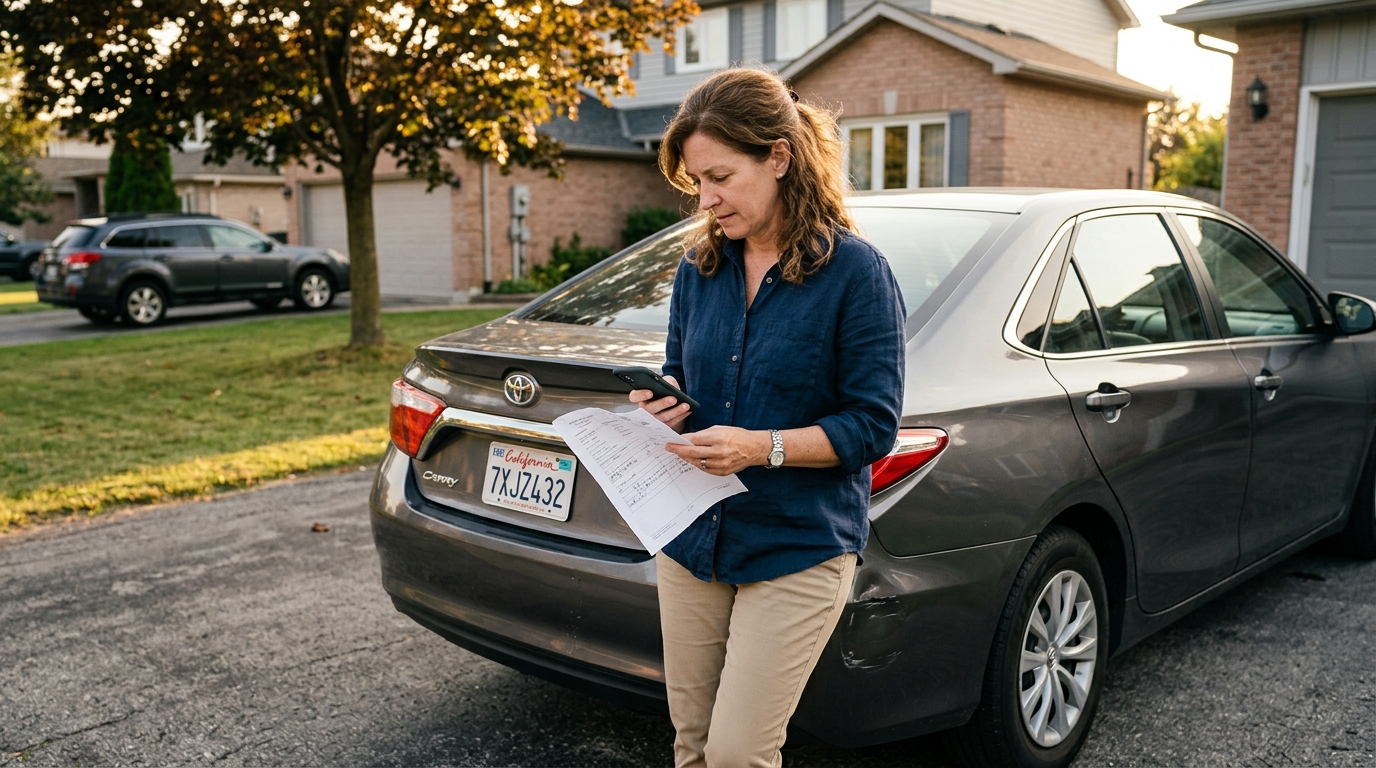
The whole question of whether to file small claim or pay out of pocket reduces to a single piece of arithmetic: does three to five years of higher premium add up to more than the insurer would hand over today? With minor bumps and cracked bumpers it usually does — which turns a "free" $800 repair check into roughly $1,500 of surcharges by the time it plays out. What follows is the math, the surcharge clocks, and the dollar lines where filing genuinely wins.
In this article
The Hidden Price Tag on a Small Claim
Every auto insurance claim lands in the CLUE (Comprehensive Loss Underwriting Exchange) database, the shared claims registry the industry runs, no matter how small the payout. At renewal the carrier pulls that file and reprices the policy against it. How many dollars went out the door hardly registers; what counts is that a claim event happened at all, and insurers read that event as one of the strongest predictors of the next one.
Across the country, one at-fault collision claim lifts premiums by something like 30% to 50% at renewal according to standard industry rate filings. Comprehensive claims — theft, hail, a deer — usually produce a gentler 5% to 20% bump. Even a not-at-fault claim can add 5% to 10% where state rules allow it, though about a dozen states, California, Oklahoma, and Massachusetts among them, forbid carriers from surcharging drivers over accidents they did not cause.
Here is the trap in the file small claim or pay out of pocket decision: an $800 check for a dent feels like found money on the day it arrives. Let a $1,600 annual premium climb to $2,000 for three years, though, and the carrier collects $1,200 in surcharges against that $800 payout — $400 underwater before anyone counts what it does to future quotes.
What a Claim Really Does to Your Premium
Real surcharge figures shift with state, carrier, and driving history, but the industry bands hold together better than you would expect. A driver with a clean record and no prior claims takes a smaller percentage hit than someone already carrying blemishes, yet the same claim event moves rates proportionally alike across most standard-market companies.
What follows are the patterns typical of major insurers drawn from standard rate filings. Non-standard carriers — the ones writing policies for higher-risk drivers — frequently apply harsher surcharges of 60% or more, since those customers already sit near the statistical ceiling.
| Type of Claim | Usual Rate Increase | How Long It Lasts |
|---|---|---|
| At-fault collision (under $2,000) | 25% to 45% | 3 years |
| At-fault collision (over $2,000) | 40% to 60% | 3 to 5 years |
| Comprehensive (hail, theft, animal) | 5% to 20% | 3 years |
| Glass-only windshield claim | 0% (in most states) | — |
| Not-at-fault collision | 0% to 10% | 3 years (if allowed) |
Two things in that table deserve a second look. Windshield glass claims generally leave rates alone because most states either require or permit zero-deductible glass coverage that sits outside the surcharge formulas entirely. And not-at-fault claims still get written into CLUE — even where surcharging them is legal, the increase stays small, typically 5% to 10% against 25%-plus for an at-fault event.
Three Years of Surcharge, Unless It Turns Into Five
The standard practice is a surcharge that runs exactly three years from the date of the accident, though more carriers than before — several regional companies and a chunk of the non-standard market — stretch it to five. It does not fade out gradually. It applies in full at every renewal until the anniversary arrives, then vanishes in a single step at the following renewal.
A different clock matters once shopping starts: individual claims stay visible on the CLUE report for five to seven years. So a claim can outlive the current insurer's surcharge and still show up when a new company runs a quote, getting priced in for another two to four years. Switching carriers to escape a surcharge therefore tends to backfire — the fresh quote reflects the very same claim, sometimes with a steeper multiplier, because an unfamiliar driver gets less benefit of the doubt.
Practically speaking: treat any claim you file as something that shapes insurance costs for a minimum of three years and possibly seven, and run break-even math on close calls against that longer horizon.
Ready to compare car insurance rates?
See quotes from top insurers side by side. Free, about two minutes, no obligation.
Get My Quotes →Running the Break-Even Numbers
Before settling the file small claim or pay out of pocket question, put these five numbers on paper or into the calculator on your phone. Five minutes of work strips almost all the guessing out of it.
- Collect written repair estimates from two body shops at minimum. That figure is the genuine out-of-pocket cost of skipping the claim.
- Take the deductible off the repair estimate. When the estimate is $900 and the deductible is $500, the insurer's check comes to $400.
- Approximate the yearly surcharge. Multiply the premium you pay now by 30% for a rough at-fault figure, or 15% for a comprehensive claim. Against a $1,800 policy that comes to $540 or $270.
- Multiply that yearly surcharge by three years — or by five where the carrier uses a longer surcharge window.
- Set the total surcharge next to the insurer's payout. Filing loses whenever the projected surcharges outweigh what the company would pay.
Worked example: a $1,200 repair under a $500 deductible produces a $700 check. Push a $1,800 annual premium up 30% for three years and the surcharge total is $540 × 3 = $1,620. Filing rather than paying cash costs $920 more. Pass on the claim.
The Cases Where Filing Is the Right Move
The math flips more often than drivers assume. Filing is plainly correct whenever one of these fits:
- Repair costs exceed twice the deductible plus the three-year projected surcharge. A $6,000 repair against a $500-deductible policy beats virtually any realistic surcharge scenario.
- Anyone got hurt, however slightly. Medical costs and possible lawsuits can blow past policy limits in a hurry, and filing keeps liability coverage engaged.
- The other driver has no insurance or left the scene. Uninsured motorist and collision coverage exist for exactly this — paying cash throws away premium you already spent.
- Accident forgiveness covers a first at-fault claim. Verify the terms in writing before counting on it; some carriers make you earn it with years of clean driving.
- Weather damage falling under comprehensive. Hail, flooding, and fallen trees are typically low-surcharge events across most states.
- Not-at-fault claims where surcharging them is banned. Drivers in California, Oklahoma, New York, and Massachusetts can file with far less rate risk.
Where You Live Changes the Answer
State insurance regulation swings this decision meaningfully. An identical $1,000 claim produces very different renewal outcomes in Los Angeles and in Tampa, because the two states police carrier rating practices differently.
- California stops insurers from raising rates or declining renewal over not-at-fault accidents under the rate rules built on Proposition 103.
- Oklahoma and New York ban surcharges tied to not-at-fault claims, although those claims still register on CLUE.
- Massachusetts runs a merit-rating plan in which only certain claim types generate a surcharge; comprehensive claims normally are not among them.
- Michigan and New Jersey sit inside no-fault frameworks that push minor collision claims through personal injury protection, which changes how the record looks.
- Florida and Texas permit surcharging with few limits, so the break-even point for filing sits higher there.
Unsure how a particular state handles a specific claim type? Rate rules are published by every state department of insurance. Searching the state name alongside "auto insurance surcharge rules" pulls up the regulatory guidance carriers are actually working from.
What to Do Before You Pick Up the Phone
Estimates come first, every time. The claims rep on that first call will nudge you toward opening a file — hold off until the numbers exist on paper. Opening a claim writes it into CLUE even if it is pulled back later, and certain carriers rate a withdrawn claim exactly like a paid one. Put the question to the rep in plain words: "If I open this and then withdraw it, will it affect my rate or show as a claim event?" Get that answer in writing before you go further.
Phone the agent for a hypothetical renewal quote first. Ask it straight: "If I filed a $1,000 collision claim today, what would next year's premium look like?" Most agents will run the numbers. One call takes all the guesswork out of the break-even calculation.
Think about raising the deductible after you absorb a small repair yourself. Anyone routinely paying cash for minor damage is buying a low deductible they never use; going from $500 to $1,000 or $1,500 usually trims collision and comprehensive premium by 10% to 20%. That is a permanent yearly saving that compounds for as long as the policy stays in force.
One last thing: the CLUE report can be audited. Anybody can request their own copy free once a year from LexisNexis, confirm no phantom claims are sitting there, and dispute whatever is wrong. A single bogus claim entry can cost thousands across the years it lingers on the record.
Frequently Asked Questions
Does filing a small claim raise my premium?
Nearly always. Standard-market carriers surcharge at renewal off the claim event itself rather than the size of the payout, so a $500 check can produce the same 25% to 40% at-fault increase as a $2,500 one. The exceptions worth knowing: windshield glass claims, some comprehensive claims such as hail or animal strikes in particular states, and not-at-fault claims where surcharging them is prohibited.
Where is the line between a small claim and a big one?
No formal cutoff exists, though insurers and consumer advocates tend to call anything below $1,500 to $2,000 small. Around that size, three years of rate surcharge often costs more than the insurer pays out. The better question is not the claim's size on its own — it is whether the payout after the deductible beats three years of projected surcharge.
Can I withdraw a claim to dodge the increase?
Withdrawing is usually possible, but the entry lives on in CLUE and some carriers surcharge a withdrawn claim just like a paid one. Put the question to the claims representative before the file is opened — will a withdrawal register as a claim event? — and get the reply in writing. A no-cost inquiry, meaning hypothetical questions with nothing opened, is the safer route.
How many years does a claim follow me?
Your current carrier normally runs the surcharge for three years, with some companies and some states pushing it to five. CLUE holds the claim for five to seven years, so an insurer pulling a fresh quote can still see it and price it in well after the original surcharge has fallen off.
Will a windshield claim cost me at renewal?
Usually not. Windshield replacements run through comprehensive coverage seldom trigger a surcharge, since glass claims sit outside most insurer rating formulas. A handful of states — Florida, Kentucky, and South Carolina among them — go further and require zero-deductible glass coverage, which makes the claim essentially free to file.
Ready to compare car insurance rates?
See quotes from top insurers side by side. Free, about two minutes, no obligation.
Get My Quotes →