
Hit and Run Insurance: What to Do and Which Coverage Pays
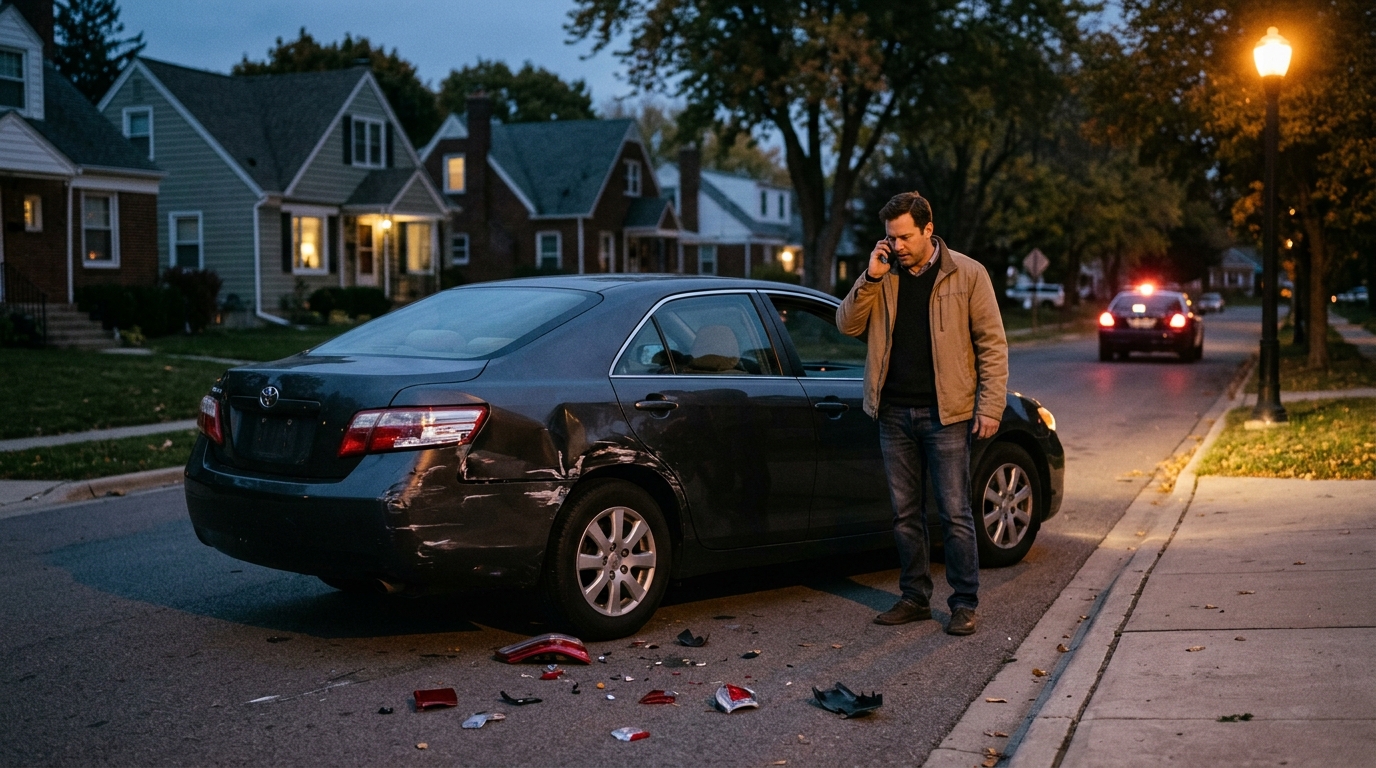
Hit and run insurance is not one product - it is a particular combination of coverages that settles who pays after another driver hits a car and vanishes. The first hour, the decision to file a police report, and the coverages printed on the declarations page all determine whether the repair comes out of pocket or gets paid. Below are the steps that matter and the coverages that actually respond.
In this article
What Legally Counts as a Hit-and-Run
Definitions shift a little from state to state, but the underlying rule holds everywhere: a driver who is part of a crash - even a low-speed bump in a parking lot - and departs without trading information or reporting it has committed a hit-and-run. Backing into a parked car and leaving, taking out a mailbox, or scraping a cyclist all qualify. Wrecking a car on the highway is not the only version.
Punishment scales with what got broken. Property-only incidents are typically misdemeanors carrying fines in the few-hundred-dollar range along with possible license points. Once someone is hurt or killed, most states move to a felony that brings jail time and license suspensions measured in years.
On the insurance side, though, hit-and-run nearly always refers to the victim's position: someone struck their car and took off before any plate number, name, or contact detail could be captured. In that situation the victim's own policy - plus how the next hour gets handled - decides whether the damage is paid or absorbed.
Your Opening 10 Minutes at the Roadside
The first few minutes shape every claim decision that comes afterward. With adrenaline running it is easy to skip a step that turns out to matter enormously.
- Do not chase the other car. A pursuit turns the claim into a road-rage incident, and any crash during the chase may be denied by the driver's own coverage.
- Pull somewhere safe and switch on the hazards. Getting hit again on the shoulder is a larger risk than any paperwork.
- Log every detail about the other vehicle - a partial plate, make, color, direction it went, unusual damage, bumper stickers, dealer frames.
- Track down witnesses. Ask anyone who pulled over for a name and phone number. One witness statement often turns "unknown cause" into "caused by another party" on the claim file.
- Shoot photos of the damage, the surrounding scene, skid marks, and whatever debris the other car left behind. Broken headlight pieces carry paint transfer that can point to the vehicle.
- Look for cameras. Nearby shops, doorbell cams, gas stations, and traffic signals often hold footage - but only for 24 to 72 hours before it records over itself.
- Call police from the scene rather than from the kitchen table an hour later.
The Police Report Almost Everyone Skips
Filing the police report is the step drivers skip most often in a hit-and-run - and the one carriers examine hardest. Many assume that with the other car long gone there is nothing left to report. That assumption is the mistake. Most policies carrying uninsured motorist coverage demand an official report within 24 hours, and a few states set an even tighter window. Without the report there is no claim.
Past the paperwork, an actual case number accomplishes three things: it starts the department's plate-reader and camera searches, it builds a documented trail supporting the driver's account, and it hands the adjuster something objective to rely on when assigning fault.
Reports get taken in person, by phone, or at the station - call the non-emergency line and ask which applies. When the car still drives and nobody is injured, plenty of cities push the report to an online portal. Filing the same night rather than a week out is critical. Each hour of delay makes the report read as an afterthought and gives the carrier space to claim the damage came from somewhere else.
Ready to compare car insurance rates?
See quotes from top insurers side by side. Free, about two minutes, no obligation.
Get My Quotes →The Coverages That Actually Respond
Which piece of an auto policy responds to a hit-and-run depends on what was damaged and how the state classifies the event. Here is the usual lineup:
| Coverage | What it handles | Usual Deductible |
|---|---|---|
| Uninsured motorist bodily injury (UMBI) | Medical bills and lost income | Normally $0 |
| Uninsured motorist property damage (UMPD) | Vehicle damage, where the state offers it | $200-$500 |
| Collision | Vehicle damage when UMPD is unavailable | $500-$1,500 |
| PIP or MedPay | Medical costs no matter who was at fault | $0 or minimal |
In most states collision coverage is what repairs the car after a hit-and-run, and the standard collision deductible applies. Roughly 20 states put uninsured motorist property damage in that role instead, usually with a lighter deductible near $200 or $300. UMBI is close to universal and pays hospital bills for the driver and passengers. Drivers carrying liability only get nothing toward their own car - the hardest truth in these claims: dropping collision to save $30 a month means covering the entire repair yourself.
The True Cost of Filing the Claim
What a hit and run insurance claim costs in dollars turns on the state, the company, and whether the file genuinely reads as not-at-fault. California, Oklahoma, and a few others legally forbid carriers from raising rates on claims where the policyholder was not at fault, hit-and-runs included when everything was handled properly. Elsewhere, insurers can and frequently do lift premiums 10% to 30% at renewal even though the driver did nothing wrong.
Plan on paying the deductible ($500 to $1,500 on collision) up front, with reimbursement only if the other driver is eventually identified and their carrier picks up the tab. Realistically, most drivers who flee are never found, so that deductible stays spent.
Certain companies waive that deductible on hit-and-runs when a witness statement or police report identifies the other vehicle. Ask about it directly - adjusters rarely bring it up, and the waiver usually hides in fine print instead of the main policy summary. A rental reimbursement rider, generally $2 to $8 a month, earns its keep here too, because repair queues after a hit-and-run can run two to four weeks.
State Rules and Waivers That Change the Arithmetic
States do not handle hit-and-run identically. About 20 offer UMPD, which usually covers vehicle damage at a lower deductible than collision. A few - New York, New Jersey, and Georgia among them - write a specific hit and run insurance deductible waiver into UMPD provided the driver files a police report inside a set window, frequently 24 hours. Michigan's no-fault system has personal injury protection paying medical bills regardless of fault, while broad-form collision is what keeps a deductible off the vehicle repair itself.
A handful of practical rules hold up in every state:
- Get a police report filed within 24 hours or risk losing the claim outright.
- Tell the insurer the same day, even before deciding whether to file at all.
- Use a repair shop the carrier approves - going your own way often means eating the gap between the shop's estimate and the insurer's.
- Ask directly about deductible waivers for hit-and-runs; wording and eligibility vary from carrier to carrier.
Anyone running liability only should price collision at the next renewal. On a five- to ten-year-old vehicle, adding it usually costs $200 to $500 a year - frequently less than one deductible, and the only real protection against a driver who disappears before anybody reads a plate.
Frequently Asked Questions
Will my premium rise after a hit-and-run claim I did not cause?
That depends on the state. A short list of states - California and Oklahoma among them - prohibits carriers from surcharging not-at-fault claims, and hit-and-runs normally qualify. In most other states, companies may raise premiums 10% to 30% at renewal even when the driver was blameless, with the actual impact varying by insurer and prior claim history.
Is a hit-and-run claim possible without a police report?
In most states it is not - uninsured motorist coverage requires a report filed within 24 hours of the incident. Even where a claim is technically allowed without one, carriers scrutinize it hard and may reject it altogether. Filing the report the same day the crash happened is the strongest single move toward getting approved.
Does leaving a note on a parked car count as a hit-and-run?
A note carrying a name, a phone number, and a quick account of the incident normally meets state hit-and-run statutes, and prosecutors seldom press charges once a driver has clearly made a good-faith effort. A number of states also want police notified inside a short window. Ringing the non-emergency line and filing a courtesy report that same day erases every bit of ambiguity.
How soon must a hit-and-run be reported to the insurer?
Most auto policies call for prompt notice - commonly within 24 to 72 hours - although the exact wording differs by carrier. Waiting a week or longer gives the company grounds to question the claim or trim the payout. Notify the carrier the same day the police report goes in, even if the driver has not yet decided whether to pursue the claim.
Ready to compare car insurance rates?
See quotes from top insurers side by side. Free, about two minutes, no obligation.
Get My Quotes →