
Does Car Insurance Follow the Car or the Driver When Borrowed?
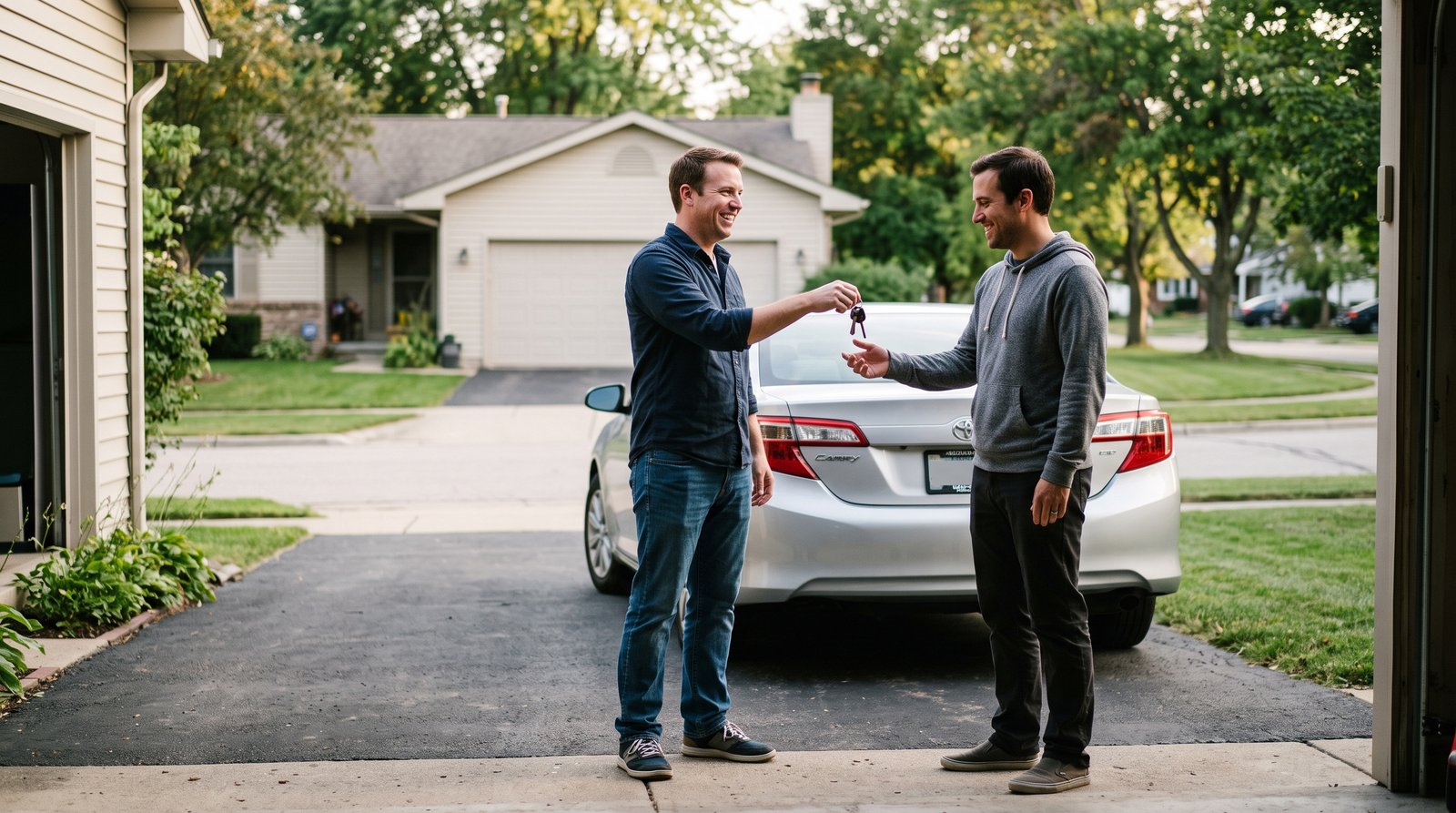
Does car insurance follow the car or the driver when a friend borrows your keys? For everyday situations the answer is the car: the coverage attached to the vehicle is what pays out after a wreck, even when the person at the wheel appears nowhere on the paperwork. The industry term for this is permissive use, and it is the reason lending your car to a buddy does not strand them without protection.
The wrinkles are genuine, however, and almost all of them fall on the owner instead of the person doing the borrowing.
In this article
- The quick answer: the policy rides with the vehicle
- Which coverages stay with the vehicle and which travel with you
- Which policy pays first after a friend wrecks your car
- The loss sticks to your history and your rate
- Situations where permissive use falls apart
- The household is where owners get caught out
- When you are the borrower: rentals and non-owner coverage
- Does car insurance follow the car or the driver where you live?
The quick answer: the policy rides with the vehicle
Insurance regulators lay this out in simple terms. According to the Texas Department of Insurance, most policies protect you, members of your family, and anybody operating your car with your okay. Arizona's Department of Insurance and Financial Institutions frames it identically: give permission, and whoever drives the vehicle falls under your policy, provided that individual has not been specifically excluded from it.
New York goes as far as putting the requirement into its regulations. Any standard auto liability policy there has to insure the named insured, a spouse sharing the household, and anyone else operating the car with the owner's blessing — provided the actual driving falls inside the boundaries of that permission. An opinion from the New York Department of Financial Services confirms that a driver like that counts as a covered insured even if the policy never lists them as an operator.
Permissive use is deliberately casual in how it works. There are no forms to sign and no need to ring your agent before you pass over the keys.
Which coverages stay with the vehicle and which travel with you
This principle has limits, and the pieces of a policy that break from it are precisely the ones drivers misjudge.
Liability, collision and comprehensive ride with the car itself. If the borrowed vehicle gets banged up, the repair goes through the owner's collision coverage and the owner's deductible.
Medical coverages stay with the individual. Texas explains that medical payments coverage picks up the doctor bills for you and your passengers, and pays as well when you are injured riding in another person's vehicle or while on foot or on a bicycle. The cleanest illustration of driver-based protection is a non-owner policy, which is held by someone with no car to their name.
Liability lands in both categories, and that dual nature is where the muddle usually begins. The Office of the Insurance Commissioner in Washington points out that bodily injury liability also extends to you and to the relatives named on your policy while you are driving another person's car with their consent. So yes, your liability does tag along with you — it simply queues up behind the vehicle owner's.
| Coverage type | Stays with the car? | Stays with the driver? |
|---|---|---|
| Liability | Yes — first in line | Yes — as excess |
| Collision | Yes | No |
| Comprehensive | Yes | No |
| Medical payments | Yes | Often, in any vehicle |
| Personal injury protection | Usually | Depends on the state |
| Non-owner liability | No | Yes |
Which policy pays first after a friend wrecks your car
What sticks in the memory should be the payment sequence. Texas spells it out: cause a wreck in a car you borrowed, and the owner's insurer handles the claim. Should that owner carry no coverage, or too little to settle the damage and injuries caused, the driver's own insurance takes over.
In other words, the owner's policy is primary while the driver's rides behind it as excess. Here is how that plays out:
- Injuries and property damage suffered by the other party come out of the owner's liability limits first.
- The owner's own car gets fixed through the owner's collision coverage, less the owner's deductible.
- Only once the owner's limits run dry does the driver's personal policy kick in.
When the borrowed vehicle is totaled, the payout is calculated under the owner's policy and issued to the owner. Our total loss payout calculator lays out how the deductible and an outstanding loan alter the check that finally lands.
Ready to compare car insurance rates?
See quotes from top insurers side by side. Free, about two minutes, no obligation.
Get My Quotes →The loss sticks to your history and your rate
Here is the piece that blindsides owners. Since the money came from your policy, the loss is recorded in your claims history rather than the borrower's. Carriers look at that record when they set a renewal price, and Arizona's regulator points out that companies consult the Comprehensive Loss Underwriting Exchange, run by LexisNexis, to review past losses.
A handful of states push further still and assign the driver's negligence straight to the owner. That is precisely what New York's Vehicle and Traffic Law does whenever someone uses or operates the car with the owner's permission, whether express or implied.
Your address decides whether the loss really pushes your rate up. Under Arizona law, an insurer may not raise a premium because of an accident that the insured did not cause or significantly contribute to through their actions. Comparable protection is missing in most states, so ask your own state's insurance department.
The deductible is on you as well. No rule forces the borrower to pay you back for it, aside from any arrangement the two of you work out privately.
Situations where permissive use falls apart
Everything turns on permission, and that concept is tighter than most drivers imagine. Protection can evaporate in these cases:
- That person is excluded by name. An endorsement you signed strips them out of the policy completely. Our guide to named driver exclusions explains the mechanics and the states that restrict them.
- The driving exceeds what you agreed to. New York's rule stretches coverage only as far as the scope of the permission granted. Loaning the car for a quick grocery errand is not the same as loaning it for a road trip.
- The person is not validly licensed. A permissive-use clause makes no promise to protect anyone who has no legal right to be driving, and Texas and California alike advise owners to read the policy and find out who is excluded before turning the wheel over to somebody else.
- The vehicle is earning money. Texas counts ride-hailing and paid delivery among the activities most policies leave out, alongside business use and racing.
- The borrower is a regular, not an occasional one. Texas also observes that most policies exclude accidents in a car you do not own yet have regular access to, meaning a habitual borrower's own policy might not stand behind them.
The household is where owners get caught out
Permissive use most often collapses because the person driving was never a casual borrower in the first place. Washington's Office of the Insurance Commissioner says it bluntly: the majority of insurance companies want every driver in the home named on the policy, covering each family member old enough to drive, whether or not they will ever touch your car. California's insurance department issues the same directive — let your insurer know when new drivers join your household.
What follows is not always a flat denial. New York's regulator explains that a company may bill extra premium, retroactively included, to cover a licensed household driver who belonged on the policy and was left off. Some carriers instead call the omission a misrepresentation, and California allows an auto policy to be canceled for fraud or material misrepresentation.
The phrase that manufactures the trouble is "they only borrow it once in a while." Any relative living with you, or a roommate who takes the car out with any frequency, belongs on the policy.
When you are the borrower: rentals and non-owner coverage
Flip the situation around. When you are the one borrowing, the owner's policy forms your first shield, and Washington's regulator suggests confirming with the owner that their coverage includes you as a driver before you climb in. If it turns out that it does not, go over your own policy with your agent.
Rentals generally follow different mechanics than borrowed vehicles. Texas points out that most policies extend to accidents while you, or another person your policy covers, is at the wheel of a rental car, and that the damage waiver pushed at the counter is not insurance in any sense — it is a promise that the agency will not bill you for damage. Renting on business is its own question to put to your agent.
For someone with no car of their own who borrows frequently, Texas suggests a non-owner liability policy. Such a policy covers the injuries and damage you inflict on other people, though not your own injuries and not damage to the vehicle you are driving. Our explainer on non-owner car insurance spells out who it genuinely fits.
Does car insurance follow the car or the driver where you live?
Regulation of auto insurance happens at the state level, and each authority quoted above is describing only its own jurisdiction. Permissive use as a principle is nearly universal, yet the details around it stay local: whether named driver exclusions are allowed, whether a company can surcharge you over a loss you had no hand in, and how much warning precedes a cancellation.
Run through this quick list before the keys change hands:
- Make sure the person borrowing holds a valid driver's license.
- Scan your declarations page for any named driver exclusion.
- Keep in mind that the deductible on your own car falls to you.
- Spell out what the vehicle will be used for, and for how long.
- Take a hard look at your liability limits. A bad at-fault wreck can blow through them, leaving the remainder as your personal responsibility, which is the argument for umbrella insurance.
Policy language differs from one insurer and one state to the next, and what you have read here covers general principles instead of the wording of any specific contract. For your own circumstances, the final word belongs to your declarations page and your state's insurance department.
Frequently Asked Questions
Can I borrow a car when I carry no insurance of my own?
Generally yes, and the coverage that answers is the owner's. Texas explains that when you cause a wreck in a borrowed vehicle, the owner's insurer settles the claim, with your own coverage entering only if theirs is absent or too small. The danger is that without a policy of your own, nothing backs up the owner's limits, so a bad crash can come after what you personally own.
Does my premium rise when a friend wrecks my car?
It might. Your policy pays the claim, and the loss stays on your claims record, which carriers examine at renewal time. A small number of states restrict this — Arizona forbids a company from raising a premium because of an accident the insured neither caused nor significantly contributed to — while most states offer nothing comparable. Your state's insurance department can say which situation applies where you live.
Should my roommate appear on my auto policy?
If they share your home and take your car out, then almost certainly. Washington's insurance commissioner states that most companies want every household driver of driving age named, regardless of whether they ever use your vehicle. Phone your insurer and ask. Putting someone on the policy is cheaper than fighting over it once a crash has happened.
Does my coverage extend to a rental car?
Frequently, by way of your own policy. Texas notes that the majority of policies handle accidents while you or another person insured under your policy drives a rental, and that the waiver sold at the counter is not insurance — it merely means the agency will not bill you for damage to the car. A work rental raises a separate issue, so check with your agent beforehand.
What if a person drives off in my car without permission?
Because permissive use hinges on permission, someone who takes the car without it usually sits outside the protection a policy grants to permitted drivers. Damage to the car may still qualify as a comprehensive claim if the vehicle was stolen, given that comprehensive handles theft. File a report with the police and your insurer right away, and let the adjuster work out which coverage responds.
Ready to compare car insurance rates?
See quotes from top insurers side by side. Free, about two minutes, no obligation.
Get My Quotes →