
Personal Umbrella Policy: The Coverage Most People Skip
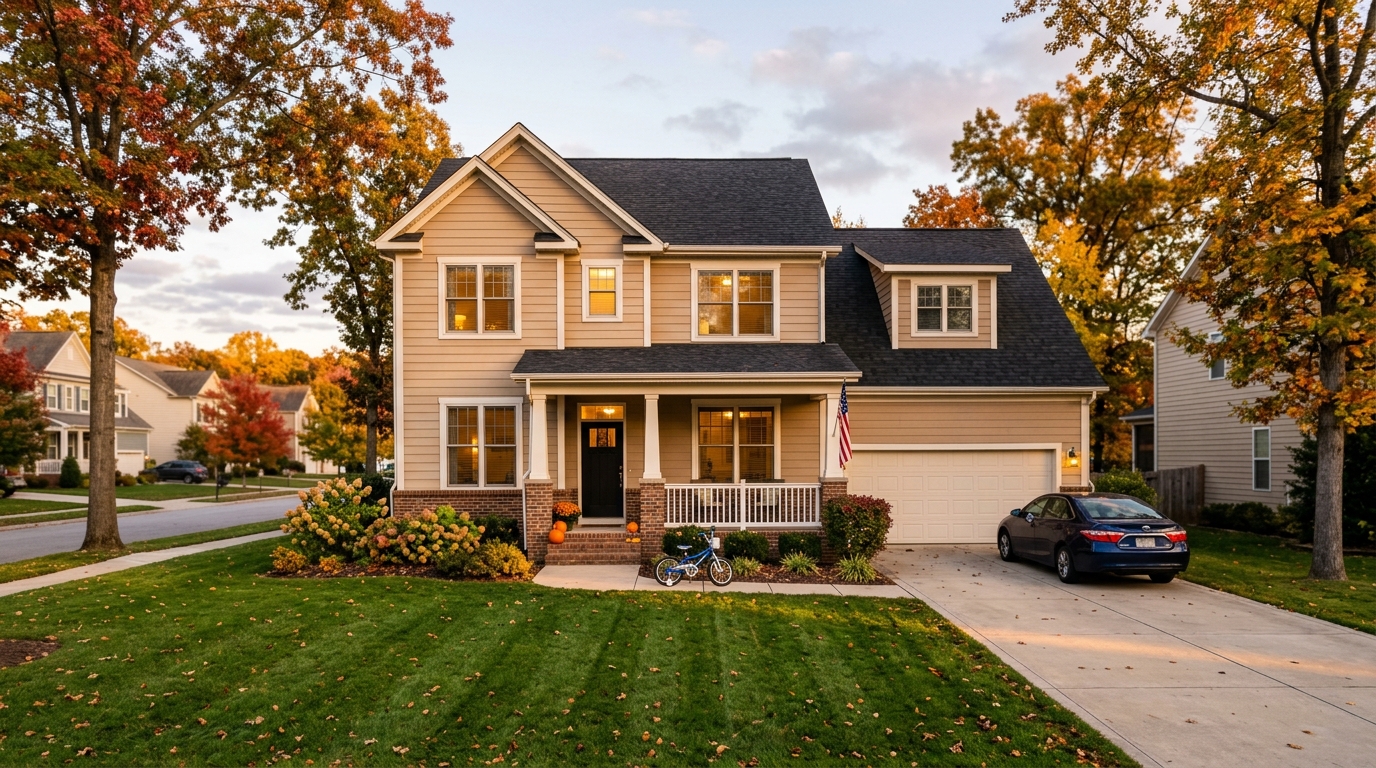
A personal umbrella policy stacks above your auto and homeowners liability to absorb the catastrophic claims that punch straight through standard limits — the kind that drain savings and garnish paychecks for years afterward. Umbrella insurance buys more real protection per dollar than almost anything else on the market, frequently $150 to $400 a year for that first million of coverage, and still fewer than one in ten U.S. households own it. What follows covers how the layers stack, what the premium looks like, who genuinely needs $1 million or beyond, plus the exclusions that catch people off guard when a claim lands.
In this article
- How the Policy Layers Over Your Auto and Home Coverage
- What Umbrella Coverage Actually Costs
- Which Households Genuinely Need $1 Million or More
- The Limits You Must Already Carry Underneath
- Where a Personal Umbrella Policy Stops Short
- Shopping for the Right Limit
- The Claims That Actually Reach the Umbrella Layer
How the Policy Layers Over Your Auto and Home Coverage
What you are buying here is excess liability coverage. Nothing comes out of it until a single claim has drained the liability limits sitting under it on an auto, homeowners, boat, or rental dwelling policy. Say an insured driver destroys another car and injures its driver: the auto policy answers first and exhausts its bodily injury and property damage limits, after which the umbrella covers whatever remains up to its own ceiling.
The arithmetic is simple enough. Someone holding $300,000 of home liability alongside a $1 million umbrella has $1.3 million on hand for any claim that begins under the home policy. A driver with 250/500/100 auto limits and a $2 million umbrella brings $2.25 million per person to a bodily injury judgment. Legal defense is covered too, and most carriers pay it outside the policy limit, so attorney bills never chew into the money left for a settlement or verdict.
In one meaningful respect the coverage reaches further than the policies beneath it. Personal injury claims such as libel, slander, and false arrest are usually picked up here even though a standard homeowners liability form throws them out. That extra reach is much of the reason anybody who has an online presence or a public-facing job should carry one.
What Umbrella Coverage Actually Costs
Pricing works per million of coverage, and that first million is always the bargain. Bundled with the same company that writes the auto and homeowners policies, a typical policy costs $150 to $400 a year for $1 million. Every million after that generally tacks $75 to $150 onto the annual premium, which puts a $2 million policy around $250 to $550 — and $5 million at $500 to $1,000.
Household risk pushes the number up. A family running three drivers under 25, a boat, and two homes pays considerably more than a retired couple with a single car and no watercraft. Standalone umbrellas from carriers such as RLI and Chubb — the route when a primary insurer will not write a big enough limit, or when someone wants auto and home kept apart — usually open near $250 per year for $1 million and climb from there.
Measured per dollar of protection, no other line of insurance a consumer buys comes close to being this cheap. The reason is that this layer only responds to tail-risk claims — the rare, severe events the average household never sets off.
Which Households Genuinely Need $1 Million or More
The familiar guideline says buy coverage matching household net worth with something added for future earnings. That guideline sells the case short. Because a judgment can ride on wages for years, anybody with steady professional income is exposed far past what they currently own. The households that benefit most often include:
- Anyone owning a home worth $500,000 or more that carries real equity
- Parents with teen drivers, since their at-fault crash rates run several times those of mid-life drivers
- Landlords holding one or more rental properties
- Homes with a pool, a trampoline, a hot tub, or a diving board
- Owners of breeds insurers flag as high-risk, including Rottweilers, Pit Bulls, and Dobermans
- People who throw parties or pour alcohol at events
- Owners of boats, jet skis, ATVs, and RVs
- Professionals whose future wages can be attached, from physicians to executives to business owners
- Anyone with a big social media following, or a habit of posting blunt online reviews
Any one item on that list normally justifies $1 million on its own. Stack two or more and the recommendation moves to $2 million or beyond, particularly across California, Florida, and Texas, where oversized jury verdicts in bodily injury cases have become routine.
Ready to compare car insurance rates?
See quotes from top insurers side by side. Free, about two minutes, no obligation.
Get My Quotes →The Limits You Must Already Carry Underneath
No umbrella carrier will write a policy unless the auto, home, and other liability coverage beneath it hits certain minimums. Ignore that step and the quickest results are a denied claim or a hole you fund yourself, sitting between the primary policy and the point where the umbrella attaches. Requirements generally look like this:
- Auto liability at 250/500/100 or 300/300/300 — that is $250,000 to $300,000 for each person, $500,000 or $300,000 for each accident on bodily injury, and $100,000 to $300,000 covering property damage
- Homeowners liability of $300,000 at minimum, though carriers writing umbrellas above $2 million increasingly insist on $500,000
- Uninsured and underinsured motorist limits that match the primary auto liability, which matters most on umbrellas extending UM/UIM protection
- Watercraft liability of $300,000 or higher once a boat passes the length or horsepower threshold the carrier sets
- Rental dwelling liability of $300,000 for each property, and sometimes more when the rental is short-term
Let any of those limits slip mid-term — the classic case being a policyholder who switches auto carriers and grabs a cheaper, thinner limit — and umbrella protection can collapse for that line entirely. Carriers usually demand notice inside a defined window, commonly 30 to 60 days.
Where a Personal Umbrella Policy Stops Short
The coverage is wide but hardly unlimited. Across the major carriers, these are the exclusions that turn up most:
- Intentional acts — assault, criminal behavior, and deliberate wrongdoing
- Business and professional liability, which sweeps in side-gig earnings, rideshare driving with no endorsement, and home businesses past a revenue threshold
- Workers compensation covering household staff like gardeners, nannies, or in-home aides
- Damage to property the insured owns — this is a liability policy, never a property policy
- Contractual liability taken on by signature, a hold-harmless clause in a rental agreement being the usual example
- Punitive damages wherever state public policy or the policy wording rules them out
- Aircraft and bigger commercial watercraft unless they are scheduled and rated specifically
- Recreational vehicles that were never disclosed on the primary policy
Personal injury protection — defamation, invasion of privacy, wrongful eviction — comes built in at some companies and as an optional endorsement at others. Two policies quoted at the same price can look wildly different on personal injury scope, worldwide coverage, and the treatment of defense costs, which makes the policy form more important than the price tag.
Shopping for the Right Limit
The lowest price nearly always comes from whoever already writes the auto and homeowners policies, since that carrier holds the underlying limits and can bundle-discount all three. Get a quote from the current insurer first, then set it against the standalone market — RLI, Chubb, USAA, and Berkshire Hathaway GUARD all write them. One phone call to an independent agent can produce all four.
Set the limit at net worth plus a sensible multiple of yearly income. A household sitting on $600,000 of equity and $200,000 in salary belongs at $2 million instead of $1 million, since the extra cost is minor and the exposure is genuine. Revisit the figure whenever a life event brings in a new driver, another property, a business, or a substantial asset. Increases in coverage adjust the premium at renewal instead of mid-term, though most carriers will bind a higher limit right away for a prorated charge.
Watch for one trap in particular: purchasing from a carrier that then refuses to lift the underlying auto or home limits to satisfy its own rules. The rejection notice tends to arrive only once that primary policy has renewed at limits that fall short.
The Claims That Actually Reach the Umbrella Layer
Claims that break through into this layer fall into fairly predictable categories. A fatal at-fault crash involving a passenger or a pedestrian will often blow past a 250/500 auto limit within days of being reported. A texting teen who causes a multi-car pileup can generate combined bodily injury judgments running into the millions, and urban jurisdictions make that far more likely.
At the house, the pattern runs toward pool drownings, dog bites that leave a child scarred, guests hurt on stairs or ice, and cars crushed by trees a homeowner ignored after being warned. Rental properties generate claims around stairways, fires, mold, and habitability fights that mature into personal injury suits. One defamation case born of a Facebook post or an unflattering Google review can rack up $50,000 to $150,000 in legal defense costs before a judgment is even entered.
In every one of those, the primary policy pays to its limit and the umbrella covers what is left. As long as the total judgment stays inside the combined limits, the policyholder owes nothing past the primary deductible. When it does not — which is the entire reason this coverage exists — the next places a plaintiff's attorney looks are future income, retirement accounts, and home equity.
Frequently Asked Questions
What does $1 million of umbrella coverage run per year?
Written alongside the same company's auto and home policies, $1 million of personal umbrella coverage usually costs $150 to $400 annually. Standalone versions from carriers like RLI tend to begin near $250 a year for that first million. Since each extra million adds only about $75 to $150 in premium, most agents suggest going straight to $2 million once the policy is in force.
Is it worth buying without much in the way of assets?
Most states allow a judgment to attach future income, so wages can be garnished for years even when current net worth is thin. Steady professional income, a teen driver at home, or risk features such as a pool or a dog all make someone a candidate. Passing on the coverage really only makes sense for a genuinely asset-light life with no future earning power to shield.
Will the policy respond to a car accident?
It will, provided the underlying auto policy carries the liability limits the umbrella carrier requires and nothing else excludes the accident. The auto policy settles first and drains its bodily injury and property damage limits before the umbrella covers the remainder up to the amount purchased. Intentional acts, certain DUI-related claims, and rideshare driving that lacks an endorsement are the usual exclusions.
How does umbrella coverage differ from excess liability?
An umbrella reaches wider, since it can respond to claims the underlying policy would refuse — personal injury for defamation or false arrest, for instance — and it frequently applies worldwide. Excess liability follows the form of the policy beneath it exactly, so a denial by the primary insurer means a denial above it as well. Households buy umbrellas, while pure excess shows up mostly in commercial and professional layered programs.
Can you buy the umbrella from a different company entirely?
You can, though expect a somewhat higher premium and tougher underlying limit requirements. RLI, Chubb, and a small group of specialty carriers write standalone umbrellas without demanding that the primary auto and home sit with them. The catch is that every change to those primary policies has to be reported to the umbrella carrier or the coverage may not be there at claim time.
How large should the limit actually be?
Convention says match your net worth and add a cushion for future income, with $1 million a sensible floor for any middle-class household that owns a car. Add a pool, teen drivers, rental property, or a high-earning professional and the range moves to $2 million to $5 million. With each additional million typically costing only $75 to $150 a year, stepping up is cheap next to the exposure it covers.
Ready to compare car insurance rates?
See quotes from top insurers side by side. Free, about two minutes, no obligation.
Get My Quotes →