
Cheap Car Insurance for Teen Drivers: How to Cut the Cost
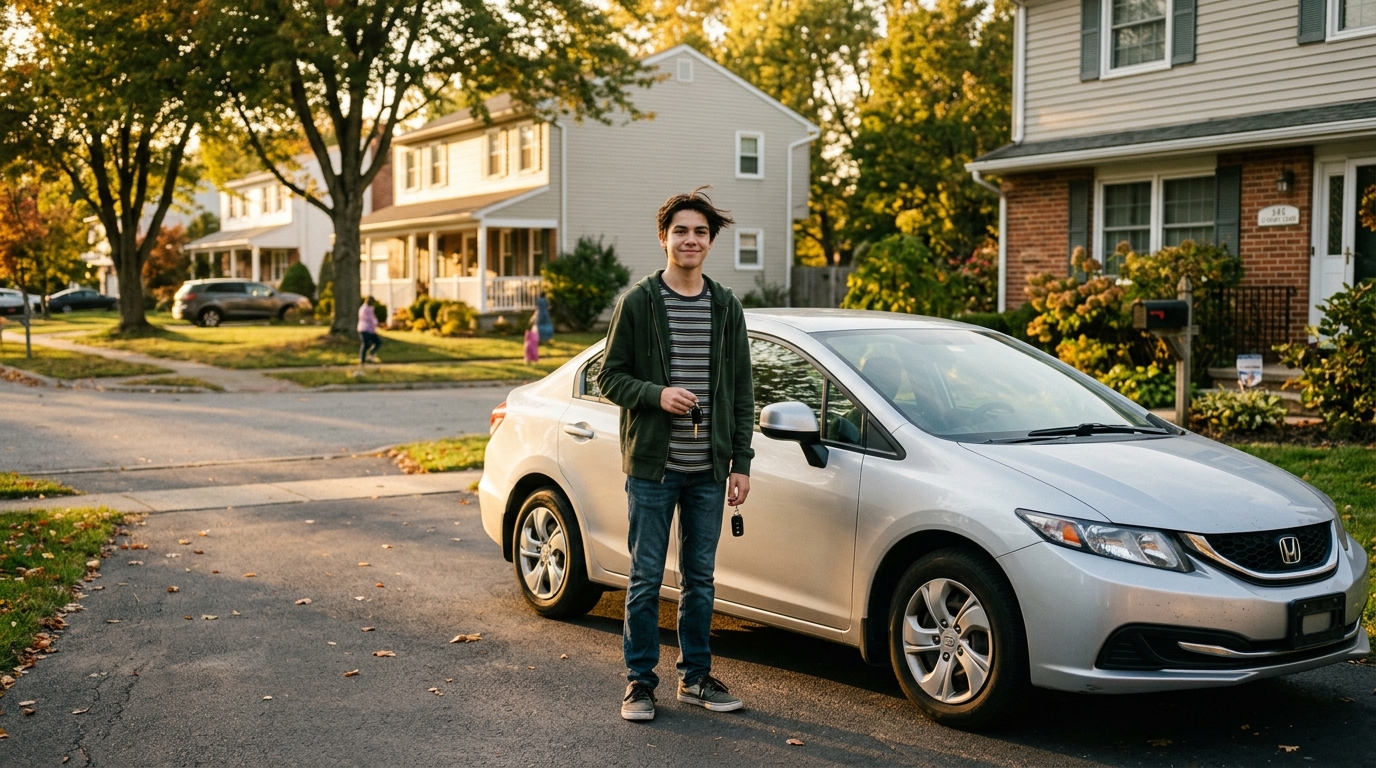
Cheap car insurance for teen drivers is real, but it almost never happens by default. Depending on state, vehicle, and coverage, teen premiums typically land between $2,000 and $6,000 a year, and what separates the bottom of that range from the top is usually how the policy gets built rather than which company writes it. Below are the levers that count: policy structure, the discounts worth pursuing, the ones that aren't, and the errors that quietly stack thousands onto the bill.
In this article
What Makes Teen Coverage So Expensive
Bringing a 16-year-old onto a household policy usually lifts the total premium 130% to 200%. Carriers set teen pricing off hard data: drivers in the 16 to 19 range appear in fatal crashes at about three times the rate of everyone 20 and older, and 16-year-old boys sit at the very top. The decline begins near 19, continues at 21, and levels out by 25 for anyone with a clean record.
What drives the cost isn't recklessness so much as inexperience. Newly licensed drivers turn in more minor collision claims than any other group — parking lot scrapes, low-speed rear-endings, single-car rollovers on turns. It's that frequency, not severity, that makes every insurer attach a heavy age surcharge to the first three years of driving, and it's why finding cheap car insurance for teen drivers depends on policy design more than shopping alone.
Put the Teen on a Parent's Policy, Not Their Own
Run a 17-year-old on their own policy and the average is $3,000 to $7,000 a year. Attach the same driver to a parent's policy and the added premium generally comes to $1,200 to $3,000 — half that or better. The savings trace back to the parent's multi-car credit, longer tenure, and the higher liability limits already baked into the policy.
What makes the arrangement pay off:
- List the teen as an operator rather than a primary driver whenever they aren't the top-mileage user of a particular car.
- Tie them to the least expensive vehicle on the policy — the older sedan, not the SUV or the newest car.
- Verify the multi-car discount is already on the parent policy before the teen goes on, since some carriers won't apply it after the fact.
- Check that the teen isn't also named on a grandparent's or another household's policy, because duplicate listings can raise the rate on both.
- Pull a fresh quote at 18 and 19, since the age curve falls faster than most families expect.
The Discounts Worth Chasing for a Teen
Plenty of advertised discounts aren't worth the paperwork. These ones reliably move a teen's number:
- Good student discount: 10% to 25% off for a 3.0 GPA or B average. Most carriers want a transcript or report card, and it has to be renewed each year.
- Driver's education: 5% to 15% off after finishing a state-approved course above and beyond what licensing requires. A few insurers cap it at the first three years.
- Distant student: 10% to 30% off when the teen is at college more than 100 miles away and left the car at home. Progressive, State Farm, and Allstate each have a version.
- Telematics or usage-based coverage: Progressive Snapshot, State Farm Drive Safe & Save, and Allstate Drivewise can strip 15% to 40% off a teen's premium when hard braking and late-night trips stay rare. For a low-mileage teen this is the biggest lever available.
- Defensive driving course: Worth 5% to 10% in most states once the teen completes an approved online class. It helps even with nothing on the record.
Ready to compare car insurance rates?
See quotes from top insurers side by side. Free, about two minutes, no obligation.
Get My Quotes →Vehicle Choice Beats Carrier Choice
Which car the teen is assigned to can swing the annual premium $1,000 or more with nothing else on the policy changing. Rating follows the vehicle's collision history, theft frequency, and repair costs, not a parent's sense of what looks safe.
The cheapest pick is almost always a used mid-size sedan with side airbags and unremarkable horsepower. A Honda Civic, Toyota Corolla, or Mazda3 that's five to ten years old insures a teen far more cheaply than a pickup, sports coupe, or luxury SUV of similar value.
Approximate yearly premium additions for a 17-year-old on a parent's policy:
| Vehicle | Approximate annual increase |
|---|---|
| Sedan, 5-10 year old (Civic, Corolla, Camry) | $1,200 – $2,200 |
| Compact SUV or crossover | $1,500 – $2,600 |
| Full-size pickup truck | $1,800 – $3,200 |
| Muscle car or sports coupe | $3,500 – $6,500 |
| New luxury sedan or SUV | $3,000 – $5,500 |
On the vehicle side, handing a teenager a brand-new car of any kind is the priciest choice a family can make. Modifications matter too — even cosmetic ones such as a lowered suspension or aftermarket exhaust draw surcharges, or a non-renewal, at certain carriers.
Choose Your Coverage Limits on Purpose
Trimming liability limits to save money is almost always the wrong call in a house with a teen driver. Relative to time behind the wheel, teens cause the largest at-fault claims, and a state minimum such as 25/50/25 won't come anywhere near a serious injury settlement. Any family with equity in a home or money in a retirement account should hold at least 100/300/100 in bodily injury liability, teen surcharge or not.
The genuine savings sit in collision and comprehensive on older cars. When the teen's vehicle is worth $6,000 or less, dropping collision often frees up $400 to $900 a year and leaves the family exposed only to a total-loss amount they could cover themselves. Bumping deductibles from $500 to $1,000 usually shaves another 10% to 15% off the collision piece, and adding telematics on top compounds the savings without switching companies.
Mistakes That Wipe Out the Savings
Over a teen's first three years on the road, these missteps routinely cost families thousands:
- Leaving the teen off the policy to hold costs down. Get caught driving and the claim may be denied, the policy canceled, and the household's clean-driver standing gone for the next quote.
- Delaying the license until 18. Most carriers charge more for first-time drivers who start above the state's minimum permit age, so that cheap unlicensed year often costs more once driving begins.
- Forgetting to re-file the good student discount. A new transcript is required annually at most carriers, and about a third of qualifying families let it lapse unnoticed.
- Setting up a standalone teen policy before ever pricing a bundled one.
- Passing on telematics over privacy worries, when the discount usually outweighs the data trade-off for a supervised new driver.
- Skipping a re-shop once six months of driving history exist, since some carriers price teens much more aggressively than others as a clean record forms.
How Often to Run Fresh Quotes
Teen pricing shifts faster than adult pricing does. The company that quoted lowest at 16 frequently isn't lowest at 18. That makes cheap coverage a moving target. Three re-quote moments are non-negotiable: the teen's 18th birthday, their 21st, and any time a driver or vehicle joins or leaves the household.
An at-fault crash, a moving violation, or the step from a provisional license to a full one each triggers another round. So does a move: teen premiums can swing 10% to 25% between zip codes inside one state. React only when the renewal notice arrives and you'll typically eat that difference for a full six-month term before the next quote shows up.
Frequently Asked Questions
What does adding a teen to a car insurance policy actually cost?
Putting a 16- or 17-year-old on a parent policy usually raises the total $1,200 to $3,000 per year, with state, vehicle assignment, and driving record all moving the figure. The same teen on a standalone policy runs $3,000 to $7,000 annually, which is why bundling remains the standard advice. What matters most is which car they're assigned to and whether good-student or telematics discounts apply.
Which company is cheapest for a teen driver?
No carrier wins everywhere — the low bidder for an Ohio teen won't be the low bidder in Florida. Geico, Erie, State Farm, and USAA (for qualifying military families) turn up near the top of teen rankings most often, though Progressive's Snapshot telematics can undercut them for careful low-mileage drivers. Quoting four carriers or more within the same week is the only dependable way to find the real floor.
Parent's policy or a separate one — which costs less?
The parent policy nearly always wins, often by 40% to 60%, because the household holds onto its multi-car discount, tenure credit, and the higher liability limits already in force. A standalone teen policy starts making sense only after the teen owns the car outright and has a permanent separate address, typically post-college.
At what ages do young drivers see rates fall?
Meaningful drops arrive at 19, again at 21, and again at 25 for clean-record drivers. The largest one lands at 25, when the young-driver surcharge comes off completely. An at-fault accident or serious violation resets that timeline, since insurers usually look back three to five years before the discount curve picks up again.
Ready to compare car insurance rates?
See quotes from top insurers side by side. Free, about two minutes, no obligation.
Get My Quotes →