
Cheap Car Insurance for Seniors: Discounts That Cut Rates
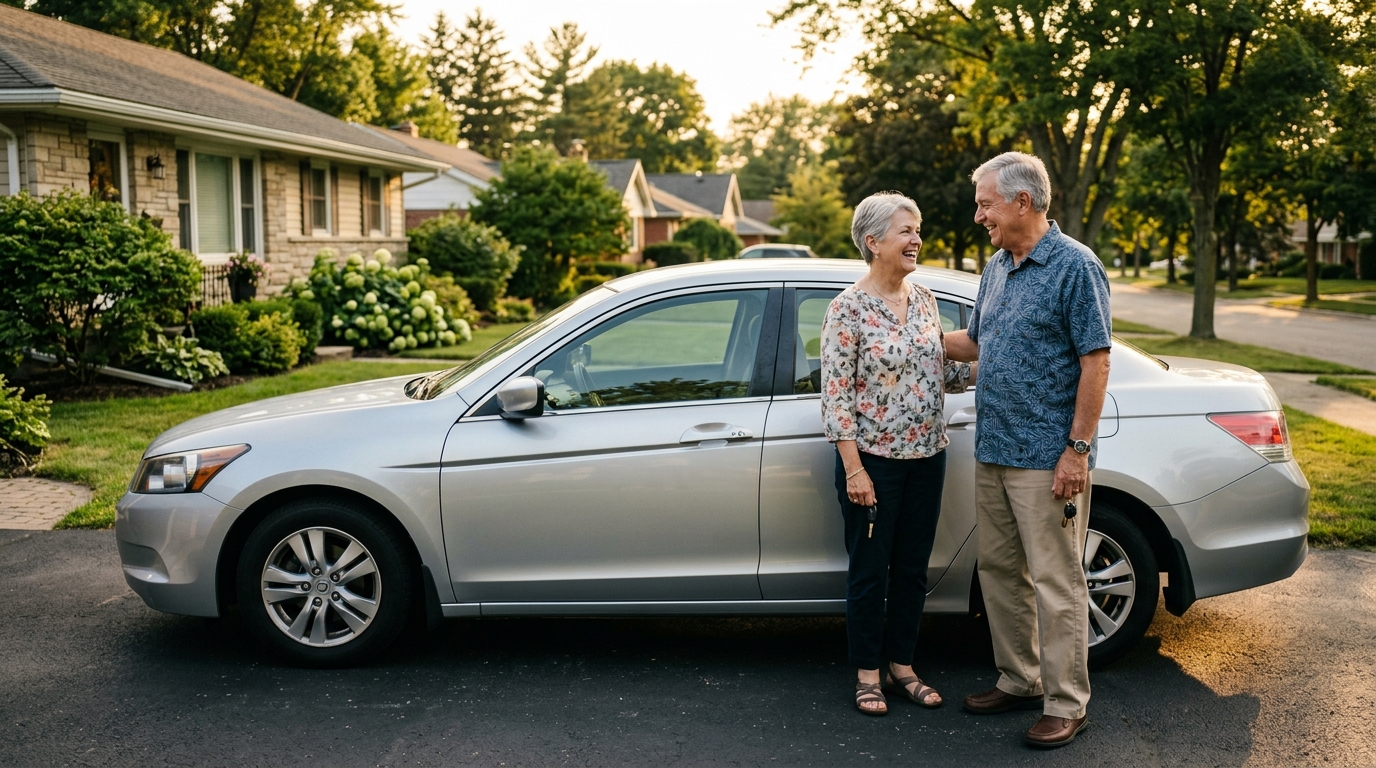
Cheap car insurance for seniors is out there, though landing it takes more effort than clicking the first ad that dangles a "retiree discount." Drivers in their 60s usually enjoy some of the lowest rates on the road, before the numbers begin drifting up around 70 and climb sharply past 75. What follows: the discounts that genuinely matter, the carriers that treat older drivers fairly, the coverage changes that cut premiums without leaving a retiree exposed, and the signals that a policy has quietly gotten overpriced.
In this article
How Rates Shift After 65 and When They Turn Up
To an actuary, driving experience looks like a bell curve. Between roughly 55 to 70, most people pay the cheapest premiums of their adult lives — clean records have piled up, mileage often falls off after retirement, and the data shows fewer serious claims per mile. Then the curve turns somewhere near 70. The typical 75-year-old pays 5-10% above what they paid at 65. By 80 that spread stretches to 20-30% at many companies.
What's behind it isn't age so much as claim severity. Older drivers aren't crashing more often than 25-year-olds, but when a crash happens the injuries and the medical bills tend to run higher. Underwriters fold reaction time, night vision, and medication interactions into their risk models. That's how two 72-year-olds with matching records end up with wildly different prices depending on each carrier's weighting, and why comparison shopping every 12-18 months pays off more after 70 than at any earlier stage of adult life.
Discounts Older Drivers Usually Qualify For
Carriers seldom spell out which credits a given policyholder can claim; the burden of asking falls on you. These commonly stack for anyone over 55:
- Mature driver or defensive driving course — takes 5-15% off liability and collision, holding for 3 years in most states
- Low-mileage credit — typically triggers below 7,500 annual miles and is worth as much as 10%
- Multi-policy bundle — pairing auto with home, renters, or an umbrella returns 10-25%
- Paying the year up front — 5-10% cheaper than being billed monthly
- Paperless billing plus autopay — modest at 2-5%, but it applies automatically
- Anti-theft gear, daytime running lights, a factory alarm — each is small, and they stack
- Group affiliation — AARP, alumni groups, credit unions (The Hartford's AARP program has the most name recognition, though it isn't always the lowest price)
By a wide margin, the defensive driving course delivers the best return. Approved classes from AAA, AARP, and the National Safety Council cost $15-$30 and recoup that within one premium cycle. Plenty of states go further and legally require carriers to grant the discount once you file the certificate.
Companies That Treat Older Drivers Fairly on Price
There's no company that's cheapest everywhere; it turns on your state, your record, and your car. Even so, a few names land in the bottom quartile again and again for drivers aged 65-80.
The Hartford administers AARP's endorsed auto program and prices well for clean-record seniors, especially across the Northeast and Midwest. Erie Insurance posts some of the lowest senior rates inside its 12-state footprint, which covers Pennsylvania, Ohio, Virginia, and neighboring states. USAA is still the cheapest choice for eligible military households at nearly every age, though only veterans and their family members qualify. Auto-Owners and State Farm hold rates steady deeper into the 70s than Progressive or Allstate, which start raising age-based prices sooner.
Geico fights hard on price yet runs hot and cold for seniors — some ZIP codes get excellent numbers and others don't, which makes a five-minute quote worth doing no matter what you assume. Amica and Nationwide score well on service and claims handling but land mid-pack on price for this age band. Pulling three to five quotes every renewal, with at least one regional carrier in the mix, is the single best habit for keeping a premium honest.
Ready to compare car insurance rates?
See quotes from top insurers side by side. Free, about two minutes, no obligation.
Get My Quotes →Coverage Changes That Save Money Without Real Risk
Slashing coverage blindly is a bad idea, but for a retiree whose car has depreciated and whose commute no longer exists, a few adjustments genuinely add up:
- Rethink collision and comprehensive on anything worth under $4,000. When a year of collision runs $600 against a totaled-out value of $3,500, the arithmetic falls apart. Let collision go, and hang onto comprehensive if the car sits outside.
- Move deductibles from $500 to $1,000. Expect around 10-15% off collision and 5-10% off comprehensive.
- Update the mileage listed on the policy. Plenty of seniors are still on file for 12,000-15,000 miles while actually driving nearer 4,000. Correcting that one line can be worth $100-$300 a year.
- Strip out towing and roadside when AAA or a credit card already provides it.
- Take another look at rental reimbursement. A $30-a-day rider runs $30-$60 a year and only pays following an at-fault claim.
One thing to leave alone: liability limits. Nearly everywhere, the state minimum is dangerously thin. If you have retirement savings, a paid-off house, or steady Social Security income on the line, carry 100/300/100 at a minimum and ideally layer a $1 million umbrella on top for roughly $150-$300 a year.
Red Flags That You're Overpaying
In most states, a clean-record senior handing over more than roughly $1,400 a year for full coverage on one car is almost certainly paying too much. Other signals that a policy needs fresh quotes:
- Three renewal cycles in a row with no movement in either direction, which usually means a legacy rate nobody has revisited.
- Discount details are only available by phone instead of being listed in the app or online portal.
- Commuting mileage is still on the policy years after retirement.
- Grandchildren or a grown child who moved out remain rated on the policy.
- Yearly increases have topped 8% two years running with no claims and no tickets.
- A car worth under $3,000 is still carrying a $500 collision deductible.
Hit any two of those and it's time to quote at least three competitors. What's known as loyalty pricing, or price optimization, is outlawed in a few states but permitted in most, so long-tenured customers can quietly be charged more than newcomers with the same profile.
What Pay-Per-Mile Programs Do for Retirees
Mileage-based and telematics plans — Allstate's Milewise, Nationwide's SmartMiles, Root, and Lemonade Car (formerly Metromile) among them — often deliver the single biggest savings to anyone logging fewer than 6,000 miles a year. A retiree paying $1,200 annually on a conventional policy can land at $500-$700 on a per-mile plan when yearly mileage comes in under 5,000.
What you give up is privacy: a plug-in device or phone app monitors behavior such as hard braking, driving after dark, and handling the phone at the wheel. Seniors with predictable daytime routines usually score well and collect the advertised discount. Anyone running frequent evening errands or long highway stretches may get less than the marketing suggests.
Two things to know before enrolling. First, the base rate looks cheap, but the per-mile charge adds up fast if your mileage guess was optimistic. Second, most programs include a trial window — sometimes 30 days, sometimes an entire policy term — during which you can see the real projected annual cost before committing. If that projection isn't clearly under your current policy, walking away is simple and free.
Frequently Asked Questions
When do senior car insurance rates begin rising?
Premiums usually bottom out in the mid-60s and start ticking up near age 70. The rise stays mild between 70 and 75, then picks up speed past 75, with the sharpest jumps often at 80 and 85. Every insurer's curve differs, which is why shopping every 12-18 months matters more after 70 than at any earlier point.
Does an AARP membership automatically mean lower rates?
No. What membership buys is access to The Hartford's AARP-endorsed auto program, which prices well for many clean-record seniors, particularly across the Northeast and Midwest. It isn't the cheapest option everywhere, so members should still collect three to five quotes elsewhere before signing.
Is it smart for a retiree to drop full coverage on an older car?
When the car is worth under about $4,000 and a year of collision plus comprehensive costs more than 10% of that value, dropping collision usually pencils out. Hold onto comprehensive if the vehicle parks outside or sits in a high-theft area, since it handles weather, fire, and theft. Whatever the car is worth, don't take liability below 100/300/100.
Is USAA genuinely the cheapest car insurance for older drivers?
For households that qualify, yes. USAA is typically the low-cost option at almost every age band, drivers 65 and older included. Eligibility runs only to veterans, active-duty military, and their family members, so plenty of people can't use it. Anyone who can should pull that quote first.
Will a defensive driving course really cut a senior's premium?
In nearly every state, yes. Most carriers apply a 5-15% discount to liability and collision for three years once a driver 55 or older finishes an approved class. Courses through AAA, AARP, or the National Safety Council usually run $15-$30 and earn that back within a single premium cycle.
Ready to compare car insurance rates?
See quotes from top insurers side by side. Free, about two minutes, no obligation.
Get My Quotes →