
Car Insurance Cost by Gender: Who Pays More and Where
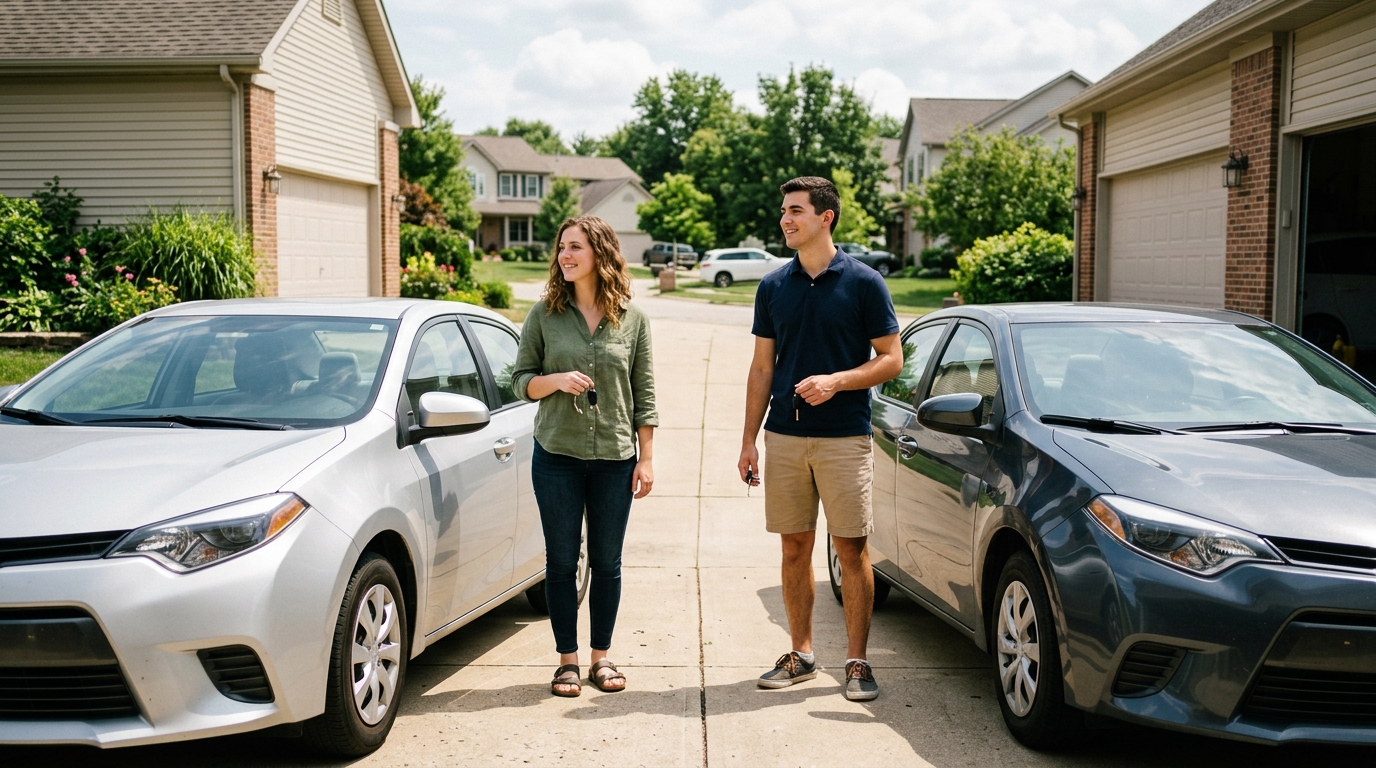
Nowhere is the car insurance cost by gender split more obvious than on teenage policies, where young men frequently pay 15% to 25% more than young women for the very same coverage. The spread narrows fast in the mid-twenties, shrinks to a few dollars a month by middle age, and disappears entirely in the seven states that bar insurers from using gender. What follows is the real dollar difference, the actuarial logic behind it, and the places where the practice isn't allowed.
In this article
The Role Gender Plays in Setting a Rate
Pricing in auto insurance rests on statistical risk, and decades of loss records show young men filing more claims — and pricier ones — than young women the same age. Among males under 20 the fatal crash rate runs about two to three times the female figure, and average claim severity tilts the same way. Those patterns go into the rating tables, producing a small but genuine gender-based adjustment to the premium.
Still, gender is far from the heaviest input in a quote. Driving history, ZIP code, credit-based insurance score, chosen limits, and the vehicle all pull harder on the total. Most companies treat it as a secondary variable stacked on top of age, marital status, and years licensed. That's how two clean-record 17-year-olds on the same block can be quoted differently, while a 45-year-old man and a 45-year-old woman with matching profiles usually land within 5% of one another.
Every rate filing goes through a state regulator, so a carrier has to back the gender factor with loss data rather than apply it on a whim. A few states reviewed that math and concluded the difference wasn't meaningful enough to permit. Others treat it as legitimate actuarial work. The resulting patchwork explains why one driver profile can be quoted two different prices depending on which side of a state line the car is garaged.
The Age-by-Age Breakdown
Lining up typical full-coverage annual premiums side by side makes the gap easy to spot. Actual quotes shift with carrier, ZIP code, vehicle, and limits, but the table below captures the industry-typical spread for a clean-record driver carrying standard 100/300/100 liability plus collision and comprehensive.
| Age range | Men, full coverage per year | Women, full coverage per year | Usual gap |
|---|---|---|---|
| 16-19 | $5,800 - $7,200 | $4,900 - $6,000 | Men 15-25% higher |
| 20-24 | $3,200 - $4,000 | $2,900 - $3,500 | Men 8-15% higher |
| 25-29 | $2,000 - $2,500 | $1,950 - $2,450 | Inside 2-5% |
| 30-59 | $1,700 - $2,100 | $1,700 - $2,100 | Essentially level |
| 60 and older | $1,800 - $2,200 | $1,850 - $2,250 | Women edge ahead |
Minimum-coverage pricing traces the same shape at around one-third of those dollar figures. What holds steady across coverage tiers is the percentage spread, not the dollar spread.
What Puts Teen Boys at the Top of the Price List
In every carrier's book teen boys are the outlier, and the price tag traces to specific claim patterns rather than to a stereotype:
- For males in the 16-19 band, fatal crash rates run roughly two to three times those of same-age females
- Claim severity averages higher for young men, so the payout is bigger when a crash does happen
- Moving violations and speeding citations appear more often on male teen records, and every one adds a surcharge above the base rate
- Among new drivers, late-night and weekend trips — both riskier windows — skew male
- Teen boys more often get added to a parent's policy on a performance car, which piles a vehicle surcharge onto the age surcharge
A 16-year-old boy joining a parent's policy usually pushes the household's full-coverage premium up by $2,500 to $4,000 a year. For a 16-year-old girl on the same policy, the addition typically runs $2,000 to $3,300. Both numbers fall with every claim-free year, and finishing a state-approved driver training course generally takes another 5% to 10% off.
Ready to compare car insurance rates?
See quotes from top insurers side by side. Free, about two minutes, no obligation.
Get My Quotes →The Point Where the Gap Disappears
On a standard policy the spread shrinks to about 5% or less by 25, and by 30 it's usually statistical noise. Two forces converge: crash rates for young men fall off sharply after 25 as habits settle, and accumulated clean-driving history starts outweighing any demographic input. At most national carriers, a 28-year-old with three claim-free years pays essentially the same base rate either way.
For married drivers the convergence comes even sooner. Marital status alone pulls a quote down 5% to 15%, and once there's a spouse and often a shared policy, gender barely factors into the arithmetic. Bundling auto with homeowners has the same effect: the multi-policy credit, generally 8% to 20%, swamps whatever gender adjustment was applied.
Way out at the far end of the curve, the pattern occasionally reverses. At some carriers, women past 65 pay a bit more than men their age, usually because female policyholders in that band log more annual miles and turn in more low-speed collision claims. The gap is minor — normally under $100 a year on full coverage — and a fresh round of quotes at each renewal wipes it out.
Where Gender-Based Pricing Is Prohibited
Seven states presently bar carriers from pricing standard auto policies on gender. The bans arrived at different moments and for different reasons, but the effect is identical everywhere: matching male and female profiles draw the same base rate in those markets.
- California - a 2019 insurance commissioner ruling ended gender rating
- Hawaii - a long-standing statute keeps gender off the list of rating factors
- Massachusetts - state auto rules have required gender-neutral rating for decades
- Michigan - the 2019 no-fault reform package removed gender from rating
- Montana - a civil rights interpretation at the state level blocks the practice
- North Carolina - its regulated market runs on a gender-neutral rate bureau structure
- Pennsylvania - regulators bar gender from private passenger auto rating
People in those states still hit the same age-based rate cliffs and earn the same clean-record credits as everybody else. Whatever a gender-neutral system saves or adds tends to be modest, since the real dollar distance between men's and women's rates is already slim once the teen years are behind them.
Five Things That Outweigh Gender on Your Bill
Once a driver passes 25, at least five other inputs will move a quote further than car insurance cost by gender ever does. Driving record leads the list: one at-fault accident piles on 40% or more for three to five years, and a DUI can double the bill. ZIP code follows close behind — trading a quiet suburban ZIP with little theft and few claims for a dense urban one can send rates up 20% to 40% without the driver changing a thing.
Third comes the credit-based insurance score, wherever it's permitted. Climbing from a poor tier to an excellent one halves the premium at some companies, a swing that makes any gender adjustment look trivial. Limits and deductibles set the quote's ceiling and floor, while the car's make, model, and safety scores anchor the physical damage piece. A used sedan with strong crash-test results can insure for 30% less than a sports coupe of similar value on the same policy.
Running quotes at three to five companies beats fine-tuning any single rating factor. Two carriers evaluating the same person routinely come back $600 to $1,200 apart per year on full coverage, purely because their loss history and appetite for that profile differ. Anyone convinced gender has locked them into a price is almost certainly losing more by skipping the comparison than the actuarial tables ever cost them.
Frequently Asked Questions
Is it true that men pay more for car insurance than women?
They do, though how much depends heavily on age. Teenage boys generally pay 15% to 25% above teenage girls for the same coverage. By 30 most carriers show under a 5% difference, and by middle age gender rarely shifts the quote by more than a few dollars a month.
When does the rate gap between genders close?
It narrows steeply once a driver turns 25 and is normally negligible by 30. Marriage, a clean record, and multi-policy credits shrink whatever remains even faster. Some carriers flip the pattern past 60 and charge women slightly more.
Which states outlaw gender-based car insurance pricing?
Seven do at the moment: California, Hawaii, Massachusetts, Michigan, Montana, North Carolina, and Pennsylvania. The rules trace back to a mix of commissioner orders, statutes, and civil rights readings. Drivers in those markets receive the same base rate no matter their gender.
What do carriers do for non-binary or transgender drivers?
It varies by company and by state. Some go with the gender printed on the license, others accept self-reporting, and a handful use a blended or non-binary rate class. Inside the seven states that ban gender rating, the question doesn't affect price at all.
Why can women over 65 pay more than men their age?
Statistics for drivers past 65 show women averaging somewhat more miles in retirement and filing more low-speed collision claims. The dollar gap is small, typically under $100 a year on a full-coverage policy, and comparison shopping across three or more carriers at renewal erases it.
Ready to compare car insurance rates?
See quotes from top insurers side by side. Free, about two minutes, no obligation.
Get My Quotes →