
Car Insurance for New Drivers: What It Really Costs
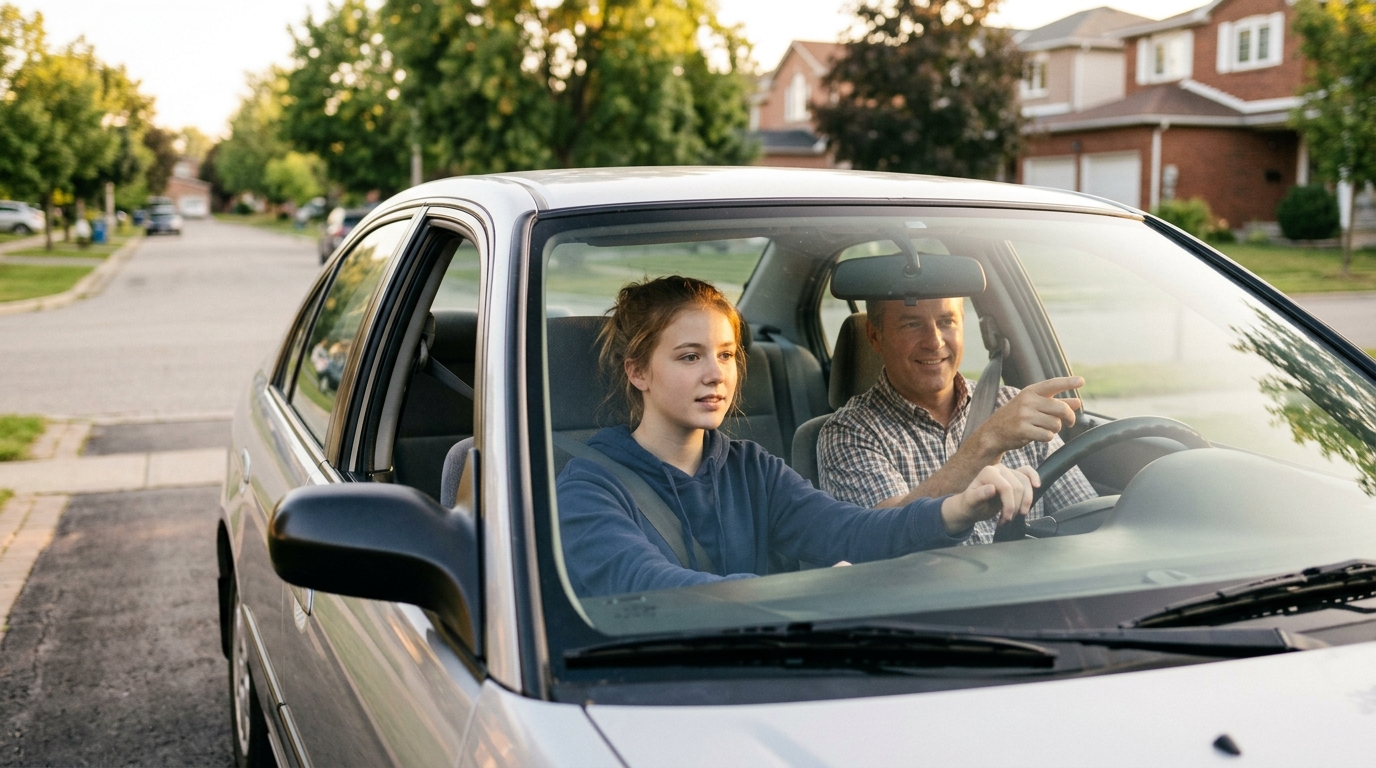
Car insurance for new drivers is nearly always the priciest chapter in a driver's rate history, often two to four times what an experienced driver pays for identical coverage. It hardly matters whether the newcomer is a 16-year-old with a fresh permit or a 34-year-old who just passed the road test; carriers treat inexperience as a risk class of its own. What follows is what first-timers actually pay, how the parent-policy route can cut the yearly bill roughly in half, and which discounts genuinely help over the first three years.
In this article
How Underwriters Define a New Driver
To an underwriter, a new driver is anybody with under three years of continuous licensed experience, whatever their age. The 30-year-old who rode the subway until last month gets rated far closer to a 17-year-old than to a 30-year-old who has been driving since high school. Age still counts, and teens absorb the largest surcharges, but the years-licensed box on the application is what most carriers weigh first when pricing car insurance for new drivers.
A few forces push the premium up during those early years:
- Crash frequency — statistically, drivers in their first 12 months file claims more often than any other group on the road.
- Claim severity — wrecks involving new drivers happen at higher speeds and generate bigger property-damage bills.
- No loss history — there is no clean record yet for a carrier to reward.
- Thin credit and coverage gaps — many new drivers also have short credit files and no prior-insurance record, and in most states both push the rate higher.
What a First-Time Driver Typically Pays
The real dollars swing hard by state, vehicle, and limits, but the shape of the pricing holds up nationwide. A 16-year-old opening a standalone policy on a used sedan generally sees $3,500 to $6,500 a year for standard liability plus collision and comprehensive. A 25-year-old new driver in the same town usually lands nearer $1,800 to $3,200 for that coverage. A newly licensed 40-year-old often pays $1,500 to $2,500 — still 30 to 50 percent more than a same-age driver with experience would pay.
| Driver profile | Standalone policy (per year) | Cost added to a parent policy |
|---|---|---|
| 16-17 years old | $4,000 - $6,500 | $1,500 - $3,000 |
| 18-20 years old | $3,000 - $5,000 | $1,200 - $2,500 |
| 21-25 years old (new license) | $2,000 - $3,500 | $900 - $1,800 |
| 26+ years old (new license) | $1,500 - $2,800 | $700 - $1,500 |
Expensive states — Michigan, Louisiana, Florida, and New York — can lift these figures 40 to 70 percent. Rural ones such as Maine, Vermont, Ohio, and Idaho often come in 20 to 30 percent under the national midpoint.
Permits, Licenses, and When Rating Begins
Most personal auto policies stretch liability coverage to a household member holding a learner's permit automatically, with no paperwork and no change in price. The permitted driver counts as a supervised operator of a car already on the policy, and the existing named insured carries the risk. A few carriers ask for a formal permit endorsement, and even those are normally free.
Everything changes the day the provisional or full license is issued. Carriers require the new licensee to be listed as a rated driver on any policy covering a household vehicle, and the premium adjusts at the next renewal — sooner if the company rerates mid-term. Skipping that step with a newly licensed teen or spouse is a common error and can produce a denied claim later on the grounds of material misrepresentation. Calling the carrier during the same week the license arrives is the safe move.
Ready to compare car insurance rates?
See quotes from top insurers side by side. Free, about two minutes, no obligation.
Get My Quotes →Why Staying on a Parent Policy Cuts the Bill in Half
The strongest lever a new driver has is remaining on a parent's policy instead of opening one alone. The gap is striking. A 17-year-old in Ohio quoted $4,800 a year on their own policy will often add just $2,000 to $2,400 to a parent's existing policy for the same coverage — close to a 50 percent reduction.
Three mechanics create the saving:
- Multi-car discount — most carriers shave 10 to 25 percent off every vehicle once two or more share a policy.
- Assigned-driver rating — because each driver is rated against a particular car, the teen gets tied to the household's cheapest vehicle while the parents stay on theirs, spreading the surcharge over a less expensive car.
- Established policy tenure — the parent's clean record, homeownership, credit, and prior-insurance history all feed into the new driver's rate factor.
It works for a teen at home, a college student under 24 at the same permanent address, or an adult child who moved back in. Once the new driver leaves for good and titles a car of their own, they generally have to come off the policy — carriers want the named insured to hold an insurable interest in the vehicle and to share its garaging address.
One trade-off is worth stating plainly: an at-fault claim on the shared policy raises the parents' renewal too. Households with clean-driving parents usually accept that, because the yearly savings are so large.
The Discounts That Do the Heavy Lifting
Discount lists run long, but only a few matter for someone with less than three years behind the wheel. These carry the most weight:
- Good student discount — usually 5 to 25 percent off a young driver's share of the premium, for full-time students under 25 carrying a B average or 3.0 GPA. Transcripts or report cards go in annually.
- Driver's education discount — 5 to 10 percent for finishing a state-approved course. Some carriers count classroom hours only; others take online programs.
- Telematics or usage-based insurance — Progressive Snapshot, State Farm Drive Safe & Save, and Allstate Drivewise can trim 10 to 40 percent at renewal based on braking, phone handling, and miles driven. New drivers with clean habits land in the top discount tier more often than any other customer group.
- Distant student discount — 5 to 15 percent when the student studies more than 100 miles from home and has no regular access to the car.
- Defensive driving course — another 5 to 10 percent in most states for an approved 4- to 8-hour course, and it stacks with driver's ed.
Stacking any three of these commonly removes 25 to 35 percent from a young driver's portion of the premium.
Signs It Is Time for a Policy of Their Own
Even with the savings, a standalone policy is sometimes the right call. The clearest signals are a permanent move out of the household, buying a car titled only in the new driver's name, or relocating to a state where the parent's carrier does not write. An insurer can refuse to renew a policy that lists a driver at a garaging address different from the vehicle's.
An at-fault accident is the other thing to weigh. A single at-fault claim from a new driver can lift a family policy 30 to 60 percent at the next renewal, which can erase everything the shared policy saved. Moving the young driver onto their own policy — and letting the parents' rate settle back down — can come out cheaper by the second year. Rerunning a comparison at every renewal is the habit that keeps costs down through those first three years, after which most carriers treat the driver as fully experienced.
Frequently Asked Questions
What does car insurance cost for someone who just got licensed?
A newly licensed teen on a standalone policy typically pays $3,500 to $6,500 a year for full coverage, while an adult licensed for the first time in their late 20s or 30s usually pays $1,500 to $3,000. Adding the new driver to an existing parent policy instead cuts that by roughly 50 percent. The largest variables are the state, what the car is worth, and the limits chosen.
Can a new driver stay on a parent's policy?
Yes, provided the new driver keeps the parents' address as a permanent residence and the car is garaged there. Full-time college students under 24 still count as household members while away at school. Once the driver moves out and puts a vehicle in their own name, carriers usually insist on a separate policy.
Do you need insurance while holding only a learner's permit?
Someone with just a learner's permit is nearly always covered automatically under an existing household policy at no extra premium, since all of their driving is supervised. Most states require no separate policy. The rating change arrives the day the provisional or full license is issued, and the carrier should hear about it inside a week so that no coverage gap opens up.
What is the cheapest way to insure a first-time driver?
Almost always this: add them to a parent's or spouse's existing policy, then pile on a good student discount, a driver's education credit, and a telematics program. Assigning the new driver to an older, lower-value car on the policy also shrinks the surcharge. Comparing three carriers at each renewal through the first three years usually keeps the annual bill as low as it can go.
Ready to compare car insurance rates?
See quotes from top insurers side by side. Free, about two minutes, no obligation.
Get My Quotes →