
Gap Insurance Explained: When You Actually Need to Buy It
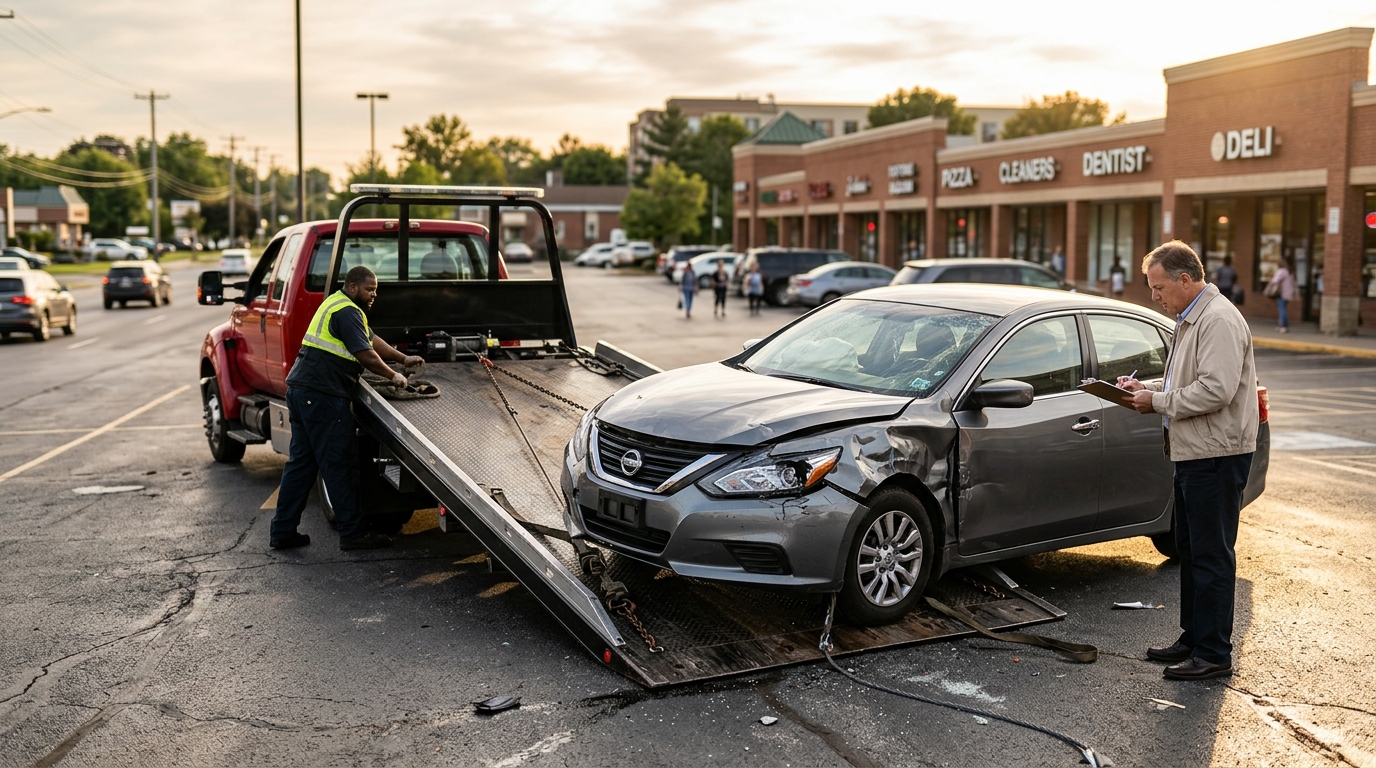
Gap insurance pays the distance between a car loan balance and what the vehicle is actually worth after a theft or total loss — a shortfall that routinely reaches $5,000 to $15,000 during the early years of a new-car note. This guide sorts out when the coverage genuinely earns its price, what it ought to cost, and why the policy pushed across the finance desk at the dealership is almost never the one to sign.
In this article
What Gap Insurance Is Designed to Pay
Gap coverage — sold at some carriers as loan/lease payoff coverage — pays whatever separates the loan balance from the vehicle's actual cash value (ACV) once the car is written off. Ordinary collision and comprehensive stop at the ACV, meaning the used-market price on the day of the loss rather than the amount still owed to the bank.
Depreciation is what opens the gap in the first place. A new vehicle usually sheds about 20% of its value within twelve months and 40 to 50% by the third year. Buyers who put little down, or who rolled negative equity from a trade-in into the new note, are almost guaranteed to be underwater for two or three years. Absent gap coverage, the insurer's payment goes straight to the lender and the borrower writes a personal check for the leftover balance — commonly $3,000 to $10,000.
Most gap contracts limit the payout to 25% above ACV or to a firm dollar ceiling somewhere around $50,000. Accidents, theft, fire, and flooding all count as covered total losses; missed loan payments, mechanical failures, and late fees added after the loss do not.
The Borrowers Who Really Need Gap Coverage
Not every borrower benefits from it. The strongest arguments for buying:
- A down payment under 20% on a new car. Borrowing 90 to 100% of MSRP all but ensures the balance outruns the vehicle's value for 18 months or longer.
- A term of 60 months or more. Long notes pay down principal slowly; at 72 or 84 months a borrower can stay underwater into the fourth year and past it.
- Leases. Gap protection is already written into most lease contracts, but not every one — check rather than assume.
- Trade-in negative equity folded into the new loan. Owing $4,000 against a trade appraised at $2,000 means the fresh loan opened $2,000 in the hole before depreciation touched it.
- Models that depreciate faster than the norm. Luxury sedans, electric vehicles, and heavily discounted brands frequently give up 25 to 35% of their value in the first year.
Anyone putting 30% or more down, choosing a short term of 36 or 48 months, or buying used after the steep depreciation has already happened generally has no use for gap insurance — the equity cushion handles the risk without help.
Pricing and Where to Buy the Coverage
What you pay depends heavily on where you buy, and the dealer's finance office is nearly always the priciest door.
| Where you buy | Typical price | Details |
|---|---|---|
| Rider on your auto policy | $20-$60 per year | Attaches to a live policy and can be cancelled anytime |
| Credit union or bank | $200-$400 one-time | A single flat charge when the loan is written |
| Dealer F&I office | $500-$1,000+ | Folded into the loan and financed at the loan's rate |
| Captive lender from the manufacturer | $400-$900 | Frequently bundled into a lease |
Coverage from the dealer is not worse in substance — it simply carries a markup of three to ten times and gets financed at the loan's APR, so the buyer pays interest on it for years. Put a $700 dealer gap policy on a 72-month loan at 8% APR and the true cost lands nearer $880 by payoff.
Auto carriers price it lowest because the rider bolts onto a policy that already exists — no fresh underwriting and no new commission. A borrower planning to attack the loan balance is best served by the one-time credit union policy, while the month-to-month insurer rider suits anyone who wants the option to cancel whenever they like.
Ready to compare car insurance rates?
See quotes from top insurers side by side. Free, about two minutes, no obligation.
Get My Quotes →Red Flags in the Dealer's Gap Pitch
A dealership's F&I (finance and insurance) office earns most of its margin on extras: extended warranties, tire-and-wheel plans, gap coverage. That is why the charge tends to appear already filled in on the closing worksheet — the finance manager is counting on the buyer accepting a slightly larger monthly payment instead of asking what the item costs on its own.
Treat the pitch as a bad deal the moment any of these show up:
- The cost is never separated out from the monthly loan payment.
- Someone insists the lender requires gap coverage. Nearly no US lender does; what they require is full coverage. Get it in writing.
- The contract stops paying at $50,000 while the vehicle carries $65,000 or more in financing.
- The collision deductible is excluded, which leaves $500 to $1,500 unpaid even under full gap.
- The refund language returns unearned premium only on a sale, not on an early payoff or a refinance.
Here is the two-minute test: open your auto insurance app right there at the F&I desk. When your existing carrier will sell gap for $5 a month and the dealer wants $895 spread across 72 payments, the choice makes itself.
Cancelling a Gap Policy Bought at the Dealer
If a dealer gap policy is already signed and something cheaper looks better, cancelling for a pro-rata refund is normally possible. Most contracts follow this sequence:
- Dig out the gap contract. It usually lives as its own document in the delivery-day folder rather than inside the retail installment sales contract.
- Find the cancellation clause and the administrator. That company's name and phone number sit near the top or the bottom of the contract, and it is seldom the dealership.
- Call the administrator yourself. The dealer merely sold the thing; a third party services it, so phoning the sales manager burns time for nothing.
- Put the pro-rata refund request in writing. Give the effective cancellation date and the current odometer reading. A written request is what starts the refund clock in some states.
- Ask where the money lands. While the loan is open, the refund knocks down principal; once the loan is closed, the check goes to the borrower.
- Bind the replacement coverage that same day. Do not sit uncovered while a refund works its way through.
Expect the refund inside 30 to 60 days, reduced by a $25 to $75 cancellation fee in certain states.
Gap Insurance Compared With New Car Replacement
Gap insurance and new car replacement (NCR) coverage get mixed up constantly because the names run together. NCR — sold by Liberty Mutual, Allstate, Erie, and a few others — buys a brand-new equivalent car if the current one is totaled inside the first one to three years, with depreciation ignored entirely. While that window is open, NCR makes gap coverage largely pointless.
The trade-offs are genuine. NCR generally tacks $50 to $150 onto the yearly premium, noticeably more than a standalone gap rider. It normally demands that the car was new when the policy began, and it sunsets on a schedule — often at year two, three, or five, depending on the company. Gap has no interest in how old the car was at policy inception; it looks only at the loan balance against the ACV on the day of the loss.
For someone who financed a new car heavily, NCR is usually the stronger play across the first two years, since it wipes out depreciation risk completely. Once that window shuts and the balance falls under the car's value, plain collision does the job. Gap fills a narrower slot: the borrower is still underwater, but the car is no longer new enough — or the policy old enough — for NCR to apply.
Frequently Asked Questions
Is gap insurance actually worth the money?
For buyers who put under 20% down on a new car and financed for 60 months or longer, generally yes — the coverage tends to pay for itself if the car is totaled during the first two or three years. Anyone with a large down payment or a short term usually does not need it. Quick check: take the loan balance and subtract the car's current Kelley Blue Book value. What remains is exactly the exposure gap insurance addresses.
Can gap insurance be added after the car is purchased?
It can. Most auto carriers will attach a gap rider mid-term as long as the vehicle is under two or three years old and the policy has been in force less than a year. Credit unions sell standalone gap policies to members as well. There is no requirement to take the dealer's F&I offer at signing just to be protected.
Does gap coverage handle negative equity from a trade-in?
Usually yes, though with a ceiling — typically 25% of the vehicle's actual cash value. Some contracts exclude rolled-in negative equity altogether, and others limit it to a flat $1,000 or $2,500. Read the rolled-in equity clause closely before signing anything.
Will gap insurance help if the car is repossessed?
No. Gap pays only when the vehicle becomes a total loss from a covered peril — a crash, theft, fire, or flood. Voluntary surrender, repossession, and mechanical failure all sit outside the contract. Falling behind on payments is not the problem gap insurance was built to solve.
Ready to compare car insurance rates?
See quotes from top insurers side by side. Free, about two minutes, no obligation.
Get My Quotes →