
Non Owner Car Insurance: Who Needs It and What It Costs
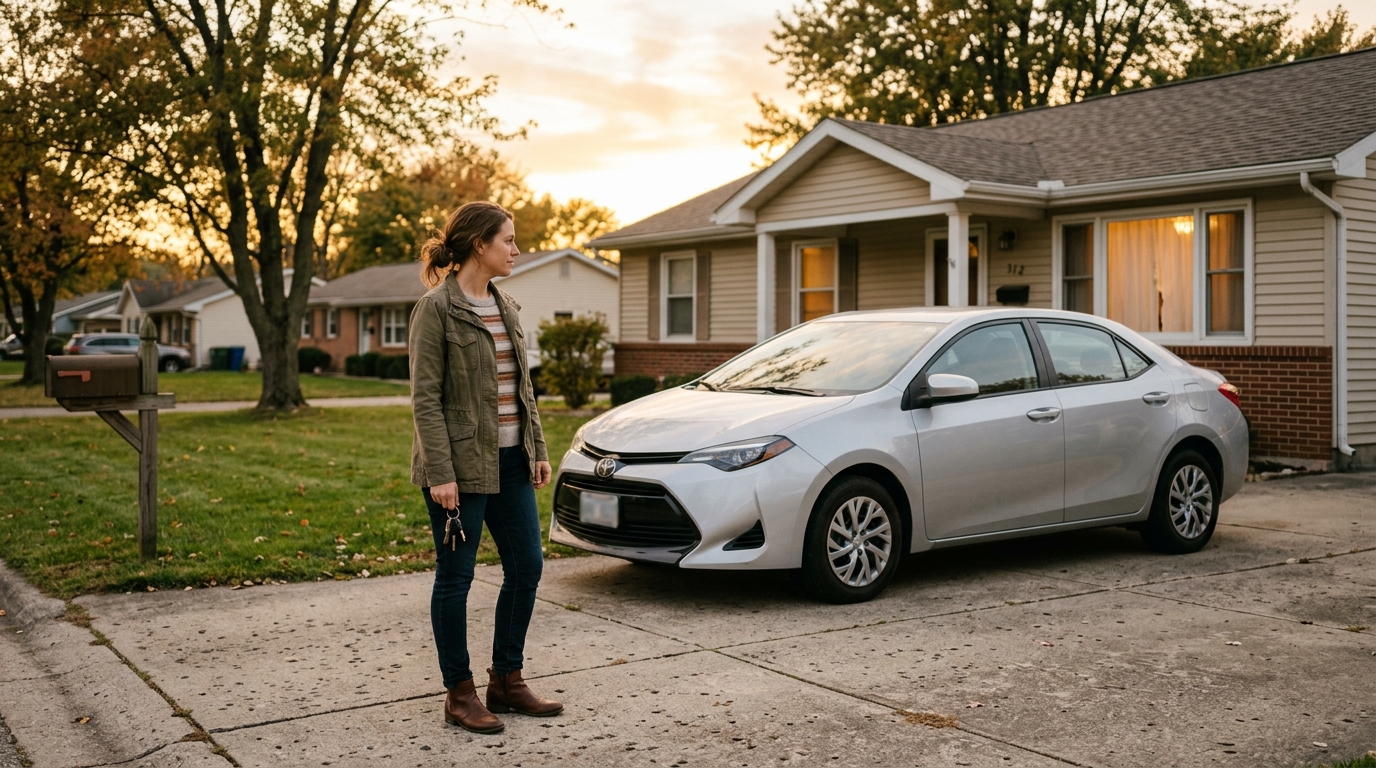
Non owner car insurance amounts to liability-only protection for people who drive without owning a vehicle — renters, borrowers, and anyone caught between cars. Expect to pay $200 to $500 a year, and understand that the payoff is frequently less about the protection itself than about preserving an unbroken insurance history so your rates don't spike the next time you buy a car. Below you will find who genuinely needs one, what it runs by state and driving record, and the cases where skipping it is fine.
In this article
What the Policy Actually Pays For
Think of it as a bare-bones auto policy with a single job: liability. When the driver causes a wreck that injures somebody or damages their property, the policy covers those bills up to whatever limits were bought. The floor is whatever the state requires — 25/50/25 in many places — yet most buyers carry 100/300/100 or more, because one bad injury claim can chew through minimum limits in a single afternoon.
Uninsured and underinsured motorist protection usually comes along too, plus medical payments or personal injury protection in states that use them. The one thing you will never find inside is physical damage on the car you are driving. Collision is absent, comprehensive is absent, and the vehicle itself carries no protection at all. Total a borrowed car in a wreck you caused and the repair or replacement falls to the owner's policy or to the rental counter's damage waiver.
These policies are also engineered to ride as excess coverage, meaning they respond only once whatever primary policy covers the car has been used up. That layering explains much of why the price sits so far below a standard auto policy.
The Drivers Who Get Real Value From One
This is a niche product, yet in a short list of circumstances nothing else fits as neatly. It usually earns its keep for:
- People between vehicles who have sold one and intend to replace it inside a year
- Regular renters taking week-long rentals a few times a year who would rather not hand the counter $15 to $30 a day for its liability upgrade
- Steady Turo, Zipcar, or Getaround customers, given how thin carshare liability tends to be above the state floor
- Carless SR-22 or FR-44 filers working through a DUI, a reckless driving charge, or a license suspension
- Grown relatives who borrow a family car often but never appear on that policy
- Urban residents who almost never drive yet grab a borrowed or rented car for the occasional road trip
The Real Price of Non Owner Car Insurance
Annual premiums typically land in the $200 to $500 band, which shakes out to something like $17 to $42 each month. Put against a full standard policy for the identical driver, that is 40% to 70% less, simply because no vehicle needs insuring against theft, weather, or physical damage. Geography swings the number hard — a clean record in Ohio or Indiana might quote near $220 a year, while an identical profile in Florida, Louisiana, or Michigan can be looking at $600 or beyond once higher liability costs and no-fault rules enter the picture.
Carriers weigh these inputs when pricing the policy, more or less in this order:
- Driving record — the single strongest lever; one DUI or a pair of at-fault wrecks can push the base premium to double or triple
- Your state and ZIP code — Michigan, Florida, New York, and pockets of California all carry liability rates far over the national average
- The limits you pick — stepping up from state minimums to 100/300/100 normally tacks on $60 to $150 a year
- An SR-22 or FR-44 obligation — the filing runs just $15 to $25, though the rate beneath it reflects whatever incident forced it
- Age and time licensed — a 22-year-old is charged clearly more than a 45-year-old on an otherwise matching policy
Ready to compare car insurance rates?
See quotes from top insurers side by side. Free, about two minutes, no obligation.
Get My Quotes →Why an Unbroken Policy History Pays You Back
The best case for buying one rarely rests on today's protection — it rests on the expense it heads off later. Insurers reward drivers who stay continuously covered. Let a policy sit lapsed beyond 30 days and most carriers drop that person into a worse risk tier at the next application. Return after a gap of six months or a year and quotes running 15% to 40% above an otherwise identical driver are ordinary. Certain preferred companies will not write you at all until you have gone six or twelve months insured again without interruption.
Paying roughly $25 a month preserves that record. Sell in March, buy again in November, and you are carrying an eight-month hole without one — a hole that can pile several hundred dollars a year onto the new policy for three to five years running. Even for a driver who never files anything, the arithmetic usually points toward keeping the coverage.
That same continuity advantage applies to anyone getting a license back after an SR-22 or FR-44 obligation, because states normally mandate the filing for three years and any gap sends the clock back to zero.
Times When Buying One Is a Waste
Plenty of people without a car have no reason to buy their own policy. Pass on it when:
- A household policy already reaches you — when a spouse or roommate's policy names everyone in the home as a driver, permissive use of that car is generally covered
- You truly almost never drive — a couple of brief rentals a year where credit card secondary coverage plus the counter's liability does the job
- Your usual ride is a company car whose commercial coverage stretches to personal use off the clock
- A purchase is days away — buy within a few weeks and a standard policy binds the day the car is delivered, leaving no gap worth worrying about
- Driving is not in the plan — solid transit nearby and no intention of borrowing or renting anytime soon
How to Actually Get One Written
Not every sales channel handles these — the typical direct-to-consumer site assumes you own the car you are quoting. Here is the path to getting one issued:
- Begin with the carriers that quote non-owner coverage openly. Geico, State Farm, Progressive, Nationwide, Allstate, and Farmers all write them, while Dairyland or The General show up often for drivers carrying SR-22 requirements.
- Pick up the phone instead of trusting the online form. A number of large insurers will only quote this product by phone or through a local agent.
- Gather your paperwork first — license number, current address, and a rundown of any crashes or violations from the last three to five years.
- Press on limits and optional coverages. Ask for pricing at the state minimum and at 100/300/100, and check whether uninsured motorist and medical payments coverage can be added.
- Mention any SR-22 or FR-44 at the start. Some carriers will not make the filing for a driver with no vehicle, and a small extra fee comes with it.
Binding happens fast, frequently the same day, with coverage able to begin by the following morning. Terms come as six months or twelve months at most companies, and the shorter one leaves more room to maneuver if a car purchase is on the horizon.
Frequently Asked Questions
What is the monthly cost of a non-owner policy?
The usual range is $17 to $42 a month, which is about $200 to $500 across a year. State, driving history, and the limits you select drive most of the difference — a clean driver in an inexpensive state may land under $20 a month; someone filing an SR-22 in Florida or Michigan can be charged $70 or more.
Will this coverage follow you into a rental car?
Usually, yes. The liability on a non-owner policy carries over to rentals, which means you can decline the daily liability add-on at the counter. Damage to the rental itself stays outside the policy, so a collision damage waiver — or the rental benefit on a credit card — still has to cover that piece.
Can you file an SR-22 with no vehicle to your name?
You can. Wherever an SR-22 or FR-44 filing is required, a non-owner version of the form is permitted. Dairyland, The General, and Progressive handle non-owner SR-22s as a matter of course, though the premium underneath sits higher thanks to the DUI or violation that created the requirement.
How does it work when you borrow a friend's car?
The coverage sits in second position. Whatever the owner's policy provides pays first up to its limits, and your non-owner policy responds above that for injuries or property damage you caused. Damage to your friend's car is not part of it — the owner's collision coverage handles that.
Which companies actually write non-owner policies?
Allstate, Geico, Progressive, State Farm, Nationwide, and Farmers all offer them, though states and individual agents treat the product differently. Drivers who need an SR-22 or FR-44 will find Dairyland, The General, and Direct Auto among the steadiest choices.
Ready to compare car insurance rates?
See quotes from top insurers side by side. Free, about two minutes, no obligation.
Get My Quotes →