
Florida Car Insurance Rates in 2026: Why Drivers Pay So Much
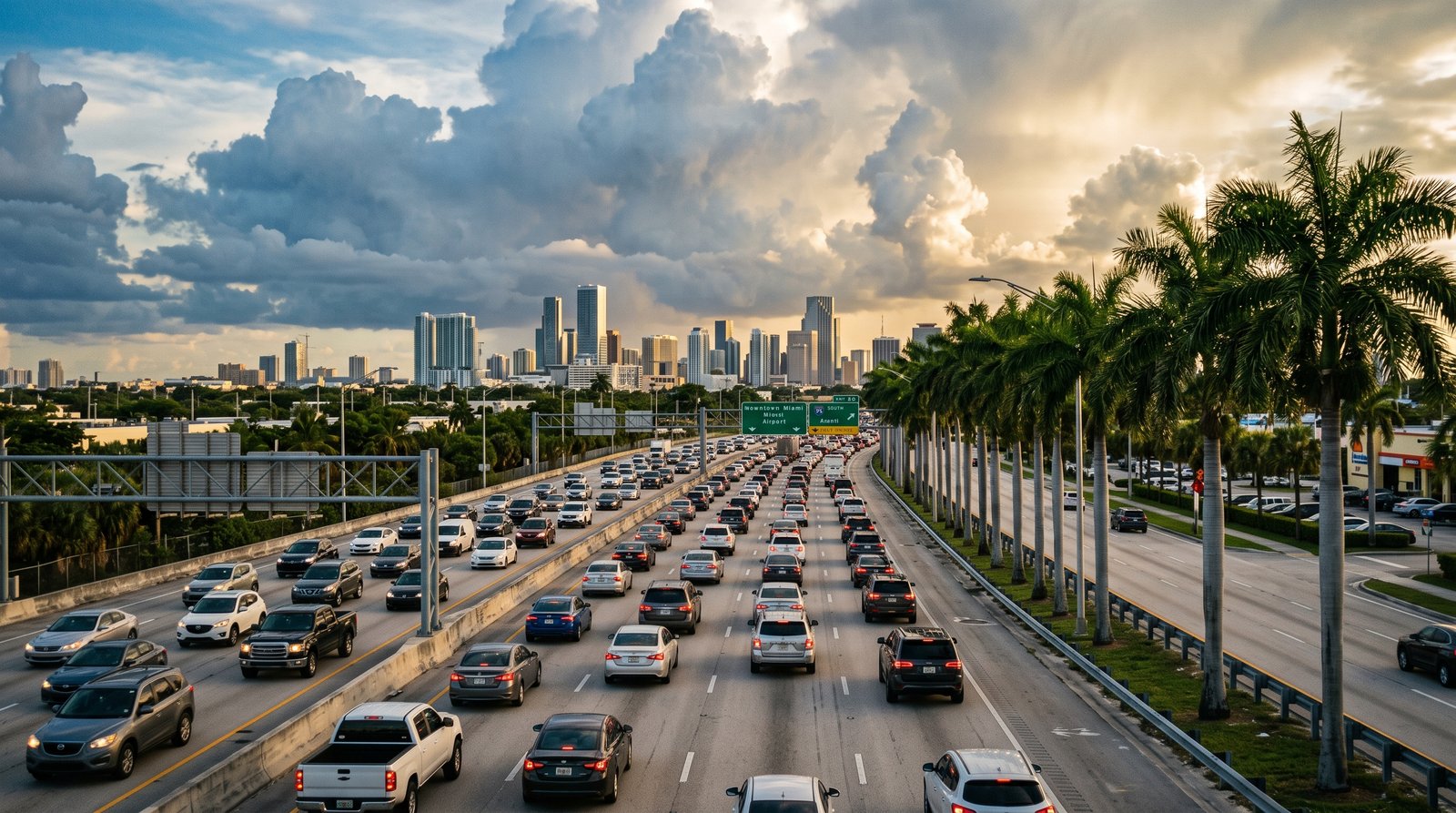
Florida car insurance rates sit near the very top of the national list, and the distance between what a driver here pays and what the typical American pays has grown wider rather than narrower over recent years. Full coverage in Miami can run more than double what an identical driver would be charged in a low-cost state such as Maine or Idaho.
The odd part is that Florida also asks less of its drivers than almost any other state when it comes to required coverage. People here pay top-of-market prices for a legal minimum that protects them badly. This guide sets out what Florida drivers are paying in 2026, the particular pressures pushing those numbers up, and the levers that genuinely move a premium in this state.
In this article
What Coverage Really Costs Florida Drivers
Premiums swing wildly from one Florida ZIP code to the next, but the statewide picture does not change: drivers here pay well over the national average on both minimum and full coverage. In the priciest South Florida ZIP codes, full coverage for a clean-record driver routinely reaches the mid four figures a year, while the same profile up in the Panhandle or the north-central counties can pay considerably less.
Several patterns hold across the state:
- Minimum coverage looks cheap beside full coverage — a comparison that flatters it, because the minimum buys so little. Florida's gap between the two is wider than in most states.
- Geography rules. Going from Miami-Dade to a rural county can slice a premium in half or better, with the driver and the car unchanged.
- Credit-based insurance scores count. Florida allows them in rating, and the distance between excellent and poor credit tiers is substantial.
- Age curves are steep. Teens here face some of the priciest rates anywhere in the country, and the savings from putting a teen on a parent's policy instead of writing a separate one are considerable.
Because carrier-to-carrier pricing in Florida varies so much, comparing quotes across several insurers is the single highest-value thing a driver here can do. A number that looks outrageous at one company is often perfectly ordinary at another.
The State Minimum Here Is Remarkably Thin
Florida asks drivers to carry only two coverages:
- $10,000 in Personal Injury Protection (PIP) — pays for your own injuries no matter who caused the wreck
- $10,000 in Property Damage Liability (PDL) — pays for damage you do to someone else's property
Look at what is absent. Florida belongs to the tiny handful of states that do not make ordinary drivers carry bodily injury liability. Seriously hurt someone in a crash you caused while carrying only the state minimum and their injuries are covered by nothing. They can sue you personally, which puts your paycheck and your assets on the line.
That $10,000 property damage cap is just as inadequate in 2026. Average transaction prices on new vehicles sit far above it, and a middling collision with a recent-model SUV will clear $10,000 without much effort. Everything past the limit is yours to pay.
A DUI puts a driver under an entirely different set of rules. A conviction here triggers an FR-44 filing, which demands liability limits well above the ordinary minimum and has to stay in place for three years. Only Florida and Virginia use the FR-44 at all.
The Forces Behind Florida's High Premiums
No single item explains what Florida drivers pay. The damage comes from the combination.
Uninsured and underinsured drivers. Florida carries one of the nation's highest uninsured motorist rates, with estimates commonly landing near one in five drivers. When that large a slice of the driving public carries nothing, the cost of their crashes lands on everyone who does pay, through uninsured motorist premiums and worse loss ratios overall.
Litigation volume. For years the state has generated a share of the country's auto insurance lawsuits far out of proportion to its population. A significant tort reform package passed in 2023, revising the comparative negligence standard and narrowing the window for bringing negligence claims. Insurers cite those changes when they talk about stabilizing rates, but such effects seep through the system slowly, and litigation here is still heavy.
Storm and catastrophe exposure. Between hurricanes, tropical storms, and everyday flooding, comprehensive claims arrive at a pace few states match. One serious storm can total tens of thousands of vehicles. Every comprehensive premium in the state reflects that risk, coast or no coast.
Population density and traffic. The South Florida metro corridors stack heavy congestion on top of a big tourist and rental population that does not know the roads, plus a dense concentration of vehicles. More cars packed close together means more claims for every mile driven.
Vehicle theft and fraud. The state has long placed near the top for staged-accident schemes and clinic-based PIP fraud alike. Enforcement has improved, but what remains is baked into the rate base.
Ready to compare car insurance rates?
See quotes from top insurers side by side. Free, about two minutes, no obligation.
Get My Quotes →Your Metro Area Changes the Math
Where the car sits overnight matters more here than in nearly any other state. Insurers rate right down to the ZIP code, and Florida's internal spread is dramatic.
- Greater South Florida, including Miami-Dade and Hialeah — reliably the costliest corner of the state and among the costliest metros in the country. Density, lawsuit frequency, theft, and uninsured drivers all peak here.
- Tampa Bay and St. Petersburg — expensive, though usually a step below the southeast. Storm surge exposure moves the comprehensive number meaningfully.
- Orlando — pushed up by tourist traffic and interstate volume, yet normally cheaper than Miami.
- Jacksonville — middling by Florida standards, and the gap between the cheapest and priciest carriers runs wider there.
- The Panhandle plus Tallahassee and Gainesville — the least expensive part of the state, occasionally close to the national average.
Planning a move inside Florida? Quote the new ZIP code before you sign the lease. Relocating twenty miles can shift a premium by hundreds of dollars a year.
What Happens After a Crash Under No-Fault
For injuries, Florida runs a no-fault system: your own PIP coverage pays your medical bills first, whoever caused the crash. The mechanics are worth learning, because two specific rules trip drivers up.
The 14-day rule. Initial medical treatment has to happen within 14 days of the accident. Blow past that deadline and your PIP benefits can be refused outright, even for a genuine injury that only surfaces later. Get checked out promptly after any crash here, even if nothing hurts.
The emergency medical condition threshold. The whole $10,000 of PIP only opens up if a qualifying medical provider decides you have an emergency medical condition. Absent that finding, the benefit stops at $2,500. That is a large difference, and it rests entirely on what your treating provider documents.
PIP picks up 80% of reasonable medical costs and 60% of lost income, capped at whatever limit applies. Pain and suffering falls outside it. Going after the at-fault driver for those damages requires injuries that clear Florida's serious injury threshold, meaning death, permanent injury, or significant scarring or disfigurement.
Property damage still runs on fault as usual. Repairs come from the at-fault driver's PDL, or from your own collision coverage if you bought it.
Moves That Genuinely Cut a Florida Premium
Some of this advice travels anywhere. Some of it works especially well here.
- Shop at every renewal, not once every few years. Carrier appetite in Florida changes constantly as companies enter, pull out, and re-rate. Whoever was cheapest two years back frequently is not today.
- Push up the comprehensive and collision deductibles. Catastrophe exposure inflates comprehensive premiums here, so moving from a $500 to a $1,000 deductible frees up more dollars than the same change does elsewhere.
- Improve your credit-based insurance score. Credit is permitted in Florida rating and the tier spread is wide. A slow lever, but a powerful one.
- Complete a state-approved defensive driving course. Insurers here must offer a discount to drivers who finish an approved course, and it is open to every age group.
- Weigh telematics carefully. Usage-based programs can pay off nicely for low-mileage and off-peak drivers. Commute daily through South Florida traffic and the math deserves a check first.
- Bundle, but verify the total. Pairing auto with home or renters usually helps, though Florida's fractured property market sometimes means the bundled home premium eats the auto saving. Price them apart and together.
Why Buying Only the Minimum Rarely Makes Sense
Florida's legal floor is inexpensive to buy and expensive to lean on. Two coverages are worth adding for virtually every driver in the state.
Bodily injury liability. Most drivers are not required to carry it, yet it is what stands between an at-fault wreck and a lawsuit against you personally. Buying $100,000 per person and $300,000 per accident costs much less than people assume, because PIP and comprehensive already dominate the base premium here.
Uninsured and underinsured motorist coverage. In a state where something like one in five drivers may carry nothing, and where plenty of those who are insured hold no bodily injury limits at all, UM/UIM is what responds when whoever hit you cannot pay. With Florida's uninsured rate, it is arguably the best optional coverage sold in the state.
Yes, both cost money — and together they turn a policy that protects almost nobody into one that holds up after a serious crash. For most drivers here that beats squeezing the last few dollars out of a bare-minimum quote.
Frequently Asked Questions
What makes car insurance in Florida so expensive?
Florida stacks up cost drivers that few states carry all at once: one of the country's highest uninsured driver rates, a long history of heavy auto injury litigation, hurricane and flood exposure that swells comprehensive claims, crowded metro traffic thick with tourists, and years of staged-accident and PIP fraud. Every one of those adds to the losses carriers have to recover, and together they lift premiums here far above the national average.
Does Florida use a no-fault system?
It does, for injuries. Your own Personal Injury Protection pays your medical bills first, no matter who caused the wreck. The coverage handles 80% of reasonable medical costs and 60% of lost income, capped at whatever limit you bought. Fault still governs property damage, so repairs come from the at-fault driver's property damage liability. Chasing the other driver for pain and suffering is possible only when your injuries clear the state's serious injury threshold.
How much coverage does Florida actually require?
Just $10,000 of Personal Injury Protection and $10,000 of Property Damage Liability. Nothing more. Florida sits in the small group of states that do not require bodily injury liability from ordinary drivers, so a minimum-coverage policy pays nothing toward injuries you cause another person. A DUI conviction moves a driver to the tougher FR-44 standard, which demands considerably higher liability limits for three years.
Should I see a doctor after a Florida crash?
Yes, and without delay. The 14-day rule gives you 14 days from the crash to start medical treatment, or PIP benefits may not apply at all. Miss that window and the insurer can throw the claim out. On top of that, the full $10,000 PIP benefit only opens up when a qualifying provider finds an emergency medical condition; without that finding the cap is $2,500.
What is the most effective way to lower a Florida rate?
Compare carriers at every renewal, because pricing here shifts constantly and the company-to-company spread is unusually wide. Lift the comprehensive and collision deductibles, which returns more in this state than elsewhere since catastrophe exposure inflates those premiums. Finish a state-approved defensive driving course, a discount insurers are obligated to offer. Build up your credit-based insurance score over time, and see whether a telematics program suits how you drive.
Is it worth carrying more than Florida's minimum?
For nearly every driver, yes. Since the state minimum carries no bodily injury liability, an at-fault crash that hurts somebody leaves you personally exposed to a lawsuit. Moving up to $100,000 per person and $300,000 per accident usually costs less than drivers expect. Uninsured and underinsured motorist coverage matters just as much, given that something like one in five drivers here may be uninsured.
Ready to compare car insurance rates?
See quotes from top insurers side by side. Free, about two minutes, no obligation.
Get My Quotes →