
Should You Bundle Home and Auto Insurance, or Split Them?
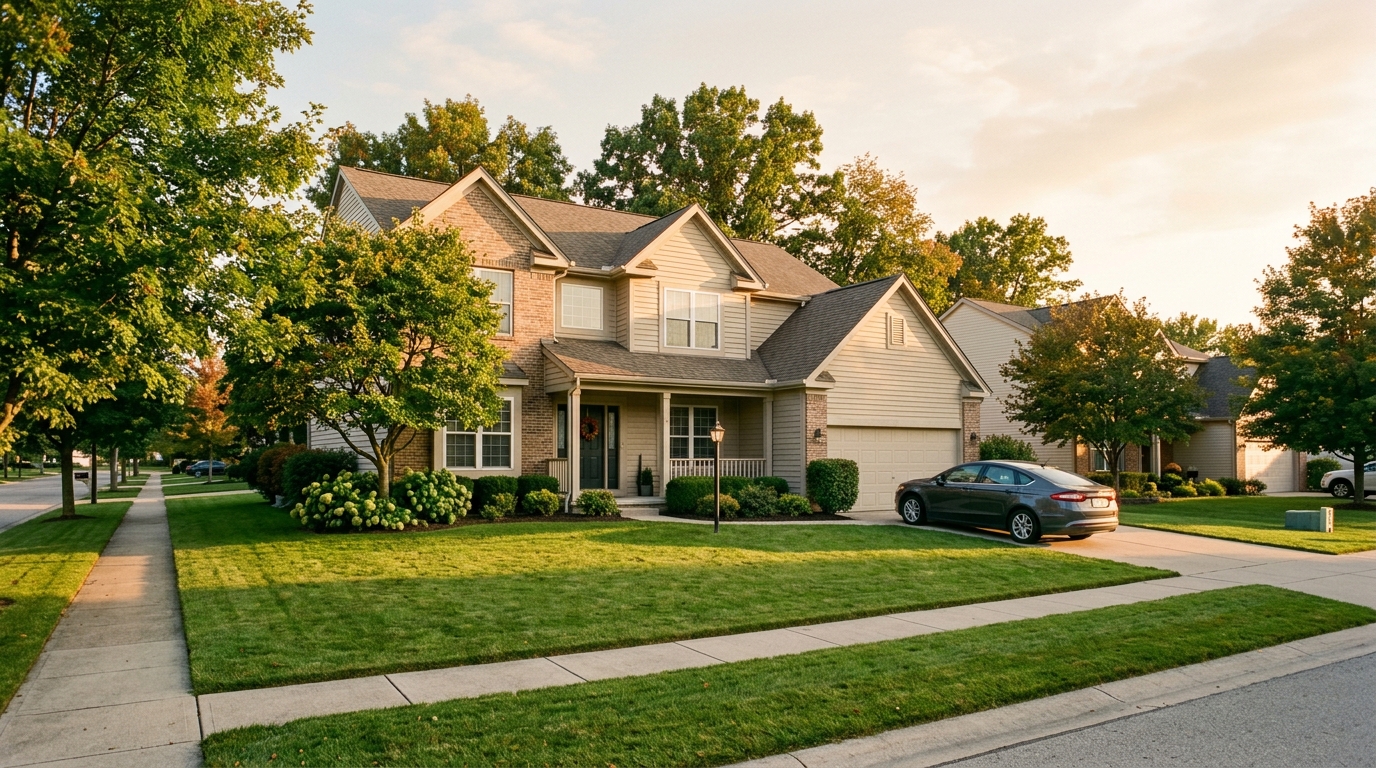
Whether to bundle home and auto coverage is one of the most familiar money questions homeowners hit at renewal. A multi-policy discount normally shaves 5% to 25% off the combined bill, but nothing about that saving is automatic — and in certain circumstances a bundle ends up pricier than shopping the two policies apart. Here is when bundling genuinely pays, which carriers hand out the deepest real discounts, and how to work the numbers yourself before you sign.
In this article
What the Multi-Policy Discount Really Does
Any large carrier writing both homeowners and auto coverage offers a multi-policy break, and most of them market it hard. The credit generally falls between 5% to 25% of the combined premium, though you rarely reach the top of that band unless an umbrella, boat, or life policy also sits with the same insurer. The credit is lopsided, too — the bigger slice normally lands on the home policy and the smaller one on auto, because home customers renew more reliably and stay put longer.
The arithmetic beats the advertising. Take 15% off a $2,400 combined premium and you save $360 per year — worth having, but not worth staying with a company whose base rates sit 20% above a rival's. That is the trap in every bundle home and auto pitch: a discount only means something measured against what someone else would charge you, and carriers are betting you stop shopping the individual policies once they are wrapped together.
States regulate these credits as well. California insurers, for instance, may only push certain bundling breaks onto the auto side, since Proposition 103 limits the way home discounts flow into auto pricing. Every state has its own wrinkles worth a look before you assume the advertised percentage lands in your lap.
Which Carriers Actually Give the Deepest Bundle Credits
Drawn from rate filings and marketing material, the companies below advertise the largest bundle savings. What you actually receive shifts with your state, your driving record, and the house itself, but this makes a sensible starting shopping list.
- Allstate — markets as much as 25% off auto when a home policy comes along, though in practice the combined credit averages nearer 10% to 15%.
- Nationwide — as much as 20% off, and unusually sharp pricing for homeowners across the Midwest and Southeast.
- State Farm — roughly 17% on average against the combined premium, frequently paired with the best base rates in low-risk suburban markets.
- Farmers — usually 10% to 15%, with extra credits that stack when you add life or umbrella coverage.
- Liberty Mutual — advertises savings up to 15%, although its underlying rates are steep throughout many coastal states.
- Progressive — a thinner credit at roughly 5% on auto and 10% on home, yet Progressive is frequently the cheapest auto option before any bundle credit gets applied.
- USAA — among the strongest overall bundle values anywhere, provided your family qualifies through military service.
- Erie — across the eastern states it serves, Erie's bundled pricing sits reliably near the bottom of the market.
The Situations Where a Bundle Genuinely Wins
The bundle performs best when both halves of your risk look ordinary — a clean driving history, a house under 30 years old, no coastal or wildfire exposure, and no fresh claims. Given that, a big national carrier will price each policy competitively and stack the multi-policy credit on top, which produces real savings against splitting companies.
A bundle also guards against renewal fatigue. Bundled homeowners tend to renew without reshopping, and that inertia is worth something when the carrier keeps rates level. A handful of insurers, State Farm and Erie among them, have a reputation for smaller year-over-year increases than the market at large — so the arrangement can compound into meaningful savings over 3 to 5 years even if the first-year credit looks unimpressive.
A suburban household with two mid-range cars and a mortgaged home under $500,000 in a low-risk ZIP is almost the textbook target for the bundle home and auto pitch, and it is exactly who the big carriers chase with their heaviest ad spend. Fit that description and the odds favor the bundle over separate policies — favorable odds, though, are not a guarantee.
Ready to compare car insurance rates?
See quotes from top insurers side by side. Free, about two minutes, no obligation.
Get My Quotes →The Cases Where a Bundle Quietly Costs You
A multi-policy credit is a percentage taken off, not a guarantee of a low price. When a carrier's base rates are high for your particular circumstances, no discount rescues you from overpaying. Bundles tend to backfire here:
- Homes facing coastal or wildfire risk — throughout Florida, Louisiana, coastal Texas, and California's WUI zones, plenty of national carriers either price home coverage out of reach or decline it outright. Putting the house with a specialty or surplus-lines carrier and shopping auto on its own usually comes out ahead.
- Drivers the market treats as high risk — SR-22 filings, a DUI, or several at-fault crashes. Non-standard auto insurers such as Dairyland or Bristol West normally beat a bundled national carrier by a wide margin on those profiles.
- A teenager on the policy — a new teen driver can push the auto premium close to double, and certain direct writers rate teens noticeably cheaper with no bundle at all.
- Expensive houses — anything over $1 million often prices better at a specialty carrier such as Chubb, PURE, or AIG Private Client than inside a mass-market bundle.
- Out-of-the-ordinary vehicles — classics, exotics, and commercial-use cars nearly always cost less at a specialty auto carrier like Hagerty or Grundy.
- Halves that do not match — a flawless driver living in a 90-year-old house, or a ticketed driver in a new build, can wind up subsidizing whichever side of the bundle is weaker.
Running the Test: Bundle Versus Two Separate Policies
The only dependable answer comes from doing the arithmetic yourself. Budget roughly 45 minutes and repeat it at each renewal:
- Pull three bundled quotes from the biggest carriers writing in your state — usually some mix of State Farm, Allstate, Progressive, Farmers, Nationwide, and Travelers.
- Pull three auto-only quotes, making sure one comes from a direct writer such as GEICO and another from a regional name like Erie or Auto-Owners if either writes where you live.
- Pull three home-only quotes, adding a specialty carrier to the mix if the house is coastal, over 30 years old, or valued above $750,000.
- Stack the best bundled number against your best auto-only plus best home-only added together. Whichever total is smaller across 12 months takes it.
- Account for what year two costs. Ask every carrier what a typical renewal increase looks like, because some lift rates 8% to 12% at the first renewal with no claims on the file.
- Consider claims service and reputation only once price is settled. The annual J.D. Power claims satisfaction rankings serve as a decent stand-in for how a company behaves when it counts.
An independent agent can produce several bundled and standalone quotes in a single sitting, which cuts the work down sharply next to filling out a form on every carrier's website.
What Needs Watching Once the Bundle Is in Place
This is not a decision you make once and forget. Most homeowners quit shopping the moment the policies are packaged, and carriers are well aware — some nudge rates up 5% to 15% per year at renewal, particularly from year two onward. Reshopping the package every 2 to 3 years, or right after any significant life change, keeps the original savings intact. Worth triggering a fresh look: paying off the mortgage, a new roof, a teen joining the policy, another vehicle, or a move across state lines.
The other thing to track is how a claim on one policy spills into the other. One at-fault auto claim can lift the auto half of a bundle by 20% to 40%, and certain carriers will also raise the home half at renewal through a shared loss-history pricing tier. That is a hidden expense of the decision to bundle home and auto that never shows up on the opening quote. Ask directly, before you sign, whether a claim on one side changes pricing on the other — the answer differs a great deal by carrier and by state.
Even so, the multi-policy credit is still one of the biggest levers a homeowner has for cutting insurance costs. It simply requires competitive base rates underneath it, plus someone willing to re-check the numbers on a regular schedule.
Frequently Asked Questions
What are the actual savings from bundling home and auto?
The advertised range is 5% to 25%, while combined savings in practice usually settle around 10% to 15%. Against a $2,400 total annual premium, that lands somewhere near $240 to $360 per year. Where you fall depends on the carrier, the state, and your own risk profile, with Allstate, State Farm, and Nationwide generally near the top of the range.
Whose bundle discount is the largest?
Allstate posts the biggest headline number at up to 25% on auto, with Nationwide next at up to 20% and State Farm around 17%. The loudest percentage does not automatically produce the smallest bill, though — a cheaper base rate at a smaller regional company regularly beats a headline discount from a national brand. Compare the final quoted premiums instead of the percentage claims.
Is it possible to bundle across two different insurers?
Not if you want the discount. The credit exists only when a single carrier underwrites both policies. Certain independent agencies will group policies from separate underwriters into one account so you get consolidated billing and a single contact, but that setup produces no premium credit. And when your strongest home carrier is not your strongest auto carrier, keeping them apart is often cheaper regardless.
Will bundling change my credit or my claims record?
Bundling on its own leaves credit alone, but it does put both policies' loss history in the hands of one carrier. A homeowners claim can shape what you pay for auto at renewal, and an at-fault auto claim can lift the home premium at some companies. Ask exactly how shared claims history gets handled before signing, since the treatment varies a lot from one insurer to the next.
Does bundling pay off for renters rather than owners?
It does. Pairing renters with auto is one of the most overlooked savings out there. Most large carriers knock 5% to 10% off auto once a renters policy is attached, and the renters coverage itself generally costs $12 to $25 per month at standard limits. Quite often the auto credit alone covers most or all of the renters premium.
Ready to compare car insurance rates?
See quotes from top insurers side by side. Free, about two minutes, no obligation.
Get My Quotes →