
What Happens After a Car Accident: Your Claim Timeline
What happens after a car accident rides less on luck than on the small calls a driver makes in the opening hour, across the first 48 hours, and through the first two weeks. Files get opened quickly, deadlines are unforgiving, and minor slips - signing a sweeping medical release, posting that you feel great, saying yes to the opening offer - quietly drain thousands of dollars. Here is how the claim really moves, from the roadside to the check.
In this article
Hour One: Handling the Scene
That opening hour carries more weight than most drivers expect. The small choices made at the roadside shape everything an adjuster reviews weeks afterward.
- Get clear of traffic and switch on the hazards. If the car still drives and is sitting in a lane, move it to the shoulder. Secondary crashes account for an outsized share of interstate deaths.
- Call 911 for injuries or heavy damage. Most states demand a police report once damage passes a threshold running from $500 to $2,500, depending on the state.
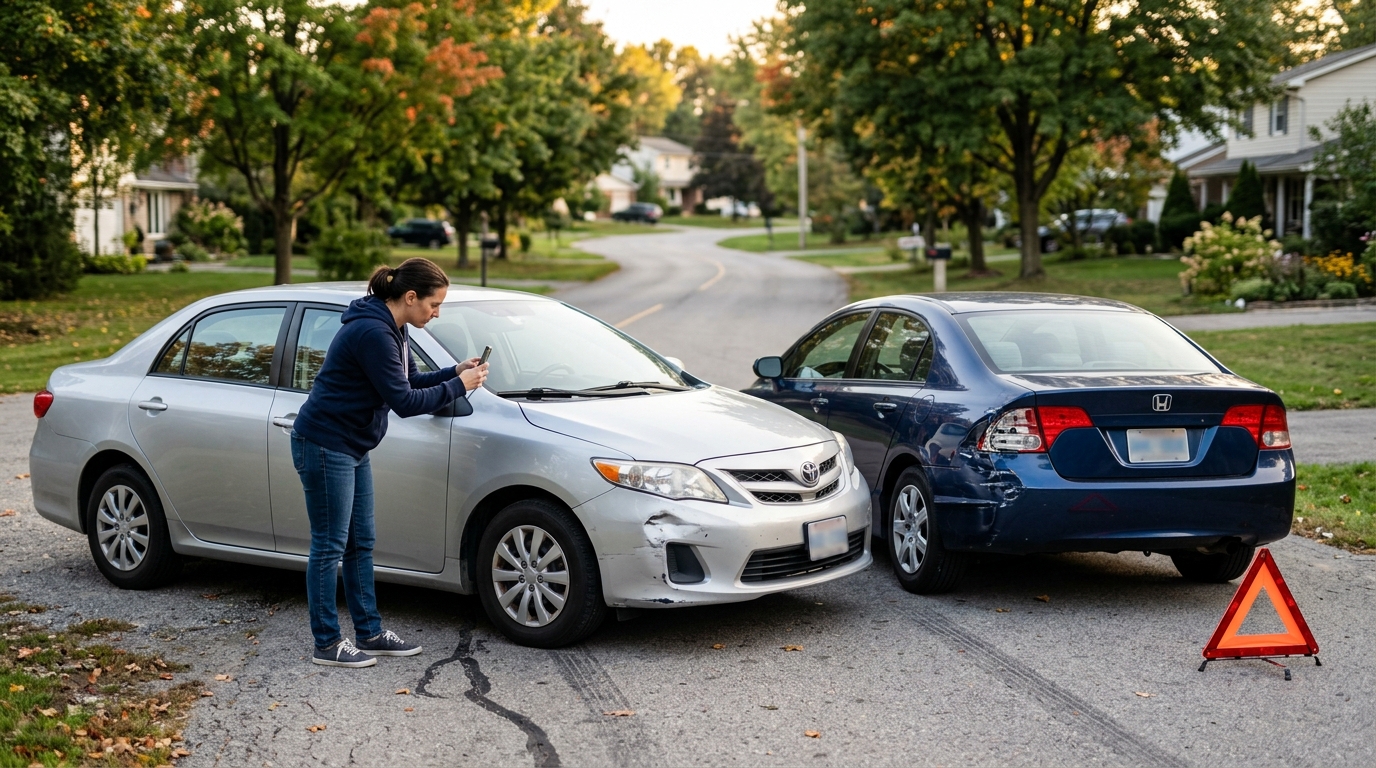
- Photograph everything with your phone. All four corners of the vehicles, both license plates, insurance cards, driver's licenses, the road conditions, and any skid marks or debris fields.
- Trade information without arguing over fault. Names, phone numbers, plate numbers, insurance carrier, and policy numbers satisfy the requirement.
- Collect witness contact details. A disinterested third party is frequently what separates a clean liability finding from a disputed 50/50 split.
- Write down anything odd. Signal timing, the weather, whether airbags fired, or signs that the other driver was impaired.
The Following 48 Hours
The first 48 hours after a car accident set the tempo for everything that follows. Carriers open files fast, and any delay reads as suspicious.
- Report the claim to your insurer, ideally inside 24 hours. Policies demand prompt notice, and carriers keep the right to deny stale claims.
- Write down the case number and the adjuster's direct line, plus the date you got them.
- Shoot a second set of photos in daylight. Night shots routinely miss paint transfer and shallow dents.
- Open a claim log. Record every call, each name, any promise made, and each callback time in a single place.
- See a doctor if anything feels wrong. Soft-tissue symptoms tend to appear 24-72 hours after impact, and a hole in the medical record is the top reason bodily-injury settlements get cut.
- Refuse a first settlement offer over the phone. Opening numbers on total losses generally arrive 10-20% under fair market value.
- Keep receipts for rides, rentals, and any missed work.
How an Adjuster Actually Handles Your File
An adjuster is not a payment dispenser - they are an employee carrying 100-200 open files while a supervisor watches their loss ratio. That first call typically starts with a request for a recorded statement. Nobody has to give one to the other party's carrier, and doing it before injuries are diagnosed or fault is settled produces quotes that resurface against the claim later.
The work itself splits three ways: confirm coverage was in force when the loss occurred, dig into liability, and put a value on the damage. In practice that means ordering the police report, requesting photos, and frequently assigning a field appraiser or routing the car to a direct-repair-program shop.
Turnaround varies. Most companies acknowledge a claim in 24-48 hours and hand down a coverage decision within 10-15 business days. Messier claims - contested liability, uninsured drivers, injuries - regularly stretch to 30-90 days. Prompt-pay statutes in states like Texas, California, and Florida force action inside defined windows; carriers that blow past them can owe interest or face bad-faith exposure.
Ready to compare car insurance rates?
See quotes from top insurers side by side. Free, about two minutes, no obligation.
Get My Quotes →Repairs, Totals, and Getting Paid
Property damage clears faster than injury does. After the adjuster settles liability, an estimate usually lands within 7-14 days. From there the carrier goes one of two directions.
Fixable damage. The body shop writes an estimate, the adjuster signs off or negotiates it, and supplements - hidden damage uncovered once panels come off - get added as work goes on. A mid-level collision involving bumper, hood, and fender work with no airbag deployment often lands at $3,500-$8,500. Rental coverage applies if the policy carries it, normally capped at $30-$50 per day.
Total loss. When repair cost plus salvage value climbs past a set share of actual cash value (ACV) - commonly 70-80%, fixed by state law - the vehicle is declared totaled. The carrier then pays ACV less the deductible.
| Step in the claim | Usual Timeframe |
|---|---|
| Report filed until an adjuster is assigned | 24-48 hours |
| Adjuster's first contact | 1-3 business days |
| Inspection or photo review | 3-10 business days |
| Estimate issued | 7-14 business days |
| Total loss offer delivered | 10-21 business days |
| Payment once the offer is accepted | 3-10 business days |
| Soft-tissue injury settlement | 60-180 days |
An opening total-loss offer is nearly always up for negotiation. Comparable listings inside 50 miles, service records, and recent repair receipts can lift ACV 8-15% higher.
Injuries, Medical Bills, and What They Settle For
Bodily injury keeps its own calendar. Adjusters hold off on an offer until the injured person reaches maximum medical improvement - the point where treatment levels off - because paying too soon risks having the claim reopened.
With soft-tissue injuries such as whiplash and strains, that window normally runs 60-180 days. Cases involving surgery, imaging, or permanent impairment can go 12-24 months. Bills pile up in the meantime. Depending on the state, MedPay or Personal Injury Protection (PIP) on the injured driver's own policy pays them first, with reimbursement coming out of the settlement later.
A bodily-injury settlement covers three categories: medical costs already incurred and still to come, lost income, and pain and suffering. Carriers price that last piece with claim-valuation software, Colossus being the best-known example. Those valuations come in low on purpose, and documented gaps in treatment, skipped appointments, and social-media posts that undercut the stated limitations all drag the figure lower still.
Habits That Quietly Cut a Settlement Down
A handful of habits shave more off a car accident settlement than any lawyer's argument can win back.
- Handing the other driver's insurer a recorded statement unprepared. That adjuster answers to their insured, not to fairness.
- Posting to social media. A gym check-in, a hiking photo, or a feeling great comment gets screenshotted directly into the file.
- Signing an overly broad medical release. Standard forms often let a carrier pull 5-10 years of unrelated records to argue a pre-existing condition.
- Skipping physical therapy appointments. Adjusters read those gaps as not really hurt.
- Accepting the first ACV number without assembling comparable listings.
- Cashing a check marked full and final before injuries are fully assessed. Endorsing it almost always releases every future claim.
- Letting the state statute of limitations expire before filing suit. In most states that window is 2-3 years for personal injury and property damage.
- Getting the car fixed before the other carrier has looked at it.
Escalating: Appraisal Clauses, Regulators, and Lawyers
Claims stall out. Adjusters stop returning calls. Offers arrive too low. Every state provides an escalation route that most drivers never touch.
Start with a written demand - email or certified mail - spelling out the claim, the damages, and a 15-30 day deadline. Promises made on the phone seldom become checks; a written demand forces a written answer.
When the vehicle's value is in dispute, most auto policies carry an appraisal clause: both sides hire an independent appraiser, those two pick an umpire, and the majority decision binds everyone. Each side pays $300-$800 out of pocket, and the result can add thousands to ACV.
For a denial or a bad-faith stall, every state's Department of Insurance accepts complaints online. Regulators forward them to the carrier's compliance team, which normally forces a re-review inside 10-30 days. Lawyers generally step in on injury claims worth $25,000 or more, and contingency fees run 33-40% of whatever is recovered.
Frequently Asked Questions
How long before a car insurance claim settles?
Property damage usually closes inside 2-4 weeks once liability is clear, with total-loss offers arriving in 10-21 business days and payment 3-10 days after acceptance. Injury claims take longer: 60-180 days on soft-tissue cases and 12-24 months where surgery or permanent impairment is involved. Contested liability or an uninsured driver routinely tacks on 30-90 days.
Must I give the other driver's insurer a recorded statement?
No. The policy contract only obligates a driver to cooperate with their own carrier. Recording a statement for the other side is voluntary, and doing it before injuries and fault are nailed down nearly always weakens the claim. A written statement, submitted once the police report is available, is the safer route.
Do rates rise after an accident I did not cause?
Usually not, though it is not guaranteed everywhere. California and Oklahoma ban surcharges for not-at-fault accidents, while several other states let carriers weigh total claims history at renewal. Even with no surcharge, some insurers quietly strip a claim-free discount, which surfaces as a small premium bump.
Is a lawyer worth it after a crash?
With property damage alone, most drivers manage the claim themselves. Attorneys usually enter when injury damages top $25,000, when liability is contested, or when the carrier denies outright or stretches negotiations past 60 days. Contingency fees typically run 33-40% of the recovery and climb if the case reaches trial.
What if the other driver carries no insurance at all?
Uninsured Motorist (UM) coverage on the injured driver's own policy covers injuries and, in some states, property damage too. UM is not mandatory everywhere - drivers in Nevada, Arizona, Ohio, and elsewhere should double-check that they carry it. Without UM, the only path left is suing the driver personally, which is frequently uncollectable.
Ready to compare car insurance rates?
See quotes from top insurers side by side. Free, about two minutes, no obligation.
Get My Quotes →