
Total Loss vs Repair: Thresholds, Payouts, and Buybacks
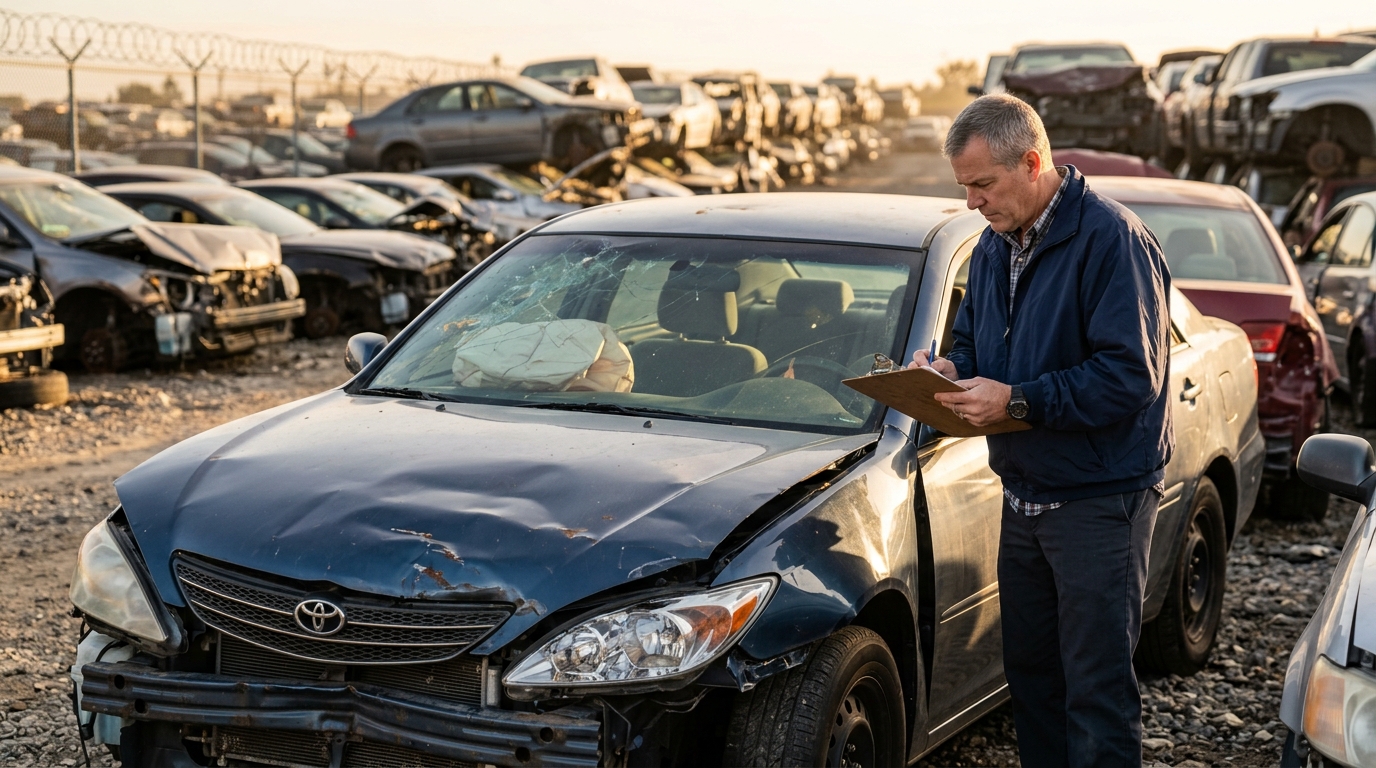
Getting a handle on total loss vs repair decisions is the difference between collecting a check for what your car was really worth and being handed a thin offer with no vehicle to show for it. When an adjuster looks over a damaged car, the verdict rests on a specific formula, on state law, and on a valuation process most drivers never examine until the day they have to. This guide unpacks the total-loss threshold, how carriers arrive at actual cash value (ACV), how to argue a soft offer upward, and when buying the salvage back is worth doing.
In this article
The Calculation Behind Total Loss vs Repair
It reduces to one fairly simple comparison, though the precise math turns on the state you live in. Following a serious crash, the adjuster gets a repair estimate from a body shop (or from a photo-based estimating system) and also pulls a salvage bid — what a dismantler or auction house would hand over for the wrecked car as it sits. Those two figures then go up against the vehicle's pre-loss value.
The broad rule: when fixing the car approaches or passes what the car was worth, it gets declared a total loss. Something like two-thirds of states run a Total Loss Formula (TLF), where repair cost plus salvage value has to meet or beat actual cash value. The rest apply a flat percentage threshold, generally somewhere between 50% and 100% of ACV.
Take a $12,000 car carrying $9,000 in damage: totaled in Iowa under a 50% threshold, but repairable in Texas at 100%. Age, mileage, and damage that predates the crash all drag a vehicle nearer the total loss line before anything happens — a 12-year-old sedan showing 180,000 miles totals on far less damage than a two-year-old crossover holding the same repair estimate.
Total Loss Thresholds, State by State
Each state writes its own rule, running from aggressive — a 50% threshold means cars total with little trouble — to lenient, where 100% forces insurers to fix plenty of borderline vehicles. Below is a sampling of thresholds in common states; treat the figures as approximate, since legislatures do change them:
| State | Threshold Rule |
|---|---|
| Iowa | 50% of ACV |
| Oklahoma | 60% of ACV |
| Nevada | 65% of ACV |
| Arkansas | 70% of ACV |
| Wisconsin | 70% of ACV |
| Alabama | 75% of ACV |
| Louisiana | 75% of ACV |
| New York | 75% of ACV |
| Florida | 80% of ACV |
| Colorado | 100% of ACV |
| Texas | 100% of ACV |
| California | Total Loss Formula |
In Total Loss Formula states, expect the car to total sooner — repair plus salvage stacks up faster than a straight percentage of value ever does. A $2,500 salvage bid against a $10,000 car means $7,500 in damage is enough to total it in a TLF state, even though the damage only represents 75% of value.
Where the Actual Cash Value Number Comes From
Actual cash value is the pre-loss market price of that particular car — not the sticker on a dealer lot and not what you handed over three years ago. Carriers lean on commercial valuation platforms, with CCC One, Mitchell WorkCenter, and Audatex doing most of the work. Each pulls comparable listings from a 50 to 150 mile radius, then adjusts every comp for mileage, trim, factory options, and condition rating.
Two habits keep making ACV feel stingy:
- The baseline leans toward private-party or wholesale pricing instead of dealer retail, a gap that can run $1,500 to $4,000 on a mid-priced car
- Condition defaults to average unless the owner or adjuster documents something better; a well-kept car with new tires and recent service deserves a rating above that
Tires less than six months old, a recently replaced timing belt, or a documented maintenance history can move the valuation $300 to $1,500 when receipts back it up. Aftermarket parts almost never help unless they replaced stock components. Unrepaired prior damage or a salvage brand on the history report cuts deep the other way — occasionally $2,000 or more.
Ready to compare car insurance rates?
See quotes from top insurers side by side. Free, about two minutes, no obligation.
Get My Quotes →Six Ways to Push the ACV Higher
Carriers lead with a computer-generated figure, and that figure can move. The valuation report itself shows you where:
- Ask for the complete valuation report listing every comparable vehicle. Most states treat this as standard, and it reveals exactly which listings were used, what adjustments were applied, and where the data originated.
- Audit those comps. Wrong trim, wrong transmission, or a listing sitting 300 miles away are frequent errors. One bad comp alone can pull the average down by $800 or more.
- Hunt down better comps on Autotrader, Cars.com, and CarGurus inside a sensible radius. Screenshot each listing with its URL. Dealer retail listings typically sit above the private-party comps carriers prefer.
- Prove the car's real condition with service records, recent repair receipts, and photos shot before the crash.
- Challenge the condition adjustment. A car marked average or below average without anyone inspecting it is fair game for a written objection.
- Invoke the appraisal clause when talks stall. Most policies carry one: the owner retains an independent appraiser ($200 to $500), the insurer retains another, and a neutral umpire breaks any tie. Settlements commonly rise 10% to 25% through this route.
Keeping the Wreck: How a Buyback Works
Buying back a totaled car — known as salvage retention or owner retention — is an option most adjusters never mention. The insurer pays out ACV minus whatever the salvage auction bid would have brought them, generally 20% to 40% of ACV depending on the car. On a $15,000 total loss with a $4,500 salvage bid, retaining the vehicle leaves roughly $10,500 in hand along with the wrecked car itself.
The title becomes a salvage title, or a branded title — the wording shifts by state. Driving it legally usually means passing a rebuild inspection once repairs are finished, after which a rebuilt or reconstructed title gets issued. Budget $75 to $300 in fees plus whatever the state inspection costs.
Retention makes sense when:
- The damage is mostly cosmetic and a low ACV is what pushed it over the threshold
- The car carries real sentimental value or is a project
- Parts are cheap and easy to source from pull-a-part yards
- The intent is to keep driving it rather than flip it
Cars on rebuilt titles give up 20% to 40% of resale value for good. Most insurers will write only liability on them, never comprehensive or collision — so a second total loss later on pays out nothing.
When Repair Comes Out Ahead
Repair wins inside a narrow set of circumstances. If the damage falls comfortably under the threshold and the car matters sentimentally or practically — a paid-off commuter with 60,000 trouble-free miles behind it — taking the repair keeps a known quantity in the driveway and skips the car hunt. The complication is diminished value: even flawless repair work leaves an accident on Carfax, and resale value drops because of it.
Roughly a dozen states permit first-party diminished value claims, letting the driver recover lost resale value from their own carrier. Third-party diminished value claims are allowed in most states when the other driver caused the crash. On late-model cars, documented DV losses often run $1,500 to $5,000, and insurers seldom hand that money over without a written demand supported by an appraisal.
When the damage lands within 10% of the total loss threshold, most drivers do better pressing for a total loss declaration. A $9,000 repair on a $10,500 car leaves an owner holding a fixed vehicle worth maybe $8,000 privately — a poor trade against a $10,500 ACV check and the start of a car search.
Frequently Asked Questions
How much damage does it take to total a car?
That depends on the state. Total loss thresholds typically sit between 65% and 80% of actual cash value, with Iowa down at 50% and both Texas and Colorado at 100%. Roughly two-thirds of states skip percentages entirely and use the Total Loss Formula, totaling the car once repair cost plus salvage value reaches or passes pre-loss value — which trips a total loss faster than a percentage does.
Am I allowed to keep a car that has been totaled?
In most states, yes, through owner retention or salvage retention. The carrier pays actual cash value less the salvage value it would have collected at auction, and the damaged car stays with the owner. A salvage title is issued, and the vehicle has to pass a rebuild inspection before it can legally be registered or driven again.
What is the best way to challenge a low offer?
Begin by requesting the full valuation report and combing the comparable vehicles for mistakes — wrong trim, wrong mileage bracket, or listings pulled from too far away turn up regularly. Then hand over your own comps from Autotrader or Cars.com plus maintenance receipts that justify an above-average condition rating. If the carrier still will not move, trigger the policy's appraisal clause to force a neutral decision.
Will the payout clear my auto loan?
Actual cash value goes to the lienholder first and whatever remains goes to the owner. When ACV falls short of the loan balance — routine during the first two to three years of a finance contract — the borrower owes the gap unless gap insurance is in place. Gap coverage generally costs $20 to $40 per year and can be worth several thousand dollars on a newer financed car.
Ready to compare car insurance rates?
See quotes from top insurers side by side. Free, about two minutes, no obligation.
Get My Quotes →