
Roadside Assistance vs AAA vs Credit Card Perks Compared
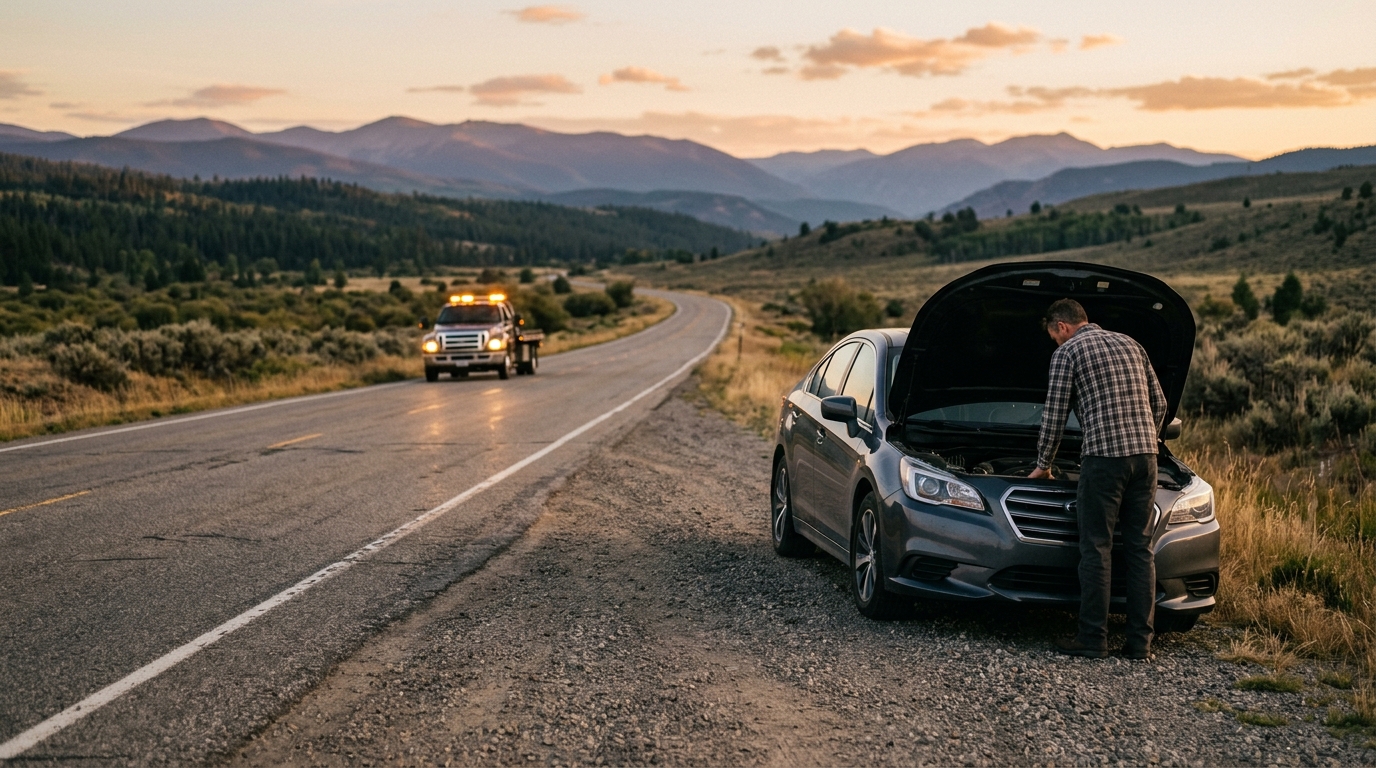
Ask most drivers about roadside assistance vs AAA vs credit card benefits and they will name the century-old auto club without thinking twice — yet the $10 line item on a car insurance policy and the no-charge perk buried in a Visa Signature agreement often summon the very same tow truck. Which one deserves your money hinges on how frequently a vehicle actually strands you, how many miles a tow may need to cover, and whether one phone number for every roadside mess is worth paying for. What follows lays out what each option really delivers, how quickly trucks reach you in practice, and what three years of protection runs once the arithmetic is honest.
In this article
What You Actually Get From Each Plan
The core service list barely changes from one provider to the next: jump-starts, mounting the spare you already carry, getting you back into a locked car, delivering up to a gallon of gas, and towing to the closest shop that can handle the repair. The differences show up in how many towed miles are included, how many calls you get in a year, and the way the bill is settled.
The insurer version — State Farm, Progressive, GEICO, and Allstate each offer one — is an auto policy add-on priced around $5-30 per vehicle per year. Towing is generally capped at 10-15 miles, and you draw from a bucket of roughly 4-5 calls before availability can tighten up.
AAA is sold in three levels. Classic, at $65-90 depending on where you live, tows you 3-7 miles. Plus ($110-140) raises that ceiling to 100 miles per call. Premier ($150-200) folds in a single 200-mile tow once a year. Because the membership attaches to you rather than a specific car, your AAA card still counts while you are riding in a friend's vehicle.
Credit card roadside is where things get murky. Plenty of Visa Signature and World Mastercard accounts will send a truck at preset cardholder pricing ($70-150 for a tow, roughly $70 for a jump). Premium travel products such as the Chase Sapphire Reserve refund a limited amount each year, though hardly any of these perks are actually free — what you get is discounted pricing, not coverage someone else pays for.
What Three Years Really Costs
| Plan | Cost per year | Cost over 3 years | Miles towed |
|---|---|---|---|
| Policy add-on | $5-30 | $15-90 | 10-15 miles |
| AAA Classic | $65-90 | $195-270 | 3-7 miles |
| AAA Plus | $110-140 | $330-420 | 100 miles |
| AAA Premier | $150-200 | $450-600 | 200 miles (once/yr) |
| Visa Signature dispatch | $0 (pay as you go) | $0-450 | Billed per mile |
Strictly on price, the policy add-on is not a close contest. Progressive Roadside Assistance at $12 per year totals $36 across three years — cheaper than renewing AAA Classic even once. The tradeoff is that 15-mile tow cap. Break down beyond it and the extra distance gets billed at retail, commonly $4-7 per mile.
For rural interstates and mountain passes, AAA Plus is the tier that earns its keep. One 60-mile tow at retail runs $200-350 — more than an entire year of Plus dues. The whole calculation flips the first time you actually need the service.
Card-based roadside seldom stays cost-free. Three tows in three years at $110 each adds up to $330 — essentially what AAA Plus costs, minus the trip-interruption and travel extras.
How Quickly a Truck Really Shows Up
Most people framing the roadside assistance vs AAA debate picture the club operating its own fleet of wreckers. It does not. Insurer plans, AAA, and card programs all hand the job to the same regional pool of independent tow operators. Even so, the timing tends to break down along these lines:
- Daytime on a suburban weekday: 30-45 minutes no matter who you called
- Rural roads and interstates: 60-90 minutes, with AAA usually a shade quicker thanks to the contract volume it sends the nearest yard
- Severe weather (ice storms, heavy snowfall): 3-6 hours whoever you use — a membership tier almost never moves you up the line
- Overnight and weekend calls: 45-75 minutes; certain insurer plans run intake through an outside call center, tacking on another 10-15 minutes
- Big cities with constant tow demand (Los Angeles, Houston, Chicago): the winner is whichever service has signed up the most local operators, which is typically AAA
What really determines your wait is not the logo on the card — it is how many trucks the local contractor happens to have working that ZIP code at that hour. All three routes are bidding for the same limited fleet.
Ready to compare car insurance rates?
See quotes from top insurers side by side. Free, about two minutes, no obligation.
Get My Quotes →Tow Miles: Where Roadside Assistance vs AAA Splits Apart
Mileage is the variable that decides this. Stuck in downtown Denver with a shop 4 miles up the street, you are fine on any plan. Stuck on I-70 at Vail Pass, 60 miles from the closest dealer certified to touch your turbocharger, and the invoices diverge sharply.
Insurer plans are written for the first situation. State Farm's Emergency Road Service hauls you to the nearest qualified facility and stops there — if that shop sits 40 miles closer than the one you would rather use, those extra 40 miles come out of your wallet at retail. A handful of carriers sell longer-mileage tiers, but a 100-mile insurer tow is uncommon.
AAA Plus answers the second situation. Its 100-mile tow can end at whatever facility the member picks. The 200-mile tow on Premier exists for one worst-case moment a year — the family SUV giving out midway through a vacation.
Card dispatch bills by the mile. Run a 60-mile tow through the Visa program and retail pricing can reach $400-550. Even the Chase Sapphire Reserve benefit generally pays back no more than $50 per incident and stops at 4 incidents a year — nowhere close to what a long haul costs.
Where Credit Card Roadside Lets You Down
Card benefits read like free protection right up until you are sitting on the shoulder actually reading the terms. Five failure points come up again and again:
- You get a phone call, not a paid bill. With most Visa Signature and World Mastercard accounts, the network arranges the truck and you settle up at retail when the operator runs your card at the scene.
- The yearly ceilings are small. Travel cards that genuinely reimburse usually stop at $50-100 per incident and 4 events per year — fine for a jump-start, useless for a serious tow.
- Only that one card counts. Getting paid back normally means charging the tow to that exact card and turning in the receipt inside 60-90 days. Use another payment method and the claim dies.
- Dispatch can drag. Call centers run by the card networks insert a verification step — confirming the account is current and the benefit applies — which pushes the truck back 10-20 minutes.
- Rentals and company vehicles are frequently left out. Insurer and AAA coverage tends to follow you into whatever car you are riding in, while card terms differ by issuer and commonly exclude anything not titled to the cardholder.
Picking a Plan Around the Car You Drive
Three things settle it: your usual distance from home, the vehicle you own, and what it is worth to you to dial a single number for any car trouble.
Urban commuters driving something new enough to sit under the factory warranty already get automaker roadside for the first 3-5 years. Layering an insurer plan on top at $5-15 duplicates it for pocket change, and passing on AAA keeps $200-500 in your account across three years.
Country drivers, frequent road trippers, and anyone running an older vehicle (100,000-plus miles) get genuine value out of AAA Plus. A single breakdown 40 miles from the house covers years of dues, and the RV and motorcycle protection on Premier matters to anybody pulling a trailer.
Families running several aging cars come out ahead with AAA's person-based model — one $130 Plus membership follows the main driver into any vehicle, rather than buying add-ons on three separate policies.
Treat card roadside as a fallback, not your main plan. Save the Visa dispatch line for the night the AAA app goes down or the insurer's phone queue is swamped during a Texas ice storm. The mistake that costs people is counting on it like actual coverage.
Frequently Asked Questions
Should I pay for AAA when my insurance already includes roadside?
If you rarely venture beyond a 15-mile radius of home, spending $130 on AAA over an existing $10-30 insurer add-on usually is not justified. The club pays off for households that drive rural roads, pull trailers, or want several older cars covered under one name. Break-even sits near one 40-plus mile tow every couple of years, which is a routine threshold once you are logging 12,000-plus miles annually.
Will a credit card's roadside benefit really cover the tow bill?
The vast majority of these programs arrange service rather than pay for it — the network summons a truck and you hand the operator retail money. A narrow group of premium travel cards, the Chase Sapphire Reserve among them, refunds a limited sum per event, generally $50-100, but only when the tow is charged to that specific card and the receipt lands inside the claim window. Assuming card roadside is free is the usual road to a surprise $400 invoice.
Does calling for roadside service push my car insurance premium up?
Using the insurer's own plan rarely moves the rate on its own, though heavy use — generally 3 or more calls within a policy period — can put a marker on the account and cost you certain discounts at renewal. The big carriers say as much in their policy wording, even if how strictly it is applied changes by state and company. Calls made through AAA or a credit card never reach the auto insurer at all, so they leave the premium alone.
Is it fine to carry AAA and an insurer roadside plan at once?
Yes, and plenty of drivers stack them on purpose, running one as the main plan and the other as backup. The usual pairing is an inexpensive insurer add-on ($10-15 per year) handling lockouts and short tows around town alongside AAA Plus for long-distance trips. Only one plan can be billed per incident, but keeping both means a second option exists when the first is running late or the situation falls outside what your primary covers.
Ready to compare car insurance rates?
See quotes from top insurers side by side. Free, about two minutes, no obligation.
Get My Quotes →