
Rideshare Insurance for Uber, Lyft, and Delivery Drivers
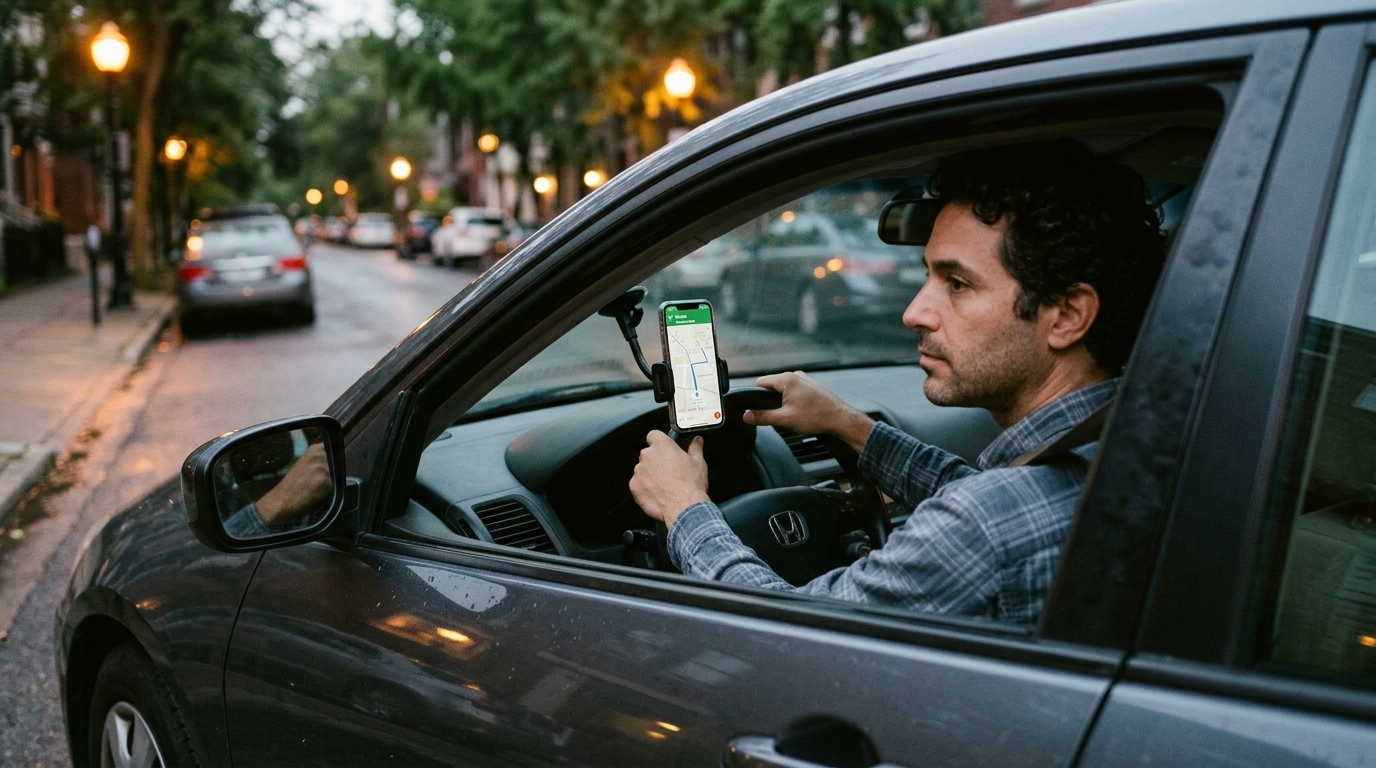
Rideshare insurance is a product because an ordinary personal auto policy quits the second you sign into the Uber, Lyft, or DoorDash app. Each platform carries coverage of its own, yet it switches on in stages — which leaves a genuine hole for anybody sitting idle waiting on a request or driving out to collect an order. Below you will see exactly where your personal policy stops, where the platform's protection begins, and what problem a rideshare endorsement actually solves.
In this article
Why Personal Auto Coverage Stops at the Uber App
Somewhere in every personal auto policy sits a business use or for-hire exclusion. The moment you switch on a rideshare app and begin taking fares, that car has moved from personal to commercial use, and the exclusion wipes out your coverage. Carriers are not shy about enforcing it either — a wave of unpaid claims in the mid-2010s prompted insurers to tighten the wording, and adjusters now deny claims as a matter of course once they see the driver was signed into the app.
That exclusion reaches further than most drivers expect. No passenger needs to be aboard for it to bite. Leaving the app open at all can drop you into a gray area. Get rear-ended in a grocery store parking lot with the app live, and a strict reading of the contract can leave the whole claim on you. Claims investigators request location data, app logs, and payment records, so quietly betting the carrier will never find out is not a plan.
The Three Driving Periods That Decide Everything
Coverage here is carved into three periods, and knowing which one you are in is the entire game:
- Period 1 — Signed in, no ride yet. You are logged on but have not taken a fare. Uber and Lyft carry contingent liability through this stretch, though normally only at state-minimum figures — typically $50,000 per person and $100,000 per accident for bodily injury, along with $25,000 for property damage. Nothing from the platform protects your own car.
- Period 2 — Fare accepted, driving to the pickup. Protection climbs steeply. Uber and Lyft both put $1 million of third-party liability in place from the moment you accept until the passenger is aboard, plus uninsured and underinsured motorist coverage.
- Period 3 — Rider on board. That $1 million liability policy stays active. Each platform layers on contingent comprehensive and collision for your vehicle — but only when your personal policy already includes collision, and only past a hefty deductible near $2,500.
Period 1 is the window that burns people.
How the Rideshare Endorsement Fills the Hole
The endorsement is a cheap rider bolted onto a personal auto policy that carries your coverage into Period 1. With it attached, the policy behaves as though the app were closed. Liability, uninsured motorist, comprehensive, and collision all stay live while you sit waiting on a request. As soon as a fare is accepted, the platform's policy assumes control. Part-time drivers generally start their rideshare insurance right here.
Every large insurer sells a version of it now, even if the names differ. Geico brands a rideshare product. Progressive lists a rideshare add-on. State Farm labels its own a TNC (transportation network company) endorsement. Allstate and USAA both offer comparable choices. Expect $10 to $25 per month, or somewhere around $175 to $350 per year if you pay annually.
Participation is not universal. A few carriers still will not insure an active rideshare driver at all, which pushes the policyholder to switch companies or step up to commercial. Where you live changes the picture too — endorsements are easy to find in California, Texas, Florida, New York, and across most of the Midwest, while a handful of states offer fewer choices at steeper prices.
Ready to compare car insurance rates?
See quotes from top insurers side by side. Free, about two minutes, no obligation.
Get My Quotes →Delivery Work Plays by a Separate Rulebook
From the curb, running deliveries for DoorDash, Uber Eats, Instacart, Grubhub, or Amazon Flex looks like ridesharing — the same phone, the same car, the same person behind the wheel — but insurers do not view it the same way:
- The personal-policy exclusions bite harder here. Most contracts name delivery of goods for compensation outright, wording broad enough to sweep in food, parcel, and grocery runs. It frequently applies even while you are just sitting with the app open.
- Platform protection is thinner than on the rideshare side. DoorDash and Uber Eats usually carry $1 million of liability while a delivery is underway, and nothing at all while you wait for an order to come in.
- A plain rideshare endorsement might not stretch to delivery. Certain carriers cover both activities; plenty do not. Anyone running both should get the answer in writing.
- Delivery-only endorsements are spreading. State Farm and Progressive are out front, selling add-ons priced $12 to $30 a month that take in food and package runs.
- Amazon Flex and Instacart keep pushing toward commercial policies. Enforcement has tightened at both, and drivers who turned in personal-policy declarations have lost their accounts once audited.
If you do rideshare and delivery both, handle them as two distinct insurance problems.
The Point Where Commercial Auto Wins
Drive full time and the endorsement math stops adding up. A commercial auto policy protects the car through every period, with no exclusions and no reliance on a platform to plug holes. It is the same coverage professional taxi and livery operators have carried for decades.
Price is the catch. Commercial coverage on a personal car used for hire generally lands between $2,500 and $7,000 per year, moving with your state, your record, and the vehicle itself. That is commonly three to five times what a personal policy plus endorsement costs. In exchange, the was the app on? argument never happens at a crash scene, and it is frequently the only route left when a personal carrier declines the risk.
The crossover point normally sits near 30 to 40 hours of driving a week. If most of your income arrives through Uber, Lyft, or delivery apps, get a commercial quote and set it beside the endorsement option. A few hybrid products — usually sold as rideshare-plus or TNC-oriented commercial policies — split the difference: full commercial protection while the app runs, personal pricing the rest of the time.
The Price Tag on Rideshare Insurance
What you pay turns on where you live, your driving record, your car, and how the coverage is assembled. Ballpark monthly ranges nationwide:
| Type of coverage | Usual cost per month | What you get |
|---|---|---|
| Personal auto (baseline) | $130–$220 | Nothing but personal driving |
| Rideshare endorsement | $10–$25 | Carries the personal policy through Period 1 |
| Delivery endorsement | $12–$30 | Carries the personal policy into delivery runs |
| Stand-alone rideshare policy | $180–$350 | Personal driving and Period 1 in one contract |
| Commercial auto (for hire) | $250–$580 | Every period, nothing excluded |
Several things swing those figures hard. State minimums differ — drivers in Michigan and Louisiana pay far more than those in Ohio or Idaho. A car's age and value set the collision portion. And one recent at-fault claim can double the base rate.
For most part-timers, the least expensive legal arrangement is still a personal policy with a rideshare endorsement attached. The priciest error — carrying neither and trusting the platform to handle everything — has produced five- and six-figure judgments against drivers whose personal claims were rejected after the wreck.
Frequently Asked Questions
Will my everyday car insurance protect me on an Uber or Lyft run?
Hardly ever. The business-use exclusion in a standard personal policy kills your coverage the instant the app is running, and carriers regularly deny claims once they pull your ride history. Closing that gap takes either a rideshare endorsement or a stand-alone rideshare policy.
What is the usual price of a rideshare endorsement?
Most drivers pay $10 to $25 per month, or about $175 to $350 per year on annual billing. Your state, your record, and what the car is worth move that figure in either direction. It remains the least expensive legal way to hold coverage through Period 1.
Does delivering for DoorDash or Uber Eats need its own policy?
Yes. Personal policies shut out delivery-for-compensation even more tightly than rideshare, and the platform's protection applies only while a delivery is in progress. The standard remedy is a delivery endorsement or a commercial policy — Progressive and State Farm both sell delivery-specific add-ons today at $12 to $30 a month.
What if I wreck the car while waiting on a ride request?
Through that Period 1 window Uber and Lyft provide third-party liability only, and in most markets just at state-minimum levels — frequently $50,000/$100,000 for bodily injury and $25,000 for property damage. Your own vehicle gets nothing from the platform, so protecting the car itself falls to a rideshare endorsement or a commercial policy.
At what point should a driver move to a commercial auto policy?
The crossover typically arrives around 30 to 40 hours a week at the wheel. Full-timers, anyone whose personal carrier declines to renew, and drivers turned down for an endorsement all tend to land on commercial. It runs three to five times a personal policy, and it erases the coverage gap outright.
Ready to compare car insurance rates?
See quotes from top insurers side by side. Free, about two minutes, no obligation.
Get My Quotes →