
Diminished Value Claim: How to Recover Lost Resale Value
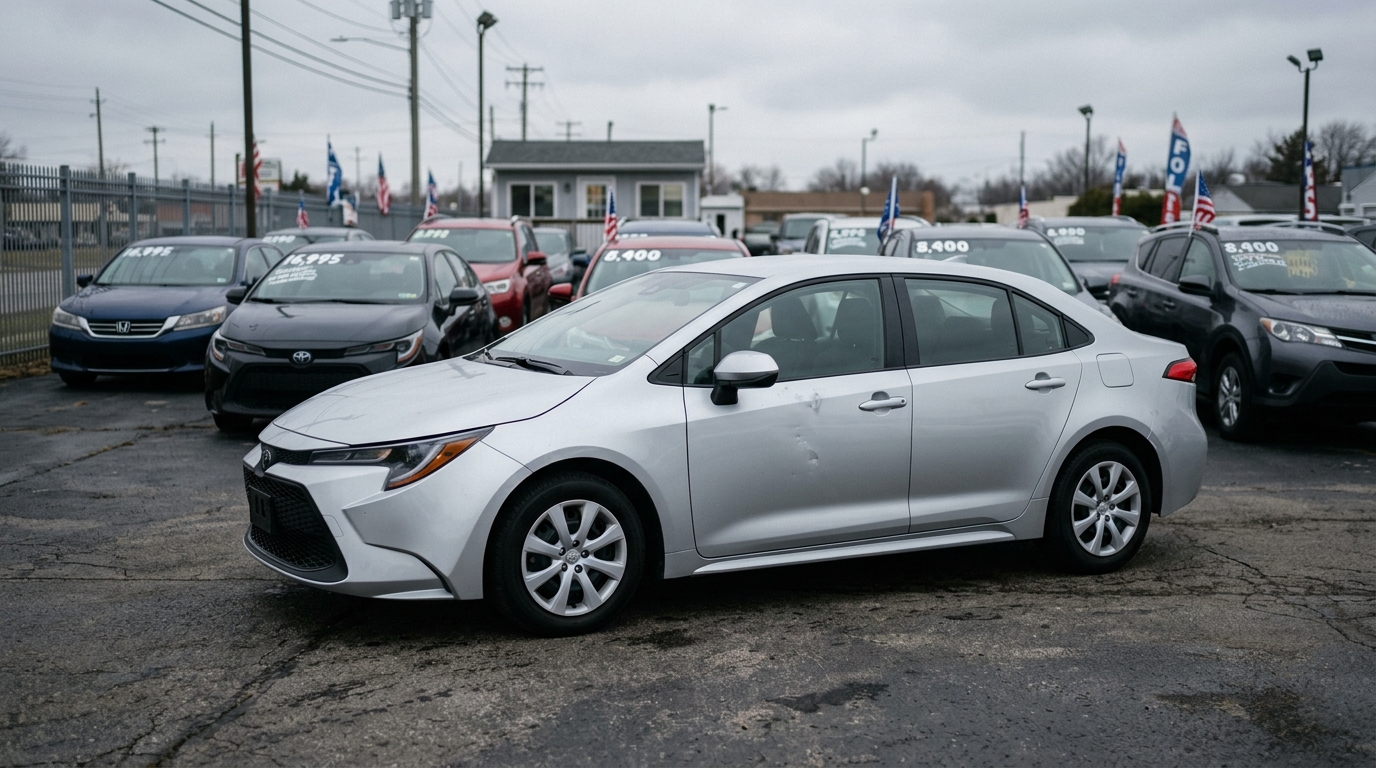
A diminished value claim is the mechanism drivers use to get back the resale value a crash stripped out of their car, even when the bodywork came back looking factory-fresh. A 2022 Toyota Camry with a spotless history might move for $24,000, yet the same car wearing a Carfax accident entry commonly brings $2,000 to $4,000 less, however perfectly the shop matched the paint. Below: how the process runs, which states back it, the way insurers price the payout, and what a realistic recovery looks like.
In this article
What the Claim Is Really Compensating
Diminished value measures the distance between what a car was worth in the second before impact and what it is worth once repaired. Restore it to pre-loss mechanical condition and the accident still lives on permanently in the record. Buyers find it on Carfax, on AutoCheck, or during a dealer inspection, and they pay less as a result. That shortfall is an actual financial loss, and in most circumstances the at-fault driver's insurer is on the hook for it.
This has nothing to do with the repair estimate. Body shop invoices put the vehicle back together physically; a diminished value claim pays the owner for how the market reacts to an accident on the record. It works almost entirely on cars five model years old or newer, with relatively modest mileage (usually under 100,000), and a clean history before the loss. Older vehicles and cars with earlier damage seldom generate a meaningful payout, since their pre-loss value already accounted for the wear and the history.
Three Kinds of Diminished Value
Adjusters and appraisers sort it into three separate buckets, and an insurer typically pays on only one of them:
- Inherent diminished value — the automatic drop in market value that simply comes with having an accident on record, no matter how good the repair was. Nearly every claim rests on this category, and it is the only one most insurers will write a check for.
- Immediate diminished value — the spread between what the car is worth in damaged condition right after the crash and what it was worth before it. Totaled-vehicle settlements handle this, so it is not claimed on its own.
- Repair-related diminished value — extra loss created by poor workmanship, paint that does not match, or replacement parts that obviously are not factory. This one goes after the body shop rather than the insurer and demands proof of bad work.
When someone says they are filing a diminished value claim, the inherent type is virtually always what they mean.
Where These Claims Are Allowed
Almost every state recognizes third-party diminished value claims, so a driver struck by someone else can chase the loss through the at-fault driver's liability insurer. Ordinary tort law settles the point: whoever was negligent owes the whole loss, and lost market value is part of it.
First-party claims — going after a driver's own collision coverage following an at-fault crash — face far tighter limits. Exclusions in most auto policies shut them down. Georgia stands out as the exception. The 2001 State Farm v. Mabry class action decision obligates Georgia insurers to evaluate and pay diminished value on first-party collision claims as a matter of course. Kansas, Louisiana, and a few others have thin case law allowing first-party recovery in narrow circumstances, but nothing about it is consistent.
Michigan's no-fault structure imposes its own restrictions, and a handful of states such as North Carolina apply hard contributory-negligence rules that wipe out recovery if the claimant carries any share of fault. The filing deadline generally sits between two and six years from the date of the accident, with three years being the most common window.
Ready to compare car insurance rates?
See quotes from top insurers side by side. Free, about two minutes, no obligation.
Get My Quotes →Building the Proof That Value Was Lost
Proof is the owner's job. Insurers never volunteer diminished value money; they want documentation establishing both the pre-loss and the post-repair market value. A claim that holds up generally works through these steps:
- Gather baseline value evidence. Pull Kelley Blue Book, NADA (J.D. Power), and Edmunds numbers for the exact trim and mileage as of the crash date. Screenshot every one of them.
- Collect the repair record. Ask for the final invoice listing each part replaced, the labor performed, and the total. Claims are strongest when repairs top $3,000 or involve frame, airbag, or structural work.
- Pull the vehicle history report. Verify the accident is now showing on Carfax or AutoCheck. That entry is precisely why resale value falls.
- Obtain a professional appraisal. An independent licensed appraiser runs $150 to $500 and delivers a report that carries far more weight in negotiation than an owner's opinion.
- Get comparable-sales evidence. Trade-in offers a dealer made on the actual car, or listings for similar vehicles carrying accident history, demonstrate real market impact.
- Submit a written demand. Send the adjuster the whole package with one specific dollar figure attached, never a range.
What Settlements Look Like and How 17c Works
Recoveries swing with vehicle value and damage severity, yet most settled claims cluster in a predictable band. A three-year-old sedan worth roughly $20,000 with moderate damage usually settles somewhere between $1,500 and $3,500. Luxury cars, trucks, and SUVs carrying structural damage can climb to $5,000 to $10,000 or beyond. Cosmetic-only work on an older vehicle may return $500 or less, and some of those are not worth the effort.
Most carriers work from a modified 17c formula, which came out of the Georgia Mabry settlement. It begins by capping potential diminished value at 10% of the car's pre-loss actual cash value, then runs two multipliers against that ceiling.
| Step | Factor | Value Range |
|---|---|---|
| 1 | Base cap (10% of ACV) | Hard ceiling |
| 2 | Damage multiplier | 0.00 (none) to 1.00 (severe structural) |
| 3 | Mileage multiplier | 0.20 to 1.00 (higher mileage = lower payout) |
Treat the formula as an opening position rather than a limit. Independent appraisals routinely land 30% to 100% higher, and adjusters will often move up when the owner arrives with a credible outside opinion. Owners who take the first offer generally leave money behind.
Common Reasons a Claim Gets Cut or Refused
Carriers fight these hard, because across an entire book of business the dollars pile up. Claims most often collapse or shrink for these reasons:
- Vehicle age or mileage — anything past 8 years old or over 100,000 miles is usually written off as having little recoverable value.
- Prior accident history — a Carfax that already shows damage guts the argument that this crash caused the loss.
- No independent appraisal — numbers the owner produced without a licensed valuation behind them count for very little.
- Comparative fault — where damages get reduced by fault percentage, a partly at-fault driver collects proportionally less.
- Statute of limitations expired — file more than two to six years out, depending on the state, and the claim is barred.
- Total loss — a car declared totaled and paid at ACV cannot claim diminished value on top; that loss is already inside the settlement.
How Filing Actually Plays Out
It starts with written notice to the at-fault driver's insurer that a diminished value claim is coming. Send it after the repairs wrap up, and comfortably inside the state's statute of limitations. The demand package holds the appraisal, the valuation screenshots, the repair invoice, the vehicle history report, and one specific dollar demand.
Adjusters usually answer inside 15 to 30 days with a counteroffer running 40% to 60% of what was asked. Expect two or three rounds of back-and-forth. Where the insurer will not engage at all or floats something unreasonable, small claims court is realistic in most states for amounts under $5,000 to $10,000, depending on the local jurisdictional cap. Filing costs $30 to $100, and no attorney is needed.
Bigger claims on luxury cars or severe structural damage can justify a diminished value attorney, generally working on contingency for 25% to 33% of the recovery. On an ordinary passenger car, the arithmetic favors handling it yourself.
Frequently Asked Questions
Can I bring a diminished value claim against my own insurer?
In most states, no. Standard auto policies carve diminished value out of first-party collision claims. Georgia is the main exception: a court ruling from 2001 requires insurers there to evaluate and pay diminished value automatically on first-party claims. Anywhere else, the claim goes to the at-fault driver's liability carrier.
What is the deadline for filing one?
Each state's statute of limitations for property damage sets the window, generally two to six years from the accident date, with three years the most common. Waiting too long ranks among the leading reasons perfectly good claims get denied, so filing within a year of the repairs being finished is the safest habit.
Is an independent appraisal worth paying for?
On anything above roughly $1,500, yes. Insurers brush off valuations the owner assembled, while an independent appraisal costing $150 to $500 usually lifts the final settlement by several times its own price. On very small claims involving older cars, that fee can swallow the likely recovery.
Does a properly repaired car really lose that much?
It does, and the drop can be measured. Industry studies keep showing 10% to 30% reductions in trade-in and private-sale value once an accident is reported on Carfax, scaled to how bad the damage was. A dealer willing to pay $22,000 for a clean car often falls to $18,000 to $20,000 the moment the accident record surfaces, however good the repair.
What if the driver who hit me had no insurance?
Uninsured motorist property damage coverage, where a driver's own policy includes it, may pick up the diminished value loss. The rules differ a lot by state, and some limit UMPD to particular kinds of damage. Without it, the only route left is suing the at-fault driver personally, which rarely justifies the effort.
Ready to compare car insurance rates?
See quotes from top insurers side by side. Free, about two minutes, no obligation.
Get My Quotes →