
Pay Per Mile Car Insurance: Is It Right for Your Driving?
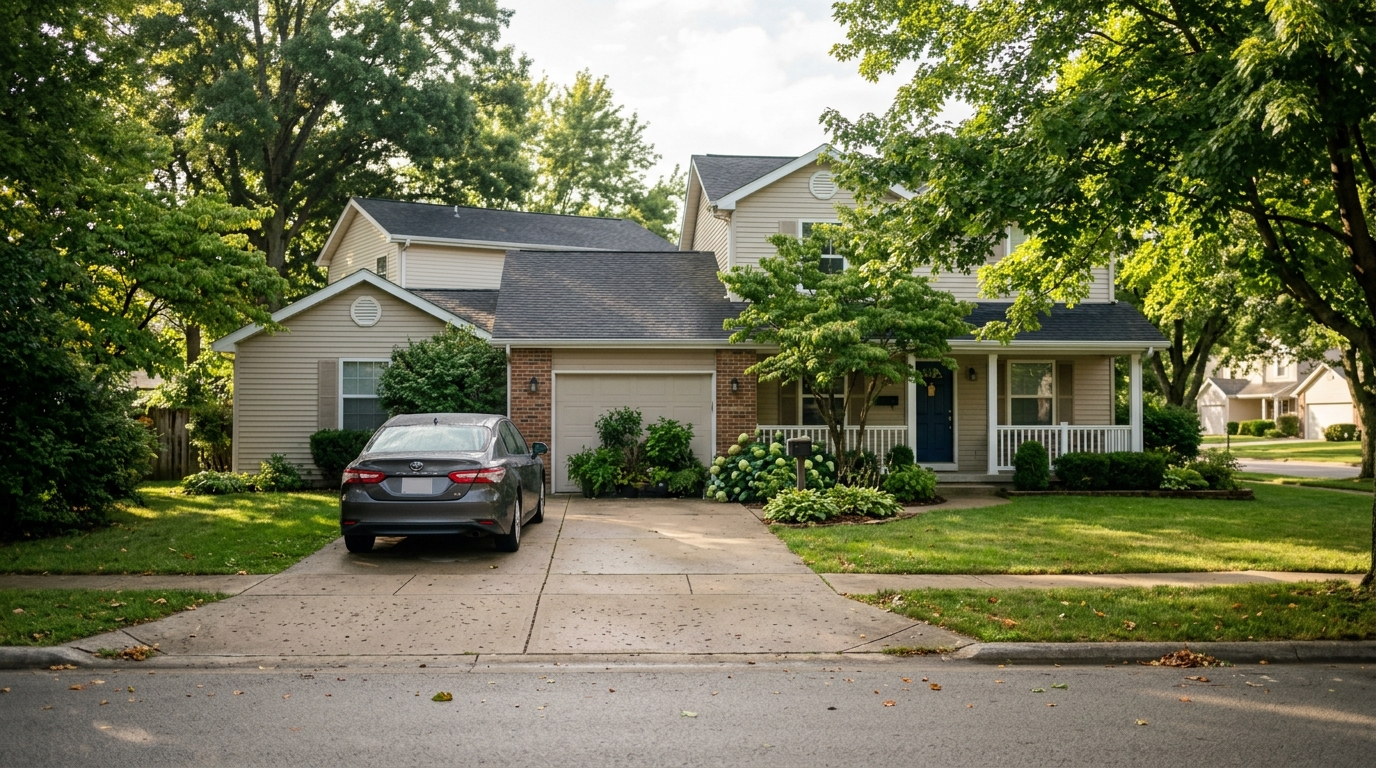
Pay per mile car insurance bills a modest monthly base rate alongside a few cents for each mile you drive, turning conventional pricing on its head for anyone whose car mostly sits still. What follows covers how these policies operate, where the break-even lands against a standard six-month premium, which national and regional companies sell the coverage, and the trade-offs to weigh before making a move.
In this article
The mechanics behind mileage-based pricing
These policies break the premium into two pieces: a fixed monthly base rate covering the risk of merely owning a car (theft, hail, a branch through the windshield) and a per-mile charge covering the risk that accumulates with time on the road. Mileage gets measured through a small OBD-II plug-in unit, a smartphone app paired to a Bluetooth beacon, or the connected-car telematics already built into newer models from GM, Ford, Toyota, and other automakers.
The protection itself is ordinary auto insurance. Liability, collision, comprehensive, uninsured motorist, and medical payments or PIP (where a state requires it) behave exactly as they do on a conventional policy and meet state financial-responsibility laws in the same way. What shifts is the billing rhythm and the variable input. Bills land monthly rather than twice a year, and the mileage share gets trued up against the odometer or device reading from the previous period.
Underwriting has not disappeared. ZIP code, age, driving record, credit-based insurance score where states permit it, and the make and model of the car all still shape the base rate and the per-mile figure. The one difference is that annual mileage — which conventional carriers usually assume at 12,000 to 13,500 — is now counted instead of guessed at.
Running the numbers on the break-even point
Base rates at most pay-per-mile carriers land between $30 to $50 per month per vehicle, with mileage charged at $0.04 to $0.10 per mile, though both figures swing widely by state and driver profile. Consider a driver whose conventional six-month policy would cost $900 and therefore $1,800 across the year. Savings typically begin once annual mileage drops below 8,000 to 10,000 — comfortably beneath the roughly 13,500 U.S. average. That threshold rises in pricey states such as Michigan, New York, Louisiana, and Florida, where standard premiums are high and any mileage-side discount gets amplified, and it falls in cheaper states like Ohio, Idaho, Vermont, and Maine.
| Annual Miles | Standard Premium | Pay-Per-Mile Estimate | Difference |
|---|---|---|---|
| 5,000 | $1,800 | $780 | Save $1,020 |
| 7,500 | $1,800 | $930 | Save $870 |
| 10,000 | $1,800 | $1,080 | Save $720 |
| 12,000 | $1,800 | $1,200 | Save $600 |
| 15,000 | $1,800 | $1,380 | Save $420 |
Those figures assume a $40 monthly base plus $0.06 per mile. Real quotes will differ, yet the curve keeps the same shape from carrier to carrier: savings peak for drivers below roughly 8,000 miles a year and shrink as usage rises.
Who comes out ahead on a per-mile policy
The biggest wins go to households whose actual driving looks nothing like the assumptions baked into a standard premium. Profiles that regularly benefit:
- Retirees with no commute at all, driving mainly to the grocery store, medical appointments, and church.
- Fully remote workers who dropped a 40-mile round trip five days a week.
- Urban dwellers in Boston, Chicago, D.C., San Francisco, or New York who ride transit most days and save the car for weekend errands.
- Two-car households where the second vehicle mostly sits parked as a backup, a weekend car, or a teen's ride.
- College students at residential campuses whose car stays garaged nine months out of the year.
- Snowbirds keeping a garaged second vehicle at a Florida or Arizona home for seasonal use only.
- Owners of collector or specialty vehicles already holding annual miles down under a standard classic policy.
On the other side, anyone commuting beyond roughly 45 minutes each way, gig drivers running rideshare or delivery, and dedicated weekend road-trippers usually pay more on a mileage model than a flat one.
Ready to compare car insurance rates?
See quotes from top insurers side by side. Free, about two minutes, no obligation.
Get My Quotes →Which carriers sell it, and where
Four companies write genuine pay-per-mile products in the U.S., joined by a few behavior-based relatives that often get mistaken for mileage pricing.
Nationwide SmartMiles covers the most ground, selling in roughly 40 states across most regions. It runs on a plug-in device or the SmartMiles mobile app and stops billing after 250 miles in a day to shield the occasional road-tripper.
Allstate Milewise reaches around two dozen states, among them California, Arizona, Illinois, Ohio, Texas, New Jersey, and Virginia. Billing happens daily instead of monthly, and the program uses a plug-in device.
Mile Auto plays a regional game, writing in Georgia, Illinois, Ohio, Oregon, Pennsylvania, Texas, and a few more. Rather than a plug-in device it collects smartphone photos of the odometer, which draws privacy-minded drivers.
Lemonade Car took over Metromile, the original pay-per-mile pioneer, and now sells the mileage product in states including California, Illinois, Ohio, Oregon, Tennessee, and Texas. Because availability expands unevenly from state to state, quotes belong side-by-side against a standard carrier's renewal.
Root is not truly pay-per-mile — its pricing rests mainly on driving behavior recorded across a two-to-three-week test drive — but it shows up in the same searches and deserves a quote alongside the others.
Making the switch without leaving a gap
Moving to one of these policies works like any other carrier change, with one added step for the tracking device or app.
- Find last year's mileage on an oil-change receipt, in the dealer service history, or straight off the dashboard odometer, then estimate the year ahead honestly.
- Quote a minimum of two pay-per-mile carriers alongside one standard carrier as a control price.
- Line the coverage up exactly — liability, collision deductible, comprehensive deductible, UM/UIM, and endorsements such as rental reimbursement or roadside.
- Bind the new policy with a future effective date that meets the current policy's expiration, so no unpaid gap appears on insurance-score reports.
- Put the device or app in place on day one so the odometer baseline gets captured cleanly.
- Cancel the outgoing policy in writing and confirm whatever pro-rated refund of prepaid premium is owed.
The catches worth thinking through first
Mileage pricing is not an upgrade for everybody. Several realities can shrink or erase savings that look obvious on a quote sheet.
Daily mileage caps. Billing usually stops somewhere between 150 to 250 miles in a single day, which looks like road-trip protection on paper. Because the cap resets at midnight, though, a 500-mile Saturday still bills at the daily maximum, and consecutive travel days pile up in a hurry.
Location tracking. The plug-in units from Nationwide and Allstate log GPS routes in addition to miles. That information supports accident reconstruction and, in certain states, behavior-based rating factors. Drivers who would rather not share location data tend to choose Mile Auto's photo-based approach.
Behavior scoring hiding underneath. Certain pay-per-mile products stack a driving-behavior credit or surcharge on top of the mileage bill for hard braking, late-night trips, or phone handling. A quoted $0.06 per mile can quietly become $0.08 in practice.
Bundling and multi-car discounts. Some pay-per-mile policies will not bundle with home or renters coverage at the same company or inside the same package, so total household premium can end up flat even when the auto line falls.
Shifting state availability. These products come and go from markets often. A carrier quoting today in Michigan or Washington might exit within 18 months, sending you back out to shop.
Frequently Asked Questions
What does a pay-per-mile policy charge for each mile?
Per-mile charges usually fall between four and ten cents, layered on a fixed monthly base of $30 to $50 per vehicle. Your exact rate reflects ZIP code, driving record, vehicle type, and credit-based insurance score where that is permitted. Low-cost insurance states such as Ohio or Idaho generally see per-mile figures near the bottom of the range, while Michigan, Louisiana, and Florida sit at the top.
Do these insurers know where I drive, or only how far?
That varies by company. The plug-in OBD-II units behind Nationwide SmartMiles and Allstate Milewise capture GPS location together with mileage, mainly for accident investigation and, in some states, behavior rating. Mile Auto instead collects monthly odometer photos through its app and never tracks location, which is precisely why privacy-conscious drivers gravitate to it. Spending ten minutes on the carrier's data-use disclosure before enrolling is time well spent.
What happens to my bill on a long road trip?
Billable mileage is generally capped at 150 to 250 miles per day, so one cross-country haul will not detonate the monthly bill the way a pure per-mile setup would. The cap does reset at midnight, which means each consecutive travel day hits the ceiling. On a week-long trip covering 3,000 miles, you would typically be billed the daily cap on five or six days instead of for the full 3,000.
Does mileage-based coverage make sense for a backup car?
It does. A spare car logging 2,000 to 4,000 miles a year is nearly the perfect candidate, since the fixed monthly base stays small and mileage charges barely register. Households frequently leave the primary daily driver on a conventional policy and move the second vehicle to pay-per-mile at renewal, cutting several hundred dollars from the combined premium.
Can I go back to a standard policy if I start driving more?
You can, and nothing penalizes you for it. These policies run in six-month terms just like standard auto insurance, and cancelling mid-term produces a pro-rated refund on unused premium exactly the same way. A changed commute, a new job, or a move out to the suburbs all send drivers back to flat-rate coverage at the next renewal on a regular basis.
Ready to compare car insurance rates?
See quotes from top insurers side by side. Free, about two minutes, no obligation.
Get My Quotes →