
New Car Replacement Coverage: Is the Add-On Worth Buying?
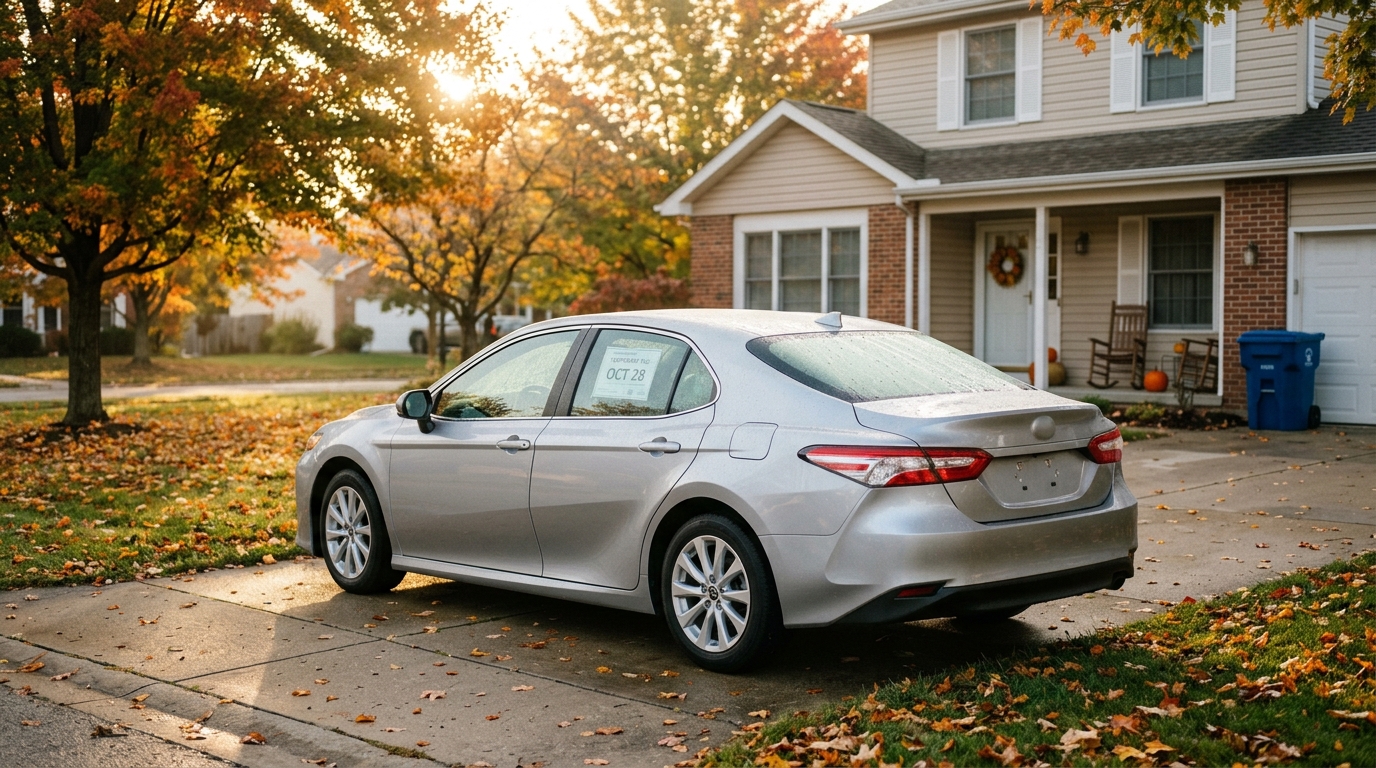
New car replacement coverage is an auto policy endorsement that swaps a totaled vehicle for a brand-new one of the same year, make, and model instead of handing you a depreciated cash settlement. It sits between ordinary collision protection and gap insurance, and on a freshly purchased car it can bridge a $5,000-$10,000 depreciation shortfall during the first year of ownership. What follows covers how the endorsement functions, where it parts ways with gap insurance, which carriers actually sell it, and whether that one-year window lines up with how long you plan to keep the car.
In this article
What New Car Replacement Coverage Actually Is
This endorsement gives a driver the right to replace a totaled car with a brand-new one carrying the same year, make, and model, in place of a depreciated actual cash value (ACV) payout. Ordinary collision and comprehensive coverage settle at ACV minus whatever deductible applies. Take a 2025 SUV with a $42,000 sticker: six months of normal depreciation could leave it worth roughly $34,000—an $8,000 hole the owner absorbs unless something else fills it.
The add-on closes that hole by committing to a check equal to the cost of a comparable current-model-year car, less the deductible. It fires only on a total-loss claim under collision or comprehensive, never on partial damage. When the car can be repaired, the normal policy limits govern and this endorsement stays dormant. That line matters because plenty of first-year claims are minor collisions landing nowhere near the total-loss threshold.
Where It Parts Ways With Gap Insurance
Shoppers mix these two up constantly, since both deal with total-loss shortfalls, yet each answers a different problem. Gap insurance makes up the distance between the ACV settlement and whatever is still owed on a loan or lease. What it shields is the lender, not your ability to buy another new car. Say the payoff is $32,000 while the ACV lands at $28,000, gap insurance handles the $4,000 difference. You are still standing there without a vehicle and have to finance a replacement.
New car replacement coverage picks up what the ACV check cannot buy on the dealer lot. Its job is car-for-car replacement rather than clearing a lender's balance. A fair number of drivers buy both: gap insurance guarding the financing and new car replacement paying for the actual vehicle.
| Comparison point | New Car Replacement | Gap Insurance |
|---|---|---|
| What gets paid | Price of a new car of the same model | Shortfall on the loan or lease |
| Who it protects | The driver | The lender |
| When it triggers | Only on a total loss | Only on a total loss |
| How long it lasts | 1-2 years, or until a mileage cap | As long as the loan runs |
| Loan required? | No | Yes |
| Usual yearly price | $30-$80 | $20-$60 |
Carriers That Actually Sell the Endorsement
This is not a universal product. Among the larger companies, these do write it:
- Liberty Mutual — its Better Car Replacement endorsement upgrades you to a car one model year newer than the one destroyed, with no hard age cutoff
- Erie Insurance — sells new car protection running about two years or 24,000 miles across most of the states where it operates
- Travelers — the Premier New Car Replacement option handles total losses through the first five model years on qualifying policies
- Farmers — writes it for cars totaled inside two years of the original purchase date
- Nationwide — folds comparable coverage into certain bundles, offered in most states
- Amica — builds the endorsement into its Platinum Choice Auto packages
Geico, Progressive, State Farm, and USAA typically will not write it as a stand-alone endorsement, steering buyers toward loan/lease payoff coverage or gap-style alternatives instead. Where you live matters too—California, for instance, limits several endorsements that are routine in the Midwest and Northeast.
Ready to compare car insurance rates?
See quotes from top insurers side by side. Free, about two minutes, no obligation.
Get My Quotes →The One-Year Clock and the Rest of the Fine Print
The eligibility window is the detail that trips up the most buyers. Most contracts restrict new car replacement to a vehicle inside its first 12 months of ownership or beneath a mileage ceiling—15,000 miles is the common figure, whichever arrives first. Cross either line and the endorsement generally lapses, sending any later total-loss claim back to standard ACV settlement rules.
Some companies push that window further. Liberty Mutual's Better Car Replacement carries no firm age limit, though it hands you a car one model year newer rather than a brand-new same-year model. Travelers stretches protection to five model years on qualifying policies. Erie's edition normally runs two years or 24,000 miles.
A few more conditions show up nearly everywhere. The car normally has to have been purchased new by the person holding the policy—pre-owned vehicles almost never make the cut. Coverage usually reaches only the first named insured, not additional drivers who own their own cars. Whether a lease qualifies depends entirely on the carrier, and aftermarket work is not covered beyond stock replacement value. Get the precise terms in writing rather than assuming any of this applies to your contract.
What the Coverage Adds to Your Premium
What you pay moves with vehicle value, state, and driver profile, but new car replacement coverage typically tacks $30 to $80 per year onto a policy. Against a mid-priced sedan or SUV already carrying a $1,400 annual premium, that works out to about a 3-6% increase.
Weighed against the risk, the arithmetic is simple. A new vehicle generally sheds 20% to 30% of its value across the first 12 months. On a $35,000 car that is a $7,000-$10,500 loss. Spending $50 a year to insure against it is cheap protection during the steepest stretch of the depreciation curve.
Bundling changes the picture as well. Certain Liberty Mutual and Erie policies tuck new car replacement into midtier or premium packages with no separate line item, even though the base premium already accounts for it. When comparing quotes, ask for a policy summary that spells out the endorsement charge—hidden pricing makes it impossible to tell a genuine bargain from a rate increase wearing a new label.
The Drivers It Fits Best
This endorsement is not a universal recommendation, but a handful of situations make it a strong buy:
- Brand-new cars bought with cash — with no loan on the books gap insurance does nothing, leaving new car replacement as the only endorsement that closes the depreciation gap on a paid-off vehicle
- Stretched loans of 72 or 84 months — the depreciation exposure runs for years, so stacking gap insurance and new car replacement covers both risks through year one
- Models notorious for a sharp first-year drop — luxury sedans, the majority of EVs, and top-trim SUVs frequently shed 25% or more within 12 months
- Households facing greater total-loss odds — punishing commutes, crowded city traffic, or a teenager listed on the policy all lift the chance of writing off a car
- Scarce or hard-to-source models — matching the spec again can mean paying more than the ACV check delivers when inventory is thin
When Passing on the Endorsement Is Smarter
Plenty of buyers are better off declining new car replacement coverage. Almost no carrier writes it on a used vehicle, so a private-party or dealer pre-owned purchase is out from the very first day. And a new car already approaching the 12-month or 15,000-mile cutoff has too little runway left to justify another premium line.
If you hold onto vehicles for four years or longer, that same $50 a year usually does more good buying down a deductible or raising liability limits, because the endorsement runs out well before the car does. Slow-depreciating models—a number of Toyota, Honda, and Porsche vehicles beat the average on resale—may never open a gap wide enough to warrant the extra cost.
Shopping around still pays. Two companies selling what looks like identical new car replacement coverage can charge wildly different amounts, driven by their underlying comprehensive rates. Pull quotes from three insurers or more, ideally including one specialist in the endorsement (Liberty Mutual, Erie, or Travelers) plus a national carrier that pushes gap coverage instead, and the comparison usually shows whether the extra premium is worth it for your car and your state.
Frequently Asked Questions
Is new car replacement coverage a good buy?
On a car that loses 20% or more of its value in year one, the $30-$80 yearly charge usually earns its place during the first 12 months of ownership. Hold the vehicle past three years, or drive a slow-depreciating model such as many Toyotas or Hondas, and the payoff shrinks sharply — the endorsement runs out right as the depreciation curve levels off. The strongest case is a financed car on a long term with gap insurance alongside it.
How long does the coverage stay in force?
The common cap is 12 months from the purchase date or 15,000 miles, whichever hits first. Erie pushes the window to about two years or 24,000 miles, Travelers reaches as far as five model years on select policies, and Liberty Mutual's Better Car Replacement sets no firm age limit but swaps a totaled car for one model year newer. The only reliable way to know which limit governs your policy is to read the endorsement language before you sign.
How does new car replacement differ from gap insurance?
One pays for a brand-new car after a total loss; the other clears whatever loan or lease balance sits above the vehicle's actual cash value. Gap insurance serves the lender by wiping out a financing shortfall, while new car replacement serves your ability to drive off in another new vehicle. On a financed car the two work together, and some owners keep both through the first year of ownership.
Can you get this coverage on a leased vehicle?
That comes down to the individual carrier. Certain insurers will write the endorsement on a lease provided the lessee is the named insured, while others limit it strictly to vehicles you own. Most lease agreements already bake in gap coverage as well, so read both the lease paperwork and the insurer's endorsement wording before counting on new car replacement for a leased car.
Ready to compare car insurance rates?
See quotes from top insurers side by side. Free, about two minutes, no obligation.
Get My Quotes →