
How to File a Car Insurance Claim Without Losing Money
Learning how to file a car insurance claim before the day you need it can spare you days of phone tag, hundreds of dollars in avoidable losses, and the headache of a rejected payout. None of it is complicated, just procedural - but the small slips, like reporting late, telling an adjuster the wrong thing, or taking the first offer on the table, are what turn an ordinary claim into an argument. What follows covers each step from impact to settlement check, including the phrases worth avoiding and the routine errors that shrink a payout.
In this article
At the Scene: What Comes Before the Call to Your Insurer
When nobody is badly hurt and both cars still drive, get them onto the shoulder or into a nearby lot. Dial 911 whenever someone is injured, a vehicle is blocking traffic, or the other driver turns out to be uninsured, intoxicated, or aggressive. Even for a light fender-bender, most states demand a police report once damage crosses a threshold - typically $500 to $2,500 depending on where you are.
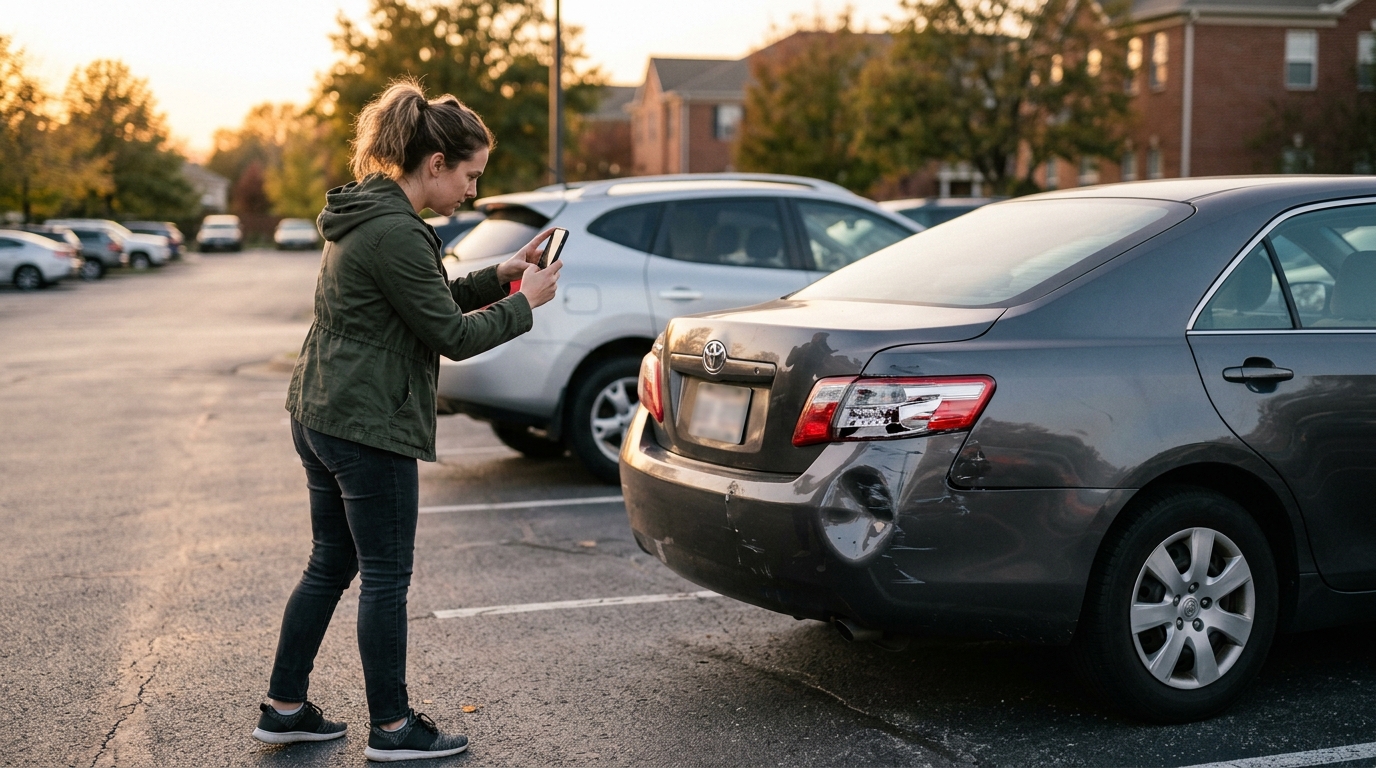
Use the wait to build your file. Shoot photos of every vehicle from several angles, plus license plates, both insurance cards, driver's licenses, the road surface, traffic signals, skid marks, and any injuries you can see. Record video of the whole scene if you can. Collect a name and phone number from every witness - a neutral bystander is the most valuable evidence there is once a claim gets disputed.
Trade insurance and contact details with the other driver while keeping the conversation flat. Skip the apology, never say I didn't see you, and avoid guessing out loud about what caused the crash. A courteous I'm sorry is exactly what the other driver's insurer will reframe as an admission of fault weeks down the road. Ask for the police report number before the officers pull away.
Deciding Whether to File at All
Some accidents are not worth reporting. When the damage lands under your deductible - most people carry $500 or $1,000 - filing means paying out of pocket anyway and possibly eating an increase at renewal. One at-fault claim usually lifts premiums 20% to 40% for three to five years, which easily swamps a small check for a scuffed bumper.
Even so, filing is nearly always correct when:
- Anybody got hurt, including mild whiplash or general soreness
- The other driver plainly caused it - their carrier pays, and in most states your own rate should hold steady
- The damage obviously runs past your deductible
- The other driver carried no insurance or took off, putting uninsured motorist coverage in play
- A third party was in the mix at all, whether a pedestrian, a cyclist, or a property owner
If you are still undecided, phone the carrier and open a claim record without committing to anything. Most policies require notice within 30 days whether or not you ever ask for money. Sitting on it longer invites a denial for prejudice to the insurer - where the delay itself, not the damage, becomes the grounds for turning you down.
Filing a Car Insurance Claim, One Step at a Time
Once you decide to file a car insurance claim, the sequence looks about the same at every major carrier. Nearly all of them accept a claim through a mobile app, a website, or a phone call. Plan on 15 to 30 minutes for that first submission.
- Call the claims line or start the app filing within 24 to 72 hours. Policies typically call for prompt notice. Keep your policy number, driver's license, and the police report number in front of you.
- Cover who, what, when, and where. Stay with observable facts: the date, the time, the intersection, your direction of travel, the weather, and the vehicles involved. Leave out opinions about fault.
- Write down your claim number. Every later call, email, or photo upload hangs on it. Save it along with the adjuster's direct line.
- Book the damage inspection. Some carriers run drive-in inspection centers, others dispatch an adjuster to your home or chosen body shop, and many now take photo estimates in the app on claims under roughly $3,000.
- Collect repair estimates. You can go with a shop in the insurer's Direct Repair Program, which is usually quicker and billed directly, or any licensed body shop you prefer. Most states protect that choice by law.
- Read the settlement before signing. On repairs, the carrier pays the shop directly and subtracts your deductible. On a total loss, expect a check equal to the vehicle's actual cash value.
Ready to compare car insurance rates?
See quotes from top insurers side by side. Free, about two minutes, no obligation.
Get My Quotes →Talking to the Adjuster Without Hurting Your Claim
Adjusters are pleasant people whose job is closing claims at the lowest amount they can defend. Every exchange is either recorded or written into the claim file. A few ground rules keep it uncomplicated.
Report only what you saw yourself. Asked How fast were you going?, give the number on your speedometer rather than an estimate. Asked Were you hurt?, answer I plan to be evaluated by a doctor instead of I feel fine. Soft tissue injuries frequently show up 24 to 72 hours later, and I feel fine stays quoted in that file forever.
Do not hand the other driver's carrier a recorded statement on the spot. No law obligates you to give one. Turn it down politely, ask for the questions in writing, and respond only after reviewing your own claim file - and, when injuries are in play, after talking with a personal injury attorney.
Never take the opening offer on a total loss or an injury claim. First numbers on totaled cars land 15% to 25% under fair market value as a matter of routine. A documented counteroffer - three to five recent comparable sales gathered from Kelley Blue Book, Edmunds, and local dealer listings - nearly always moves that figure up.
The Errors That Stall or Shrink a Payout
Claims run on procedure, and a short list of avoidable mistakes explains most of the reductions, holdups, and flat denials.
- Letting more than 72 hours pass before reporting. Delay gives the other driver room to reshape the story and hands adjusters a reason to doubt yours.
- Skipping the medical exam because it's just a bruise. An injury documented within 72 hours anchors everything that follows; symptoms first raised a week later get denied as unrelated.
- Turning over the keys before the estimate is approved. Once a shop starts work without insurer sign-off, the carrier can fight any charge above its own internal estimate.
- Taking the first total-loss valuation without gathering your own comparable listings and pushing back with recent local sales data.
- Signing a general release to speed up a check. That signature normally kills every future claim, including injuries that appear weeks afterward.
- Talking about it on social media - the crash, your injuries, or your recovery. Carriers screenshot public posts to attack injury claims, and one photo from a hike can erase a soft tissue settlement.
Timelines, Payment, and What Comes After
A clean not-at-fault repair claim with nobody hurt normally wraps in two to four weeks. Total losses take three to six weeks. Injury claims against another party can run six months to two years before they close out, particularly while treatment continues.
The rhythm usually goes like this: the carrier acknowledges the claim inside 24 to 48 hours, an adjuster reaches you within three to five business days, the damage gets inspected inside a week, and repair authorization follows a few days after the estimate. State insurance departments cap the outer edges - California, for instance, gives insurers 40 days from receipt of proof of loss to accept or deny, and most states set similar deadlines in the 15-to-45-day range.
Rental coverage only helps if you bought it - usually $30 to $50 a day with an overall ceiling of $600 to $1,500 depending on the limits you chose. When the other driver is at fault, their liability coverage should cover your rental in most cases without that daily cap.
When the car gets repaired instead of totaled, ask about diminished value - the gap between what it was worth before the crash and what it is worth after the repair. Most states allow that claim against the at-fault driver's carrier, and a well-documented demand can bring back $500 to $3,000 on a newer car that had a clean history until an accident showed up on its Carfax report.
Frequently Asked Questions
How quickly do I have to file after a crash?
Policies generally require prompt notice, which carriers read as somewhere inside 24 to 72 hours. State statutes of limitation give you far longer to pursue the claim - usually two to six years - but letting more than a few days slip risks a denial for late notice. Report it fast even while you are still weighing whether to chase payment.
Does filing a claim push my premium up?
One at-fault claim generally adds 20% to 40% for three to five years, varying by carrier, state, and driving history. Not-at-fault claims usually leave rates alone in most states, although some companies still surcharge after repeated incidents. Comprehensive claims for theft, hail, or animal strikes hit far softer than collision or liability claims do.
Can I still file when the crash was my fault?
Yes. Collision coverage repairs your own car no matter who caused it, less your deductible. Liability coverage separately handles the other driver's damage and injuries up to your policy limits. A renewal increase is likely, but the repair money still comes through your own policy right away.
What happens when the other driver has no coverage?
Turn to your own uninsured or underinsured motorist coverage, which is either required or offered in nearly every state. UM/UIM generally handles medical bills, lost wages, and in some states property damage up to the limit you picked. Without it, collision will repair the car but not pay a single medical bill, and chasing an uninsured driver directly is rarely worth the legal expense.
Ready to compare car insurance rates?
See quotes from top insurers side by side. Free, about two minutes, no obligation.
Get My Quotes →