
Classic Car Insurance vs Standard Auto Policies Compared
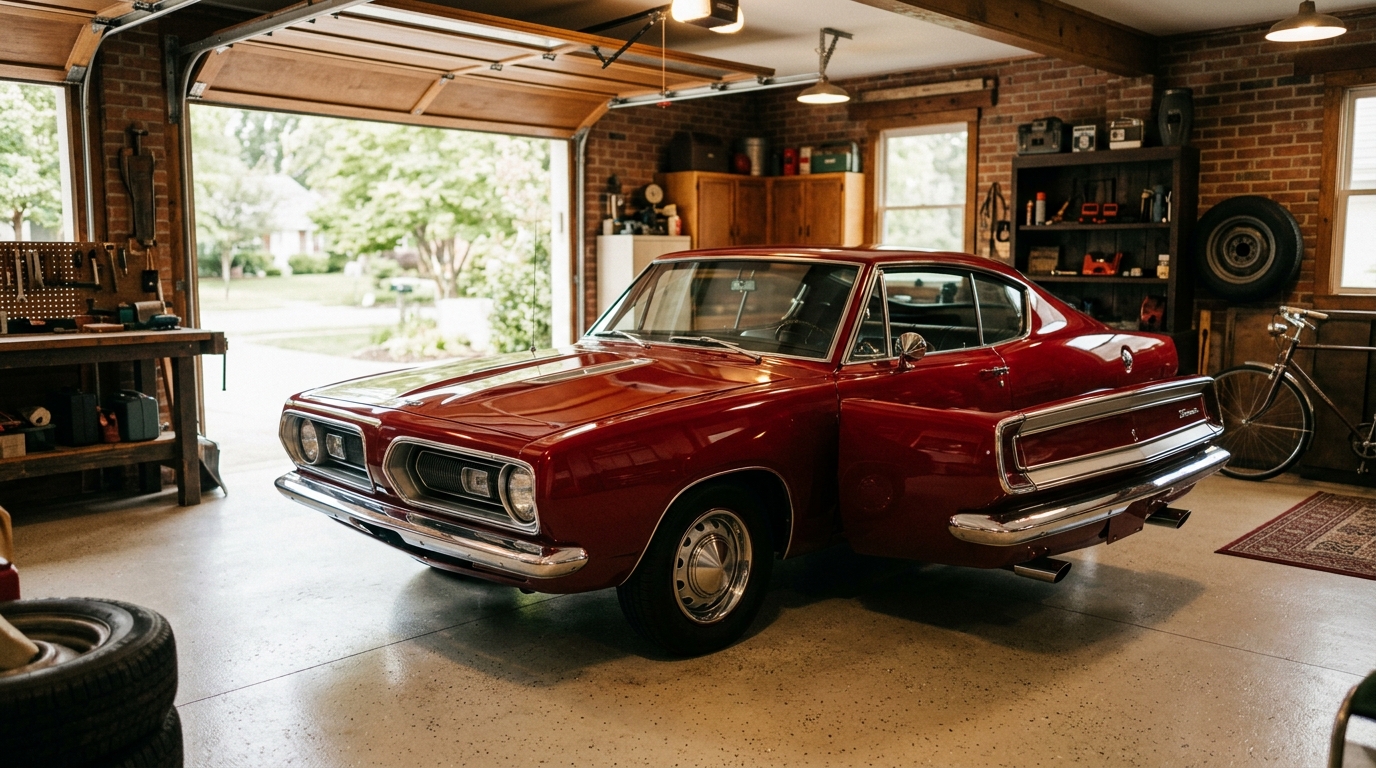
Classic car insurance treats vintage, antique, and collectible vehicles on completely different terms than the policy riding along on your daily commute. Rather than cutting a depreciated actual cash value check, these specialty contracts run on agreed value, fixing the car's worth on the day the coverage takes effect. Below you will find how that arrangement operates, which vehicles make the cut, how the premiums compare against a standard auto policy, and which companies own the collector market.
In this article
What an Agreed-Value Policy Really Pays Out
Total a car on an ordinary policy and the insurer writes a check for actual cash value (ACV) — whatever the vehicle would have sold for on the day it was destroyed, adjusted for depreciation and condition. That approach is fine for a five-year-old crossover and completely wrong for a 1967 Camaro that has been appreciating for twenty years.
Specialty collector policies run on agreed value instead. Owner and carrier settle on a dollar amount at the time the policy is written. Should the car be stolen or wrecked beyond repair, that exact figure gets paid — no depreciation formula, no hunting through auction comps, no debate over condition. A restored Chevelle set at $52,000 remains a $52,000 car in the insurer's eyes until the two sides revise it at renewal.
Arriving at that number takes paperwork. Carriers generally ask for current photos of every panel plus the interior, along with whatever restoration receipts you have. A professional appraisal is usually required once a car crosses roughly $75,000 to $100,000 in value. Many insurers will also let an owner bump the agreed value at renewal when the market moves, so an appreciating car does not fall behind. Deductibles land between $500 and $1,000 on most policies, and a few carriers write zero-deductible coverage for lower-value collectibles.
The Eligibility Rules Daily Drivers Cannot Meet
Classic car insurance is not simply insurance for old cars. Underwriters build these policies around a narrow use profile, and a daily driver rarely matches it. The rules you will run into most often:
- Age of the car: A classic policy usually calls for 20 to 25 years, while antique status waits until 45 years or older. Hagerty and Grundy do make room for certain newer modern classics such as C5 Corvettes and Fox-body Mustangs.
- Miles per year: Limits normally land between 2,500 and 7,500 miles annually. A handful of carriers sell higher or unlimited-mileage tiers for extra premium.
- Storage: The car has to live in a locked, fully enclosed garage. A carport or a driveway will not satisfy it.
- Another vehicle required: Somebody in the household must own or lease a regular car for everyday driving, which is exactly why a classic cannot serve as the primary commuter under most contracts.
- Who is behind the wheel: Carriers generally want a licensed driver 25 or older with a clean history — no serious violations across the past three to five years.
- Shape it is in: The vehicle needs to be roadworthy or properly restored. Barn finds and half-finished projects belong on specialty restoration coverage instead.
Why the Premiums Come Out So Much Lower
It surprises owners constantly: a $50,000 collector car often insures for less than the family SUV parked beside it. These policies frequently come in 30% to 60% below what a mainstream carrier would quote on the same value, and the reasons are structural:
- Very few miles at risk. A car that sees 3,000 miles a year going to shows and Sunday cruises carries a sliver of the crash exposure a 15,000-mile commuter does.
- Where it sleeps. Mandatory locked garages take out the bulk of theft, weather losses, and parking-lot dings.
- The kind of owner involved. Underwriters count on the typical collector customer being older, longer-licensed, and careful with the car.
- Limits on how it is used. No commuting, no rideshare work, no hotel valets, no running errands day to day — each one pulls claim frequency down.
Real numbers shift by state and by car, but a $40,000 restored muscle car kept in an Ohio garage might run $300 to $500 a year on a collector policy against $1,400 or more from a standard carrier for the same limits. Pricier cars cost more in absolute terms, yet the ratio holds up.
Ready to compare car insurance rates?
See quotes from top insurers side by side. Free, about two minutes, no obligation.
Get My Quotes →The Carriers That Dominate Collector Coverage
A short list of companies takes most of this business, and each occupies its own corner:
- Hagerty — The biggest specialty classic writer in the country. It runs the Hagerty Drivers Club, a heavily cited valuation database, and its own concours events. The pick for enthusiasts who want more than a piece of paper.
- Grundy — Founded 1947, headquartered in Horsham, PA. Its calling card is agreed value with no mileage cap, underwritten through the Philadelphia Contributionship. A favorite among collectors who actually drive.
- American Modern — A wide-ranging specialty carrier under Munich Re. It takes classics, kit cars, replicas, and hot rods that pickier companies turn down.
- Chubb — Built for six- and seven-figure exotics and blue-chip collectibles, with concierge claims handling and coverage anywhere in the world.
- Heacock Classic — Based in Florida and sharp on pricing for prewar cars and low-mileage tiers.
- J.C. Taylor — An East Coast regional with deep roots in Full Classics and prewar iron.
- State Farm and USAA — Each writes classic coverage through its regular channels. Bundling with a homeowners or existing auto policy is easier, though the restoration-specific benefits are thinner.
Pulling quotes from two or three specialty writers alongside the insurer you already use tends to expose the widest spread in price.
When a Standard Auto Policy Is Still the Right Call
Age alone does not entitle a car to collector coverage. The dividing line is where the value is headed and how much the car actually gets driven.
Take a 2001 Mazda Miata that doubles as a weekend track car and a grocery-getter: it will not clear the bar, since it flunks both the second-car and mileage tests and its value has already hit bottom. Standard coverage with comprehensive and collision paying ACV suits it fine. The same reasoning covers older luxury sedans, mid-2000s sports cars, and nearly anything depreciating on a normal curve.
The signal to switch is a market value that starts rising instead of sliding. Fox-body Mustangs, air-cooled Porsche 911s, first-generation Acura NSXs, and 90s Japanese sports cars have all crossed that line within the past decade. Once a car is worth more now than it was three years back, an ACV policy is capping your payout below what replacing it would actually cost. That is the moment to move to agreed value — typically alongside adding a second vehicle for everyday errands.
How a Claim on a Collector Policy Unfolds
These claims do not travel through the same repair network as a fender-bender on a Camry. Most collector carriers let the owner name the restoration shop, and that matters because a general body shop cannot track down period-correct trim, chrome, or paint codes for a 1970 Chevelle. When parts have to be located or fabricated, the repair can drag on three to six months.
On a total loss the carrier hands over the full agreed value less the deductible. Nobody argues about KBB figures or condition grades. Plenty of policies also carry spare-parts coverage — commonly $500 to $2,000 for components stored with the car — plus protection while the vehicle is being trailered to a show or sitting inside a restoration shop, neither of which a standard auto policy includes by default.
Diminished value is another point of separation. When a properly repaired classic sells for less because of its accident history, a number of specialty carriers will make up the difference. Standard policies almost never will.
Frequently Asked Questions
Can a car I drive daily be put on a classic policy?
No. Almost every collector policy bars commuting and insists the household keep a separate car for everyday use. Underwriters check this up front and can turn down a claim if the vehicle was serving as the primary ride. A few Hagerty and American Modern tiers permit occasional weekly errands, but genuine daily driving belongs on a standard auto policy.
What is the minimum age for a car to qualify as a classic?
The usual bar is 20 to 25 years for classic status and 45 years or older to be called an antique. Certain carriers will write modern classic policies on 15-year-old cars like C5 Corvettes, Fox-body Mustangs, and first-generation NSXs once the market treats them as collectibles. Rare exotics can go on a policy while brand new through specialty writers such as Chubb.
Is an appraisal required to fix the agreed value?
Not in every case. Photos, restoration receipts, and comparable auction results usually satisfy the carrier for any car valued beneath $75,000 to $100,000. Past that line most companies want a certified appraisal, and some request a fresh one every three to five years so the agreed value tracks the market.
Does classic coverage really cost less than a regular policy?
Yes. Measured against the same vehicle value, collector policies usually land 30% to 60% under standard auto, thanks to low yearly mileage, garaged storage, and restrictions on use. A $40,000 collector car might insure at $300 to $500 a year on a specialty policy versus $1,200 or more from a standard carrier at equivalent limits.
Ready to compare car insurance rates?
See quotes from top insurers side by side. Free, about two minutes, no obligation.
Get My Quotes →